
Join Our Fixed Trip Starting Date
| TRIP DATES | AVAILABILITY | PRICE | SPACE LEFT | |
|---|---|---|---|---|
| April 1, 2027 - April 9, 2027 | Available | 3.340,00€ |
8 Available
|
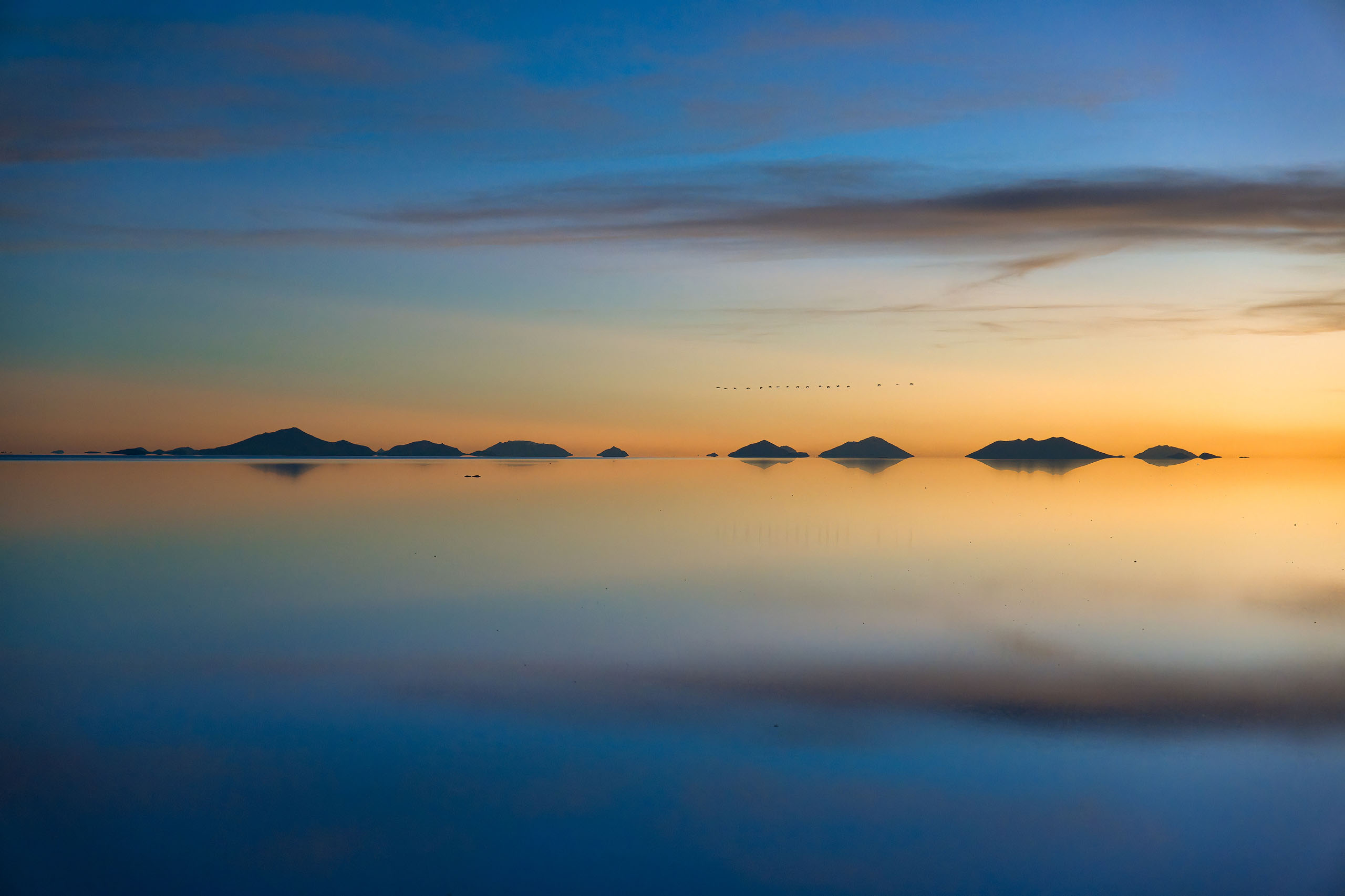
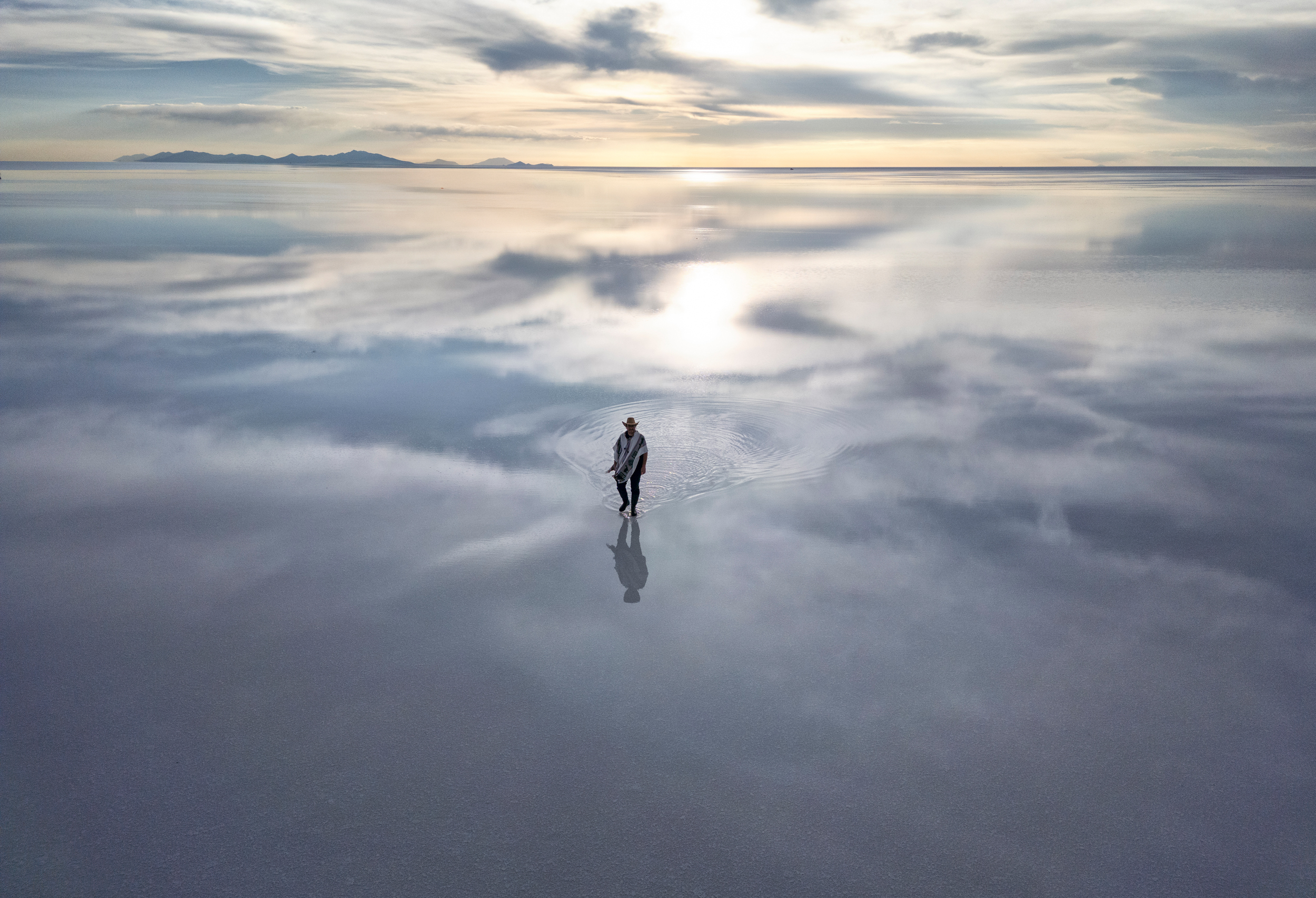
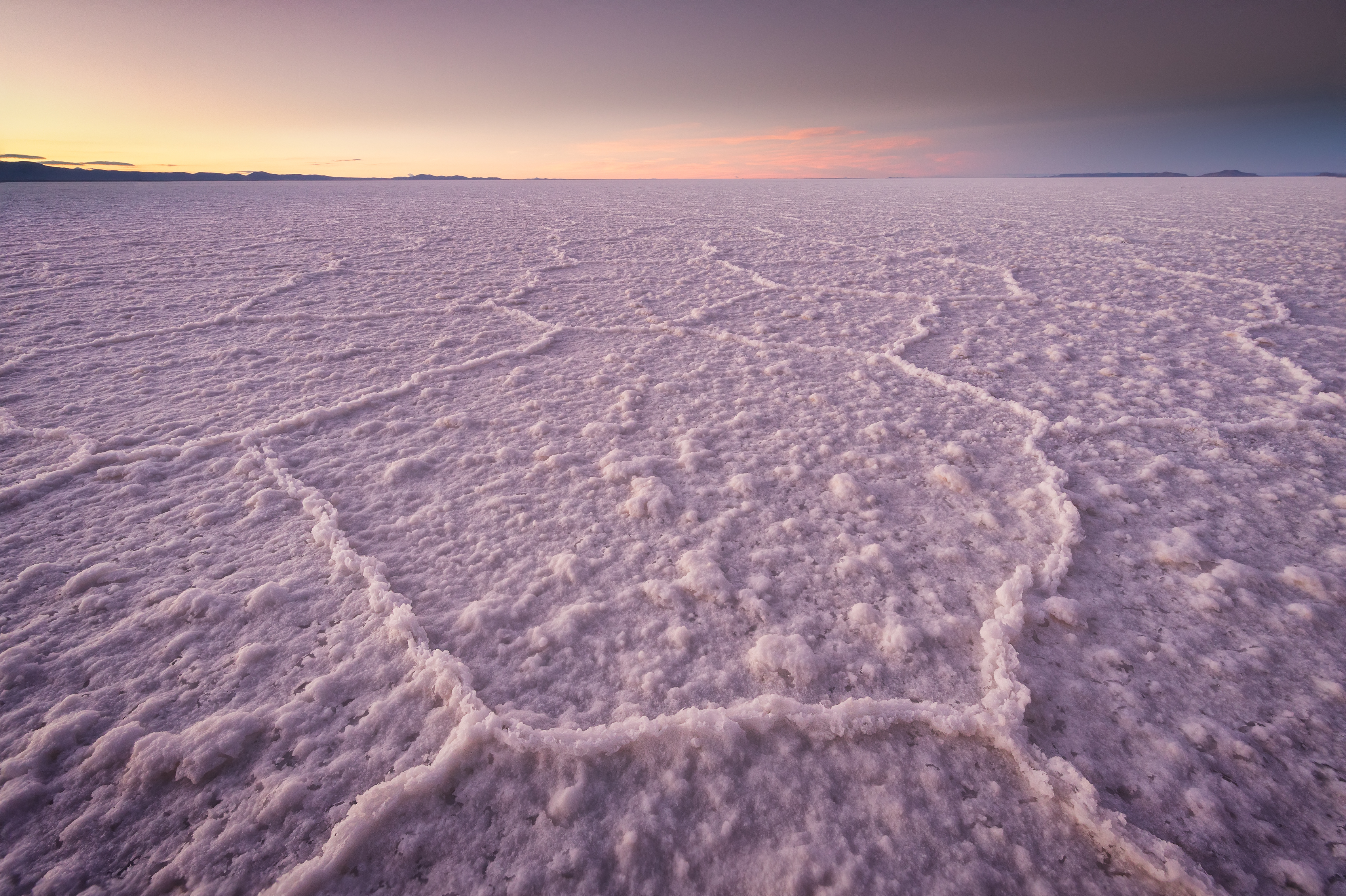
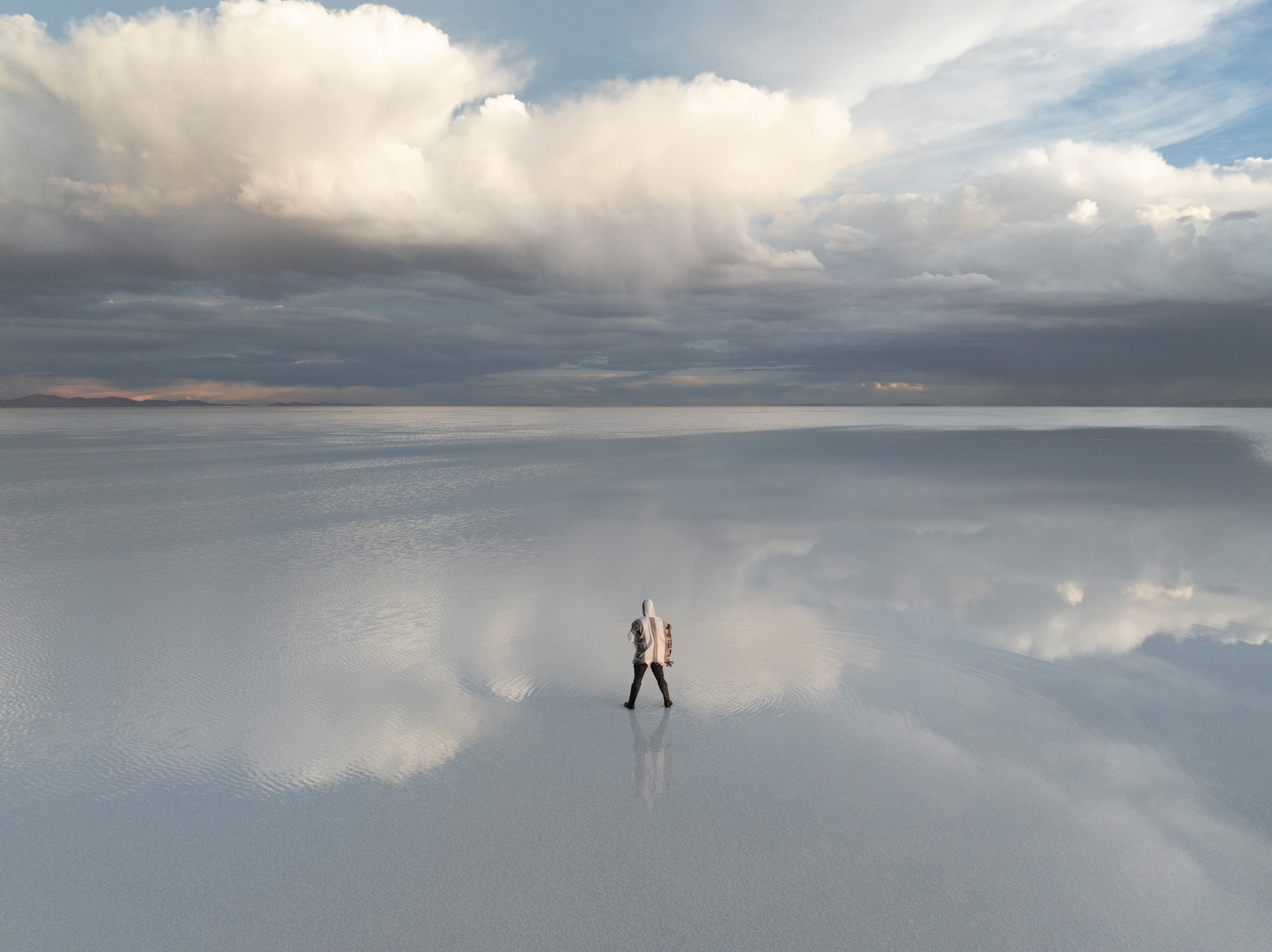
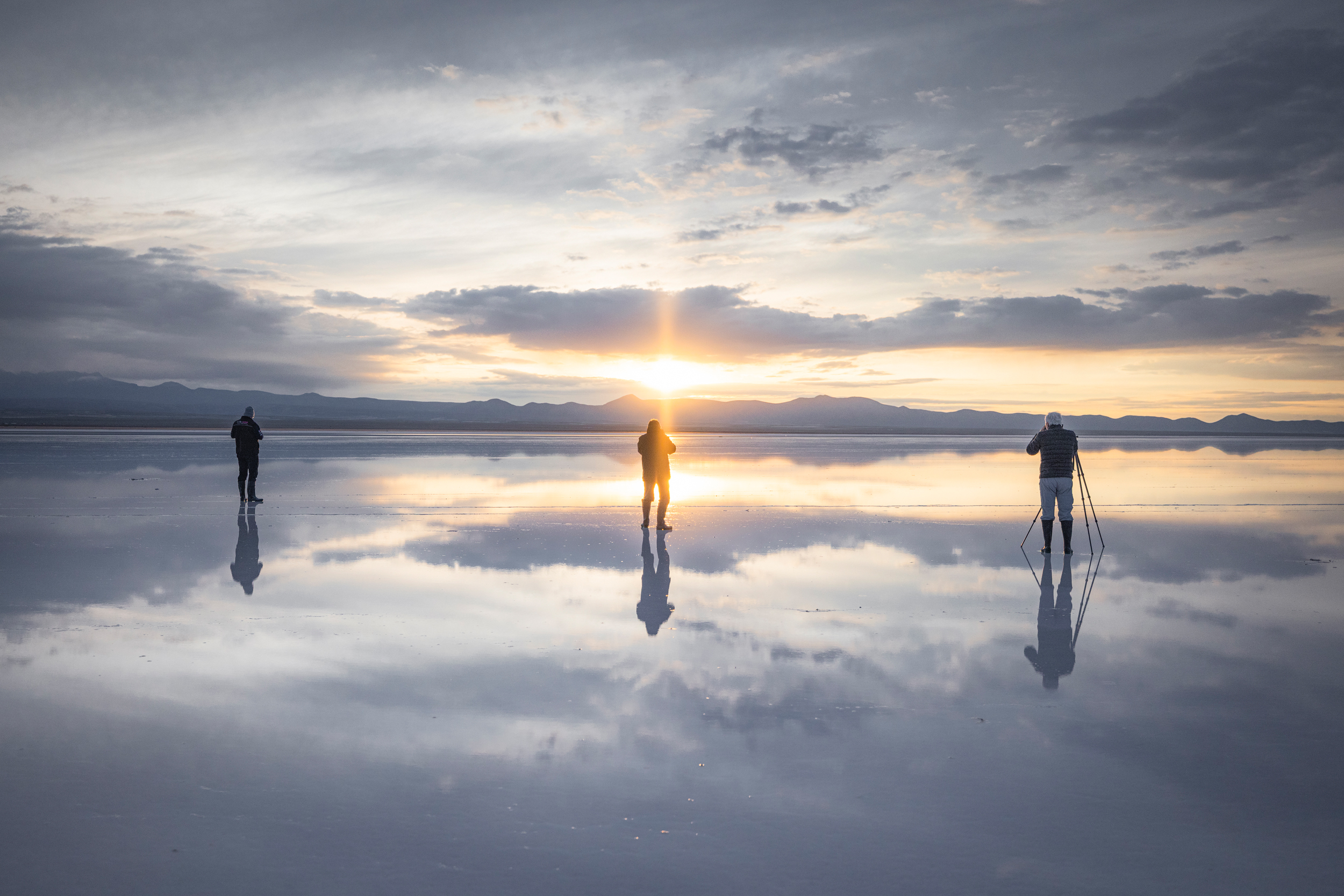
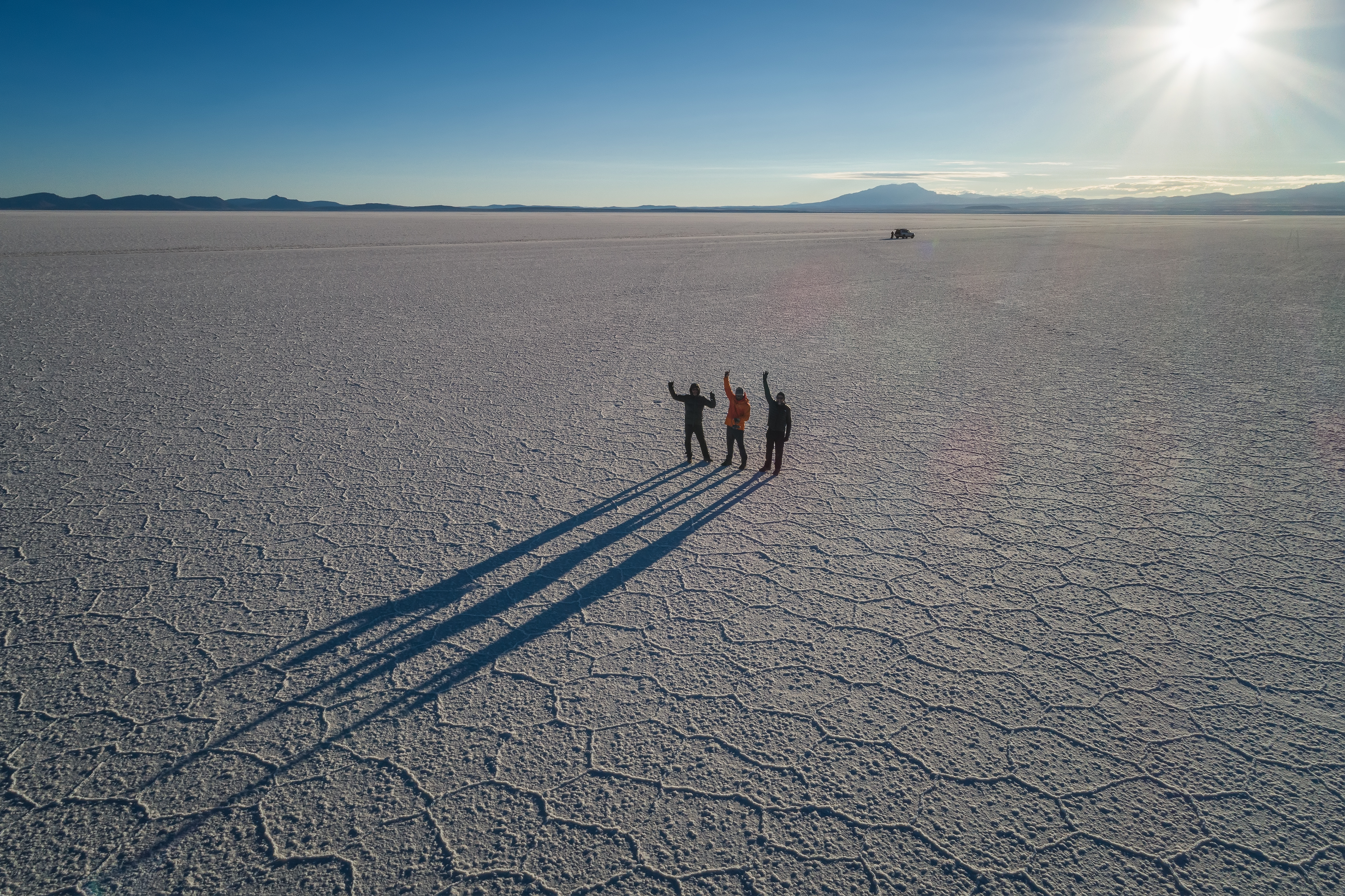
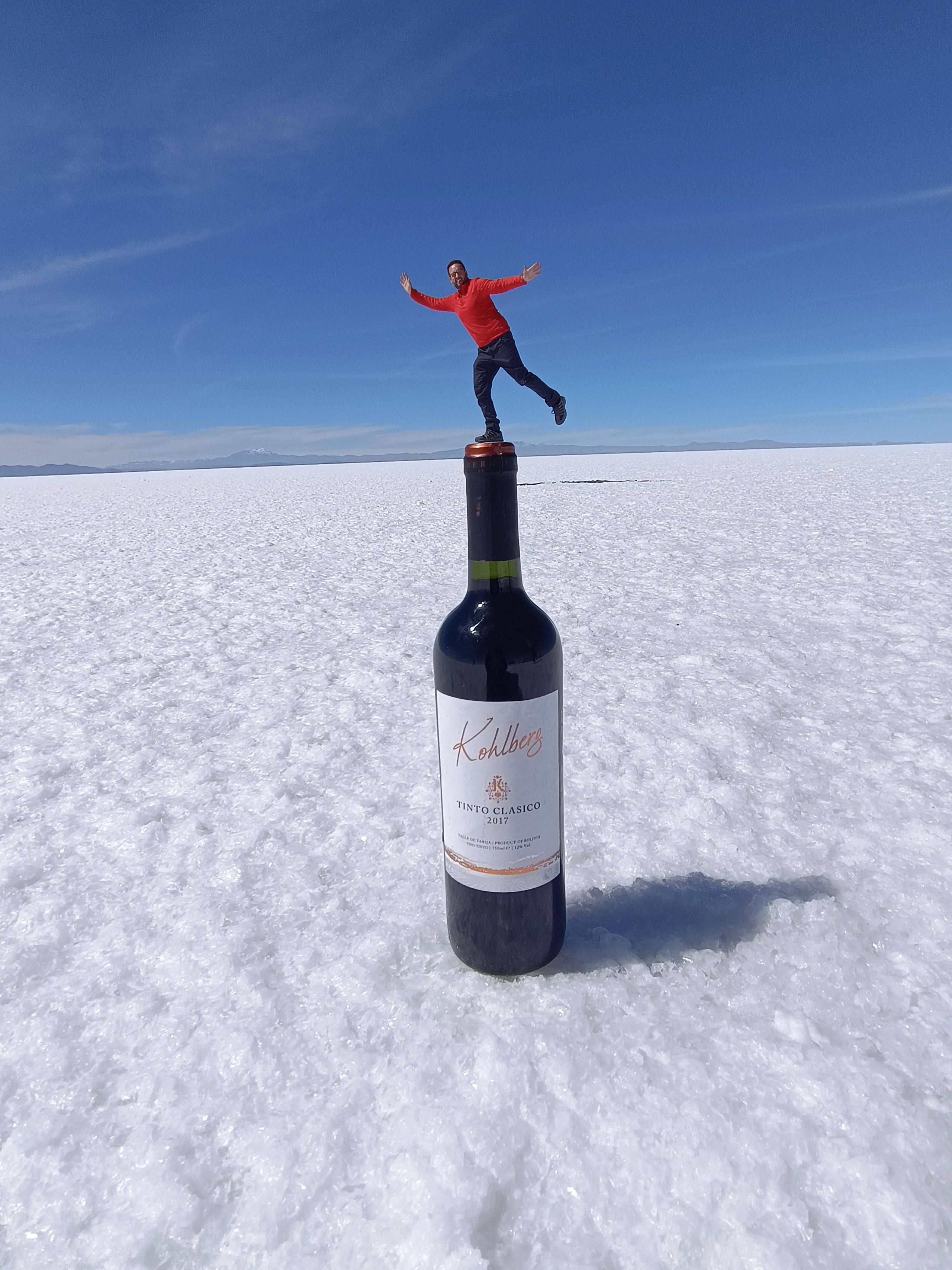
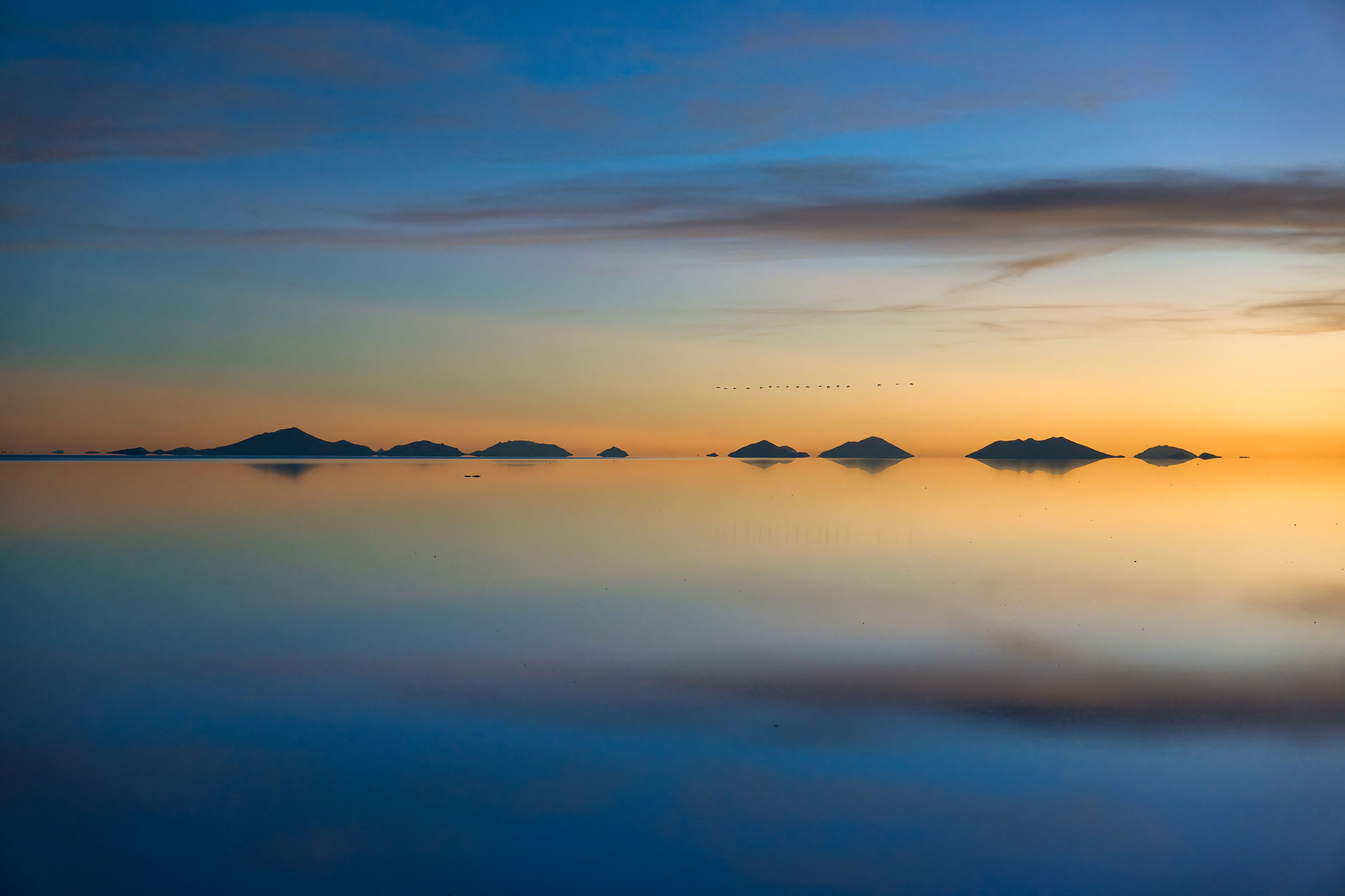
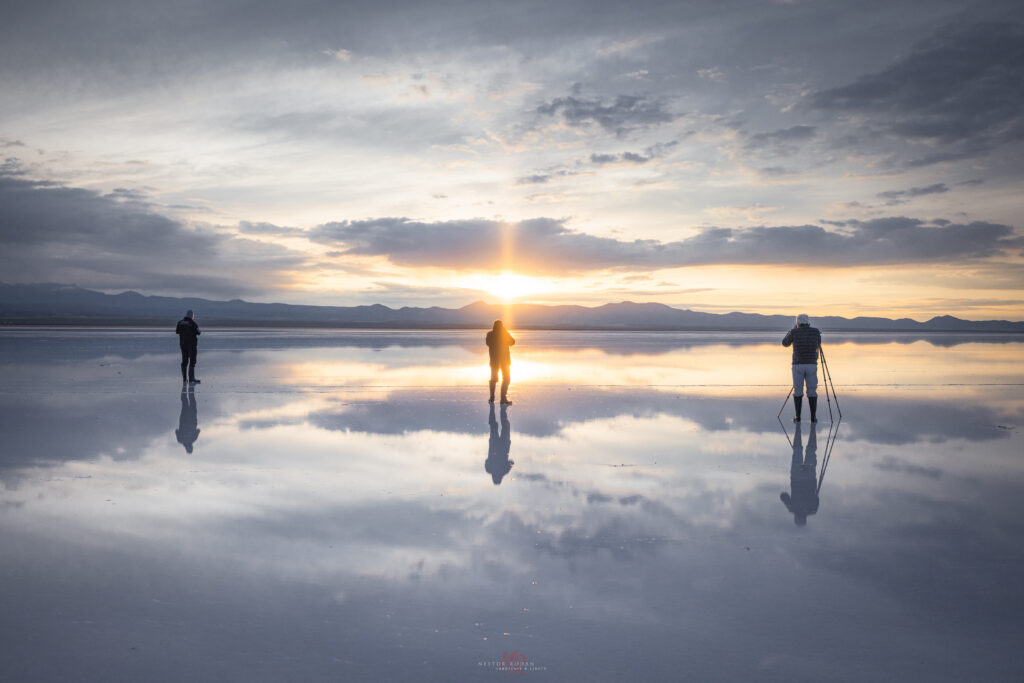
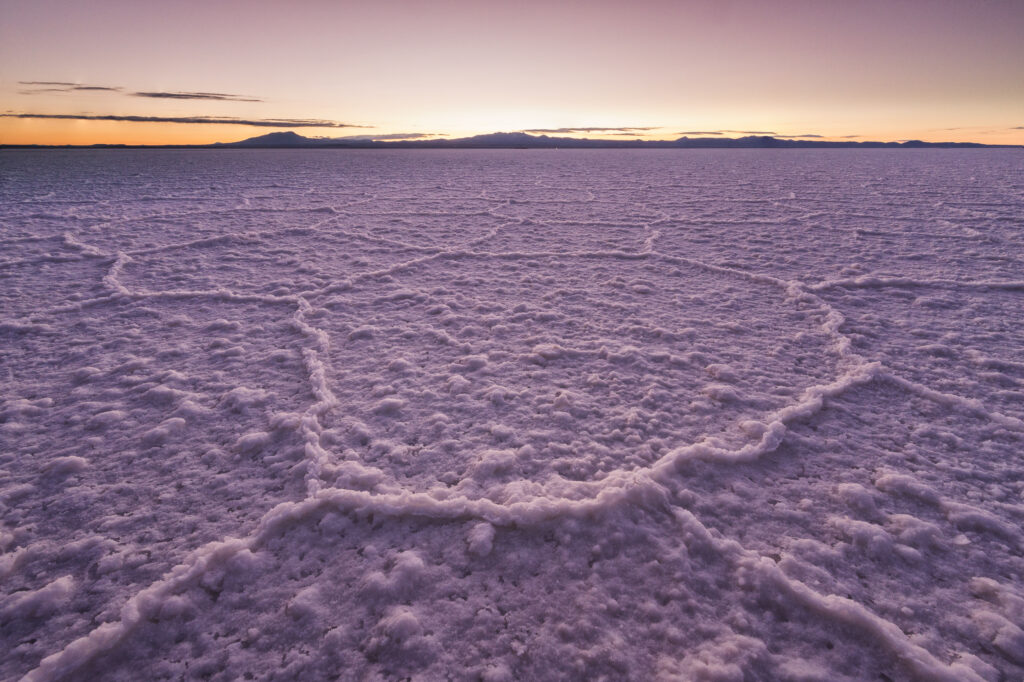
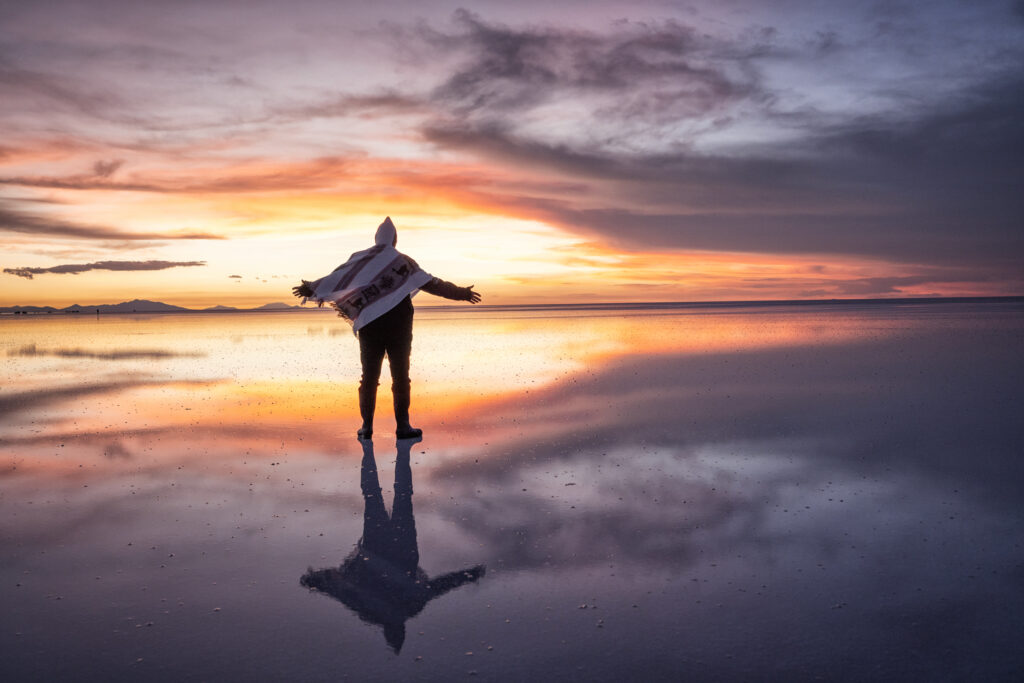
The Salar de Uyuni, in Bolivia, is the largest salt desert on the planet, covering 10,582 km² at an average altitude of 3,656 metres. It formed from the evaporation of ancient prehistoric lakes — Lago Minchin and Lago Tauca — leaving behind a salt crust up to 10 metres thick. Its surface is one of the flattest on Earth, with elevation changes of less than one metre across its entire expanse, making it a reference point for satellite calibration. During the rainy season, a thin film of water transforms the flats into a perfect mirror; in the dry season, the characteristic salt polygons formed by crystallisation emerge across the surface.
But beyond the facts, the Salar de Uyuni is one of those places you need to experience at least once in your lifetime. Not only for its vastness or its mystery, but for the sensation of absolute emptiness: no reference points on the horizon, nothing but salt in every direction. The silence, the scale and the light create an experience that is difficult to put into words, let alone images.
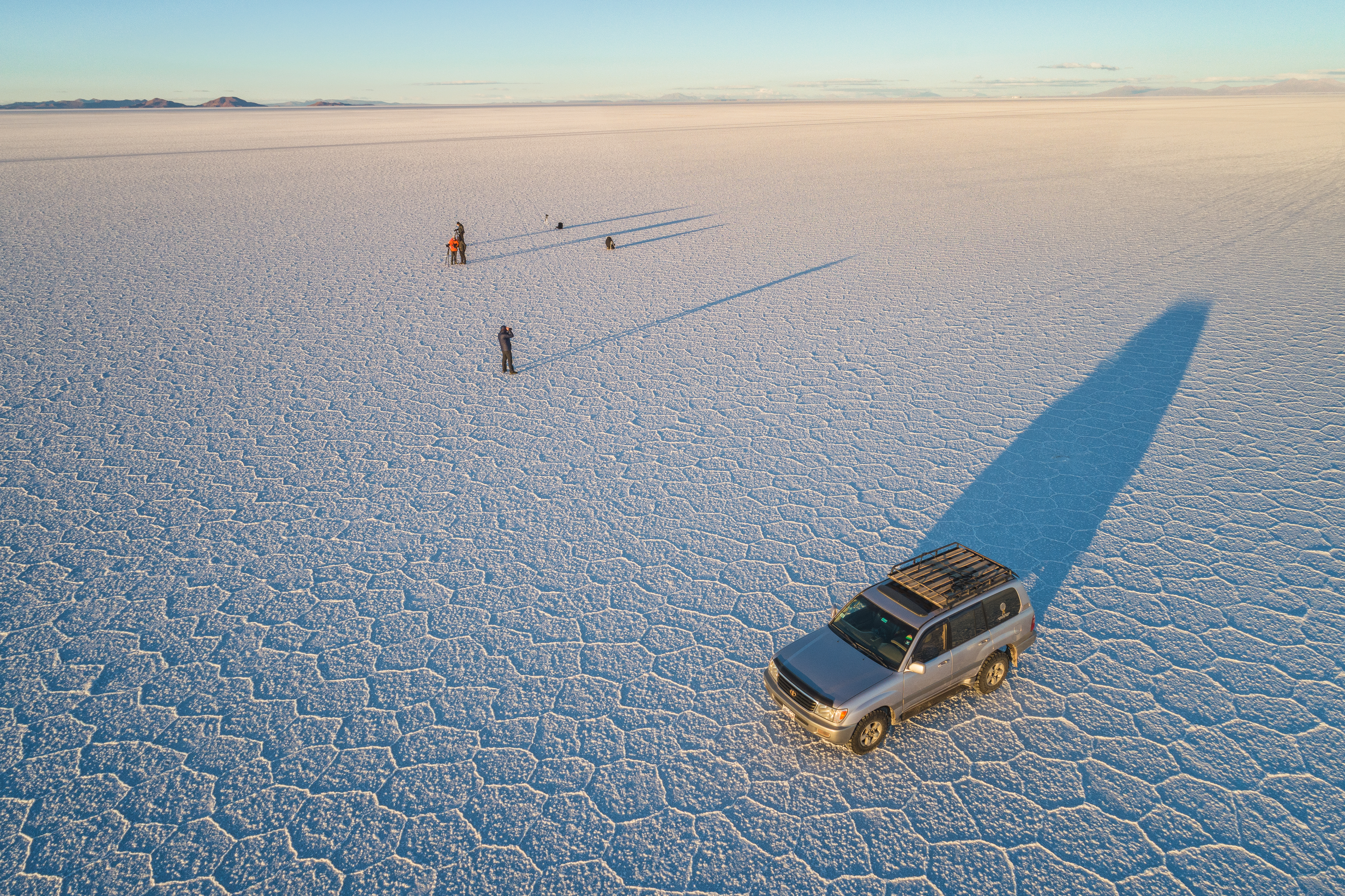
This expedition is not simply about crossing it — it is about interpreting it photographically from within. Over several days we will travel across it in 4×4 vehicles, working in small groups of four people per vehicle to maximise comfort and flexibility at every location.
We operate on the ground with the same local drivers and guides we have been working with for more than five years. This approach not only ensures genuine knowledge of the place and access to the best conditions — it is also part of a commitment: giving back directly to the local community, with whom our relationship has long since gone beyond the professional.
Because the Salar de Uyuni is not just a destination. It is a singular place that demands to be observed with patience, photographed with intention, and experienced with respect.
Itinerary
DAY 1 · Wednesday, April 1st DEPARTURE FROM CITY OF ORIGIN
We depart from our city of origin airport, usually Madrid or Barcelona, with destination La Paz. From there, a domestic connection takes us to Uyuni, where we will land the following day at 08:00 h local time, ready to begin the expedition.
We will arrive in Uyuni on the first flight of the morning. Our drivers will pick us up and take us to the hotel to rest. This will be our first contact with altitude: 3,665m.
During the central hours of the day we will acclimatize calmly, saving energy for the afternoon. At 17:30 h we will head out to the Colchani Edge: no photographic pressure — simply observe, breathe and calibrate our eyes before the infinite horizon of the salt flat.
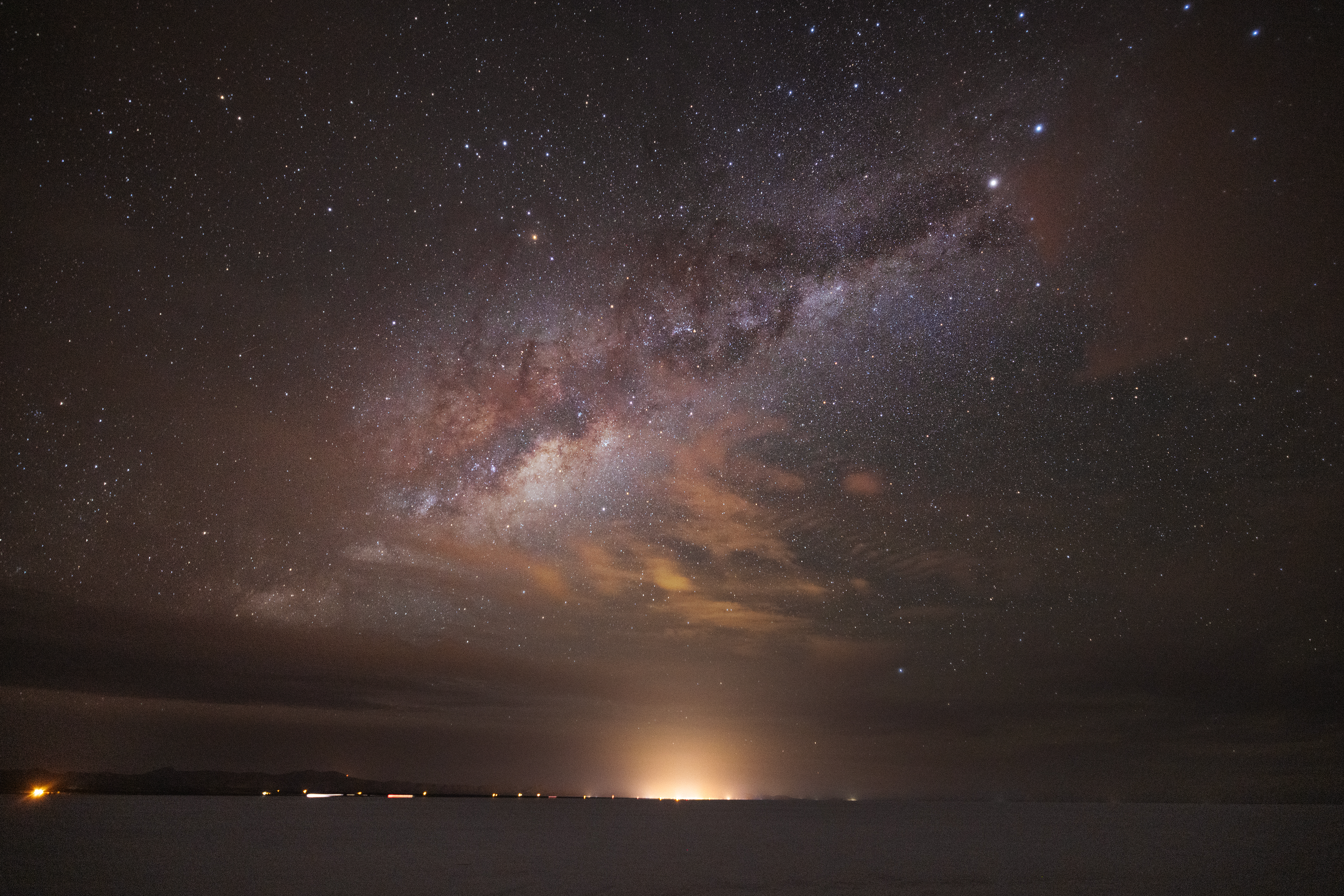
With the moon at 18%, a starry sky is already possible if the group has energy, although this is not a required session.
Day 3 will begin with our first free morning: time to stroll through town, discover the local shops and immerse ourselves in the customs of Uyuni without any rush.
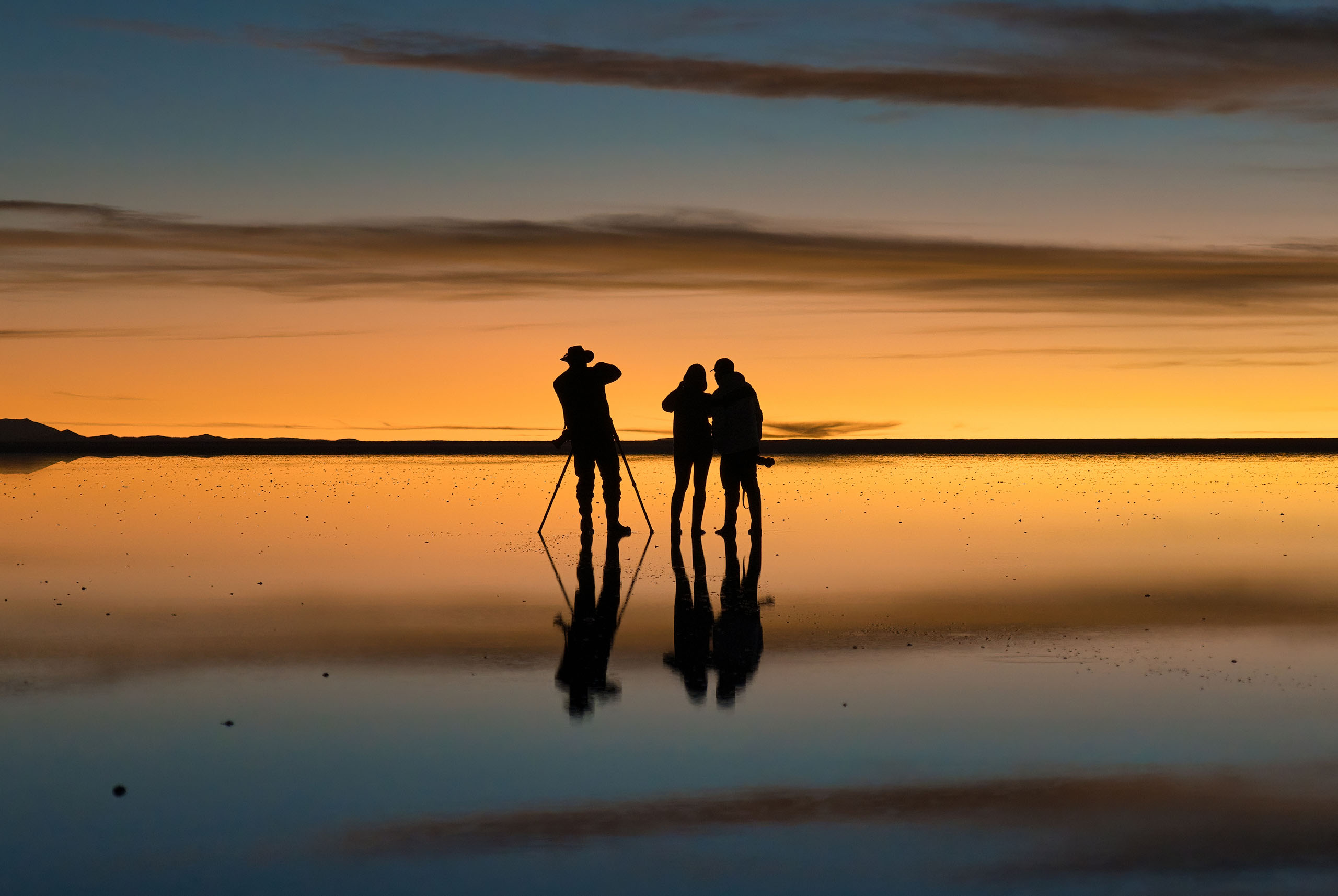
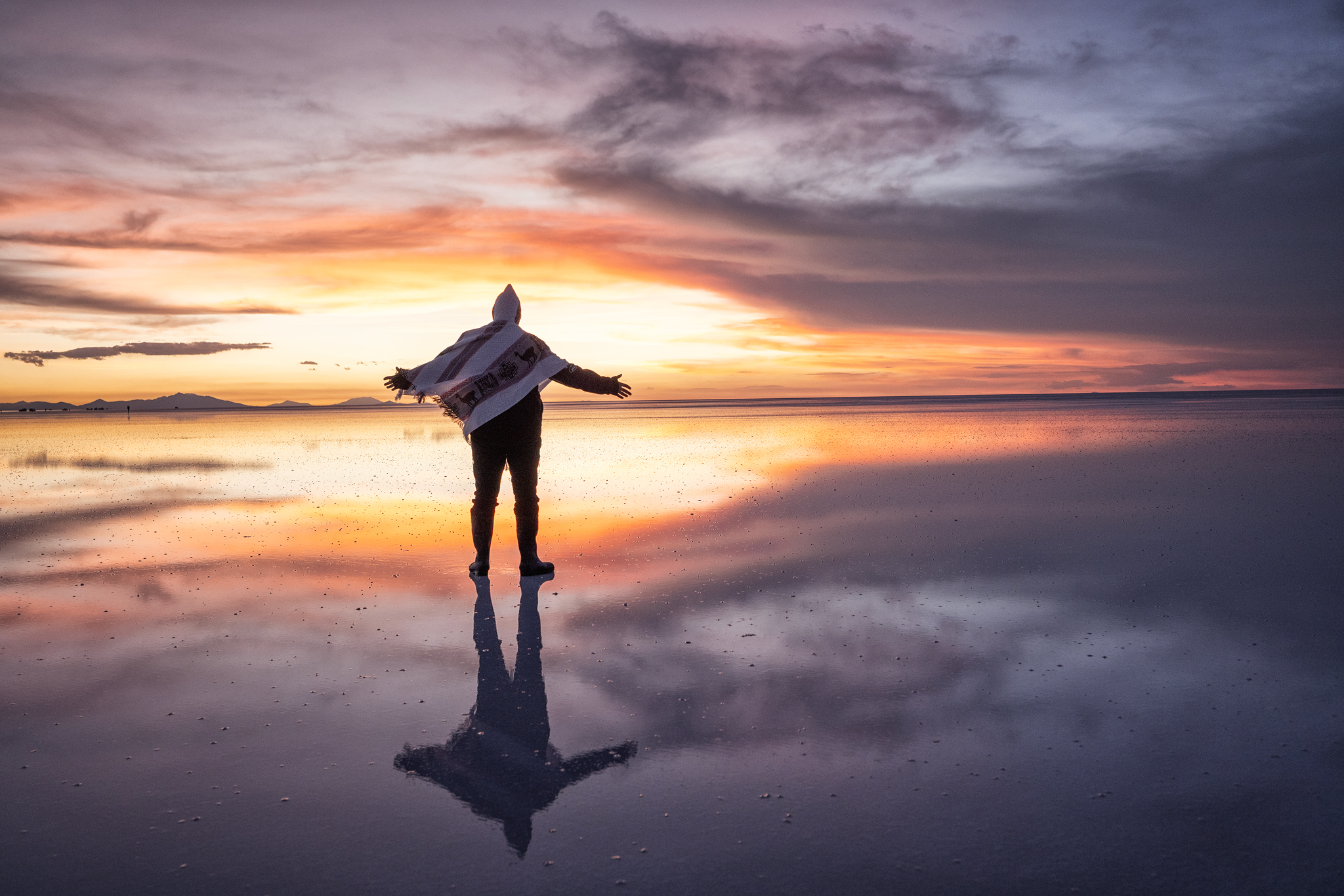
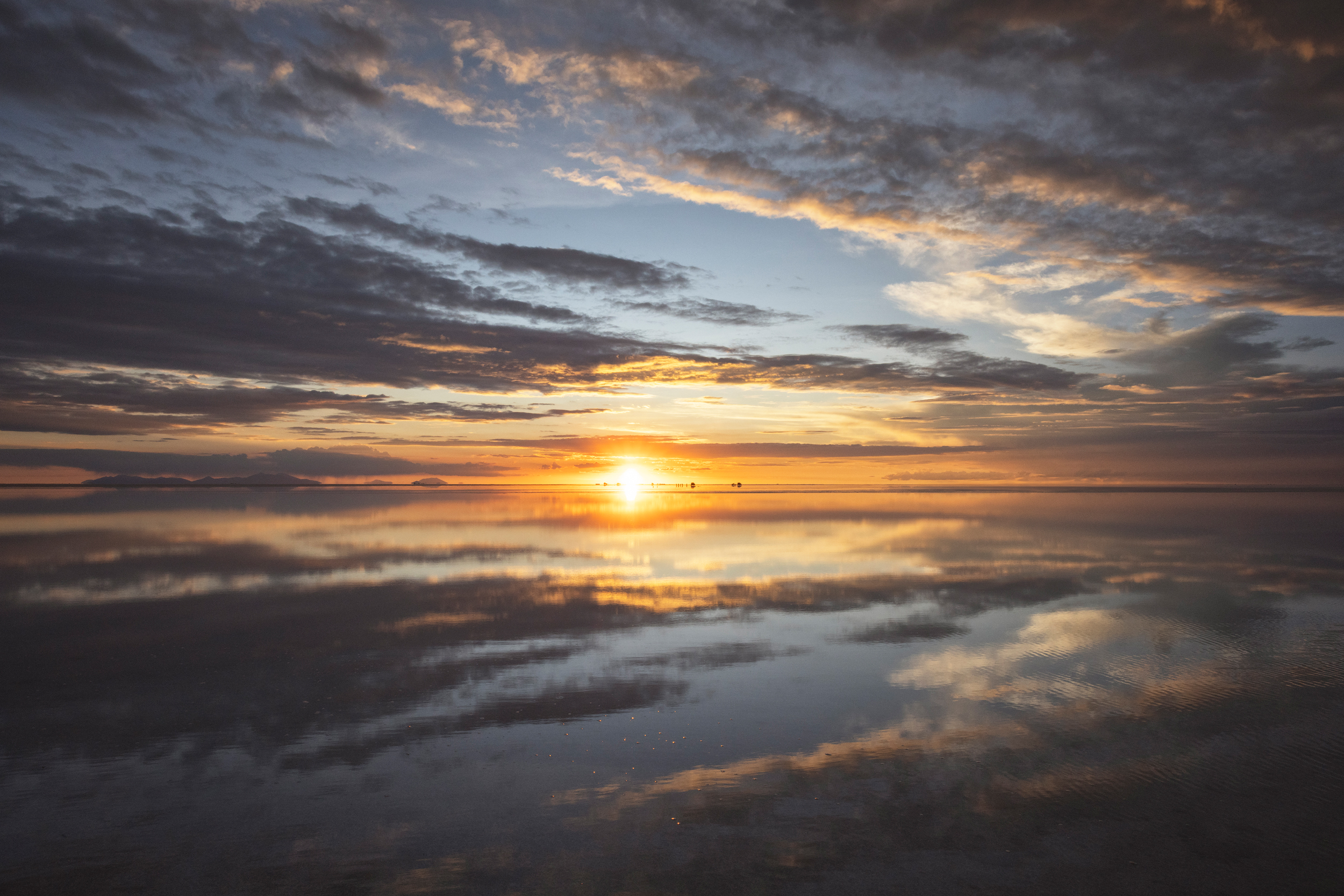
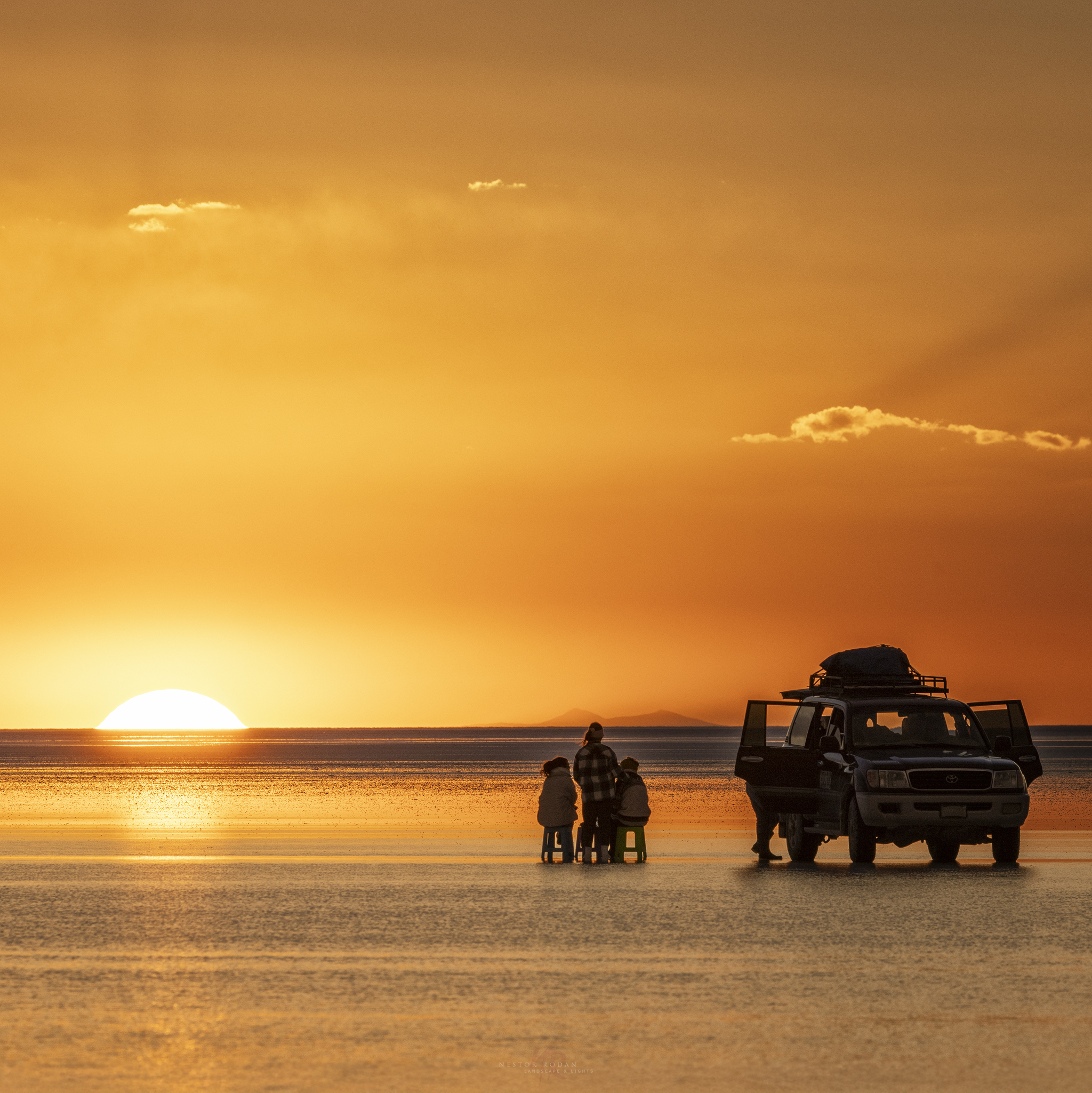
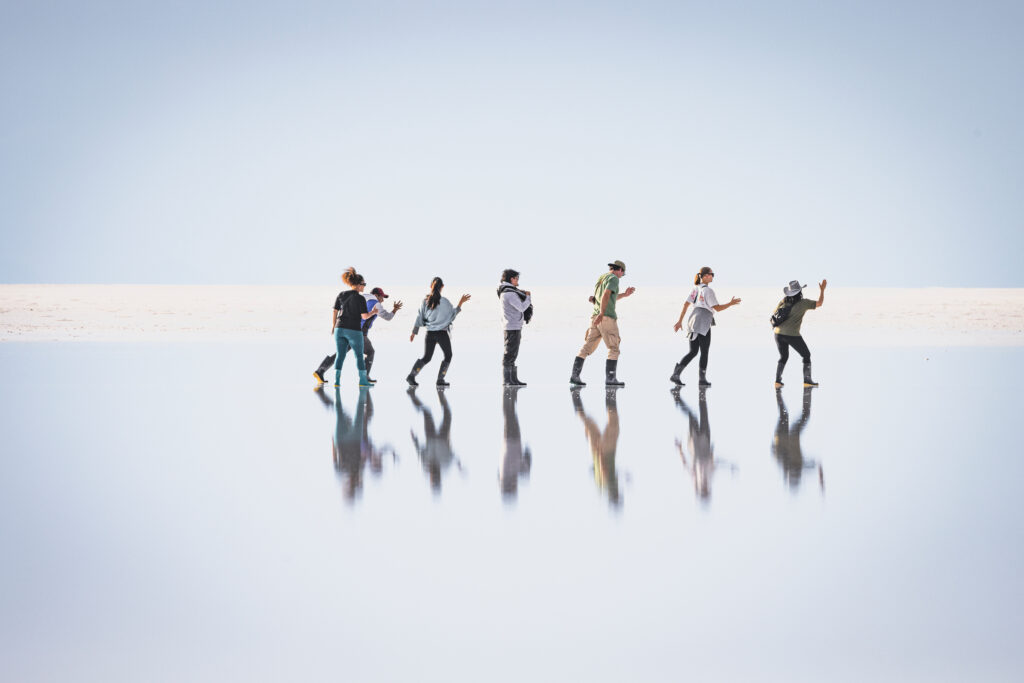
After lunch, a long and intense day begins. We will head out to the salt flat to photograph the sunset over the water: the reflections, the light changing colour by the minute, the sensation of being suspended between two skies. We will have dinner in the field or back at the hotel, and when darkness falls our first night photography session will begin.
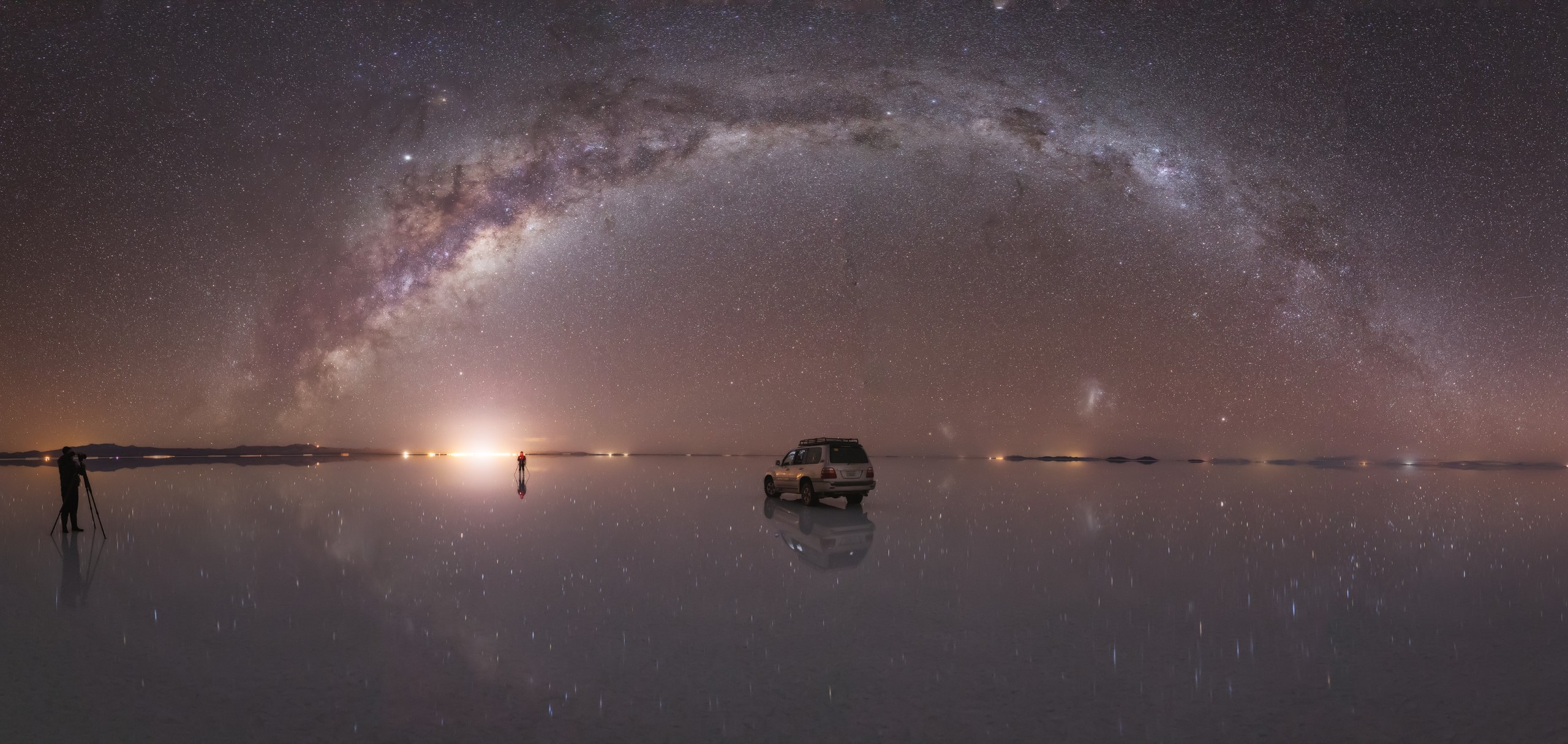
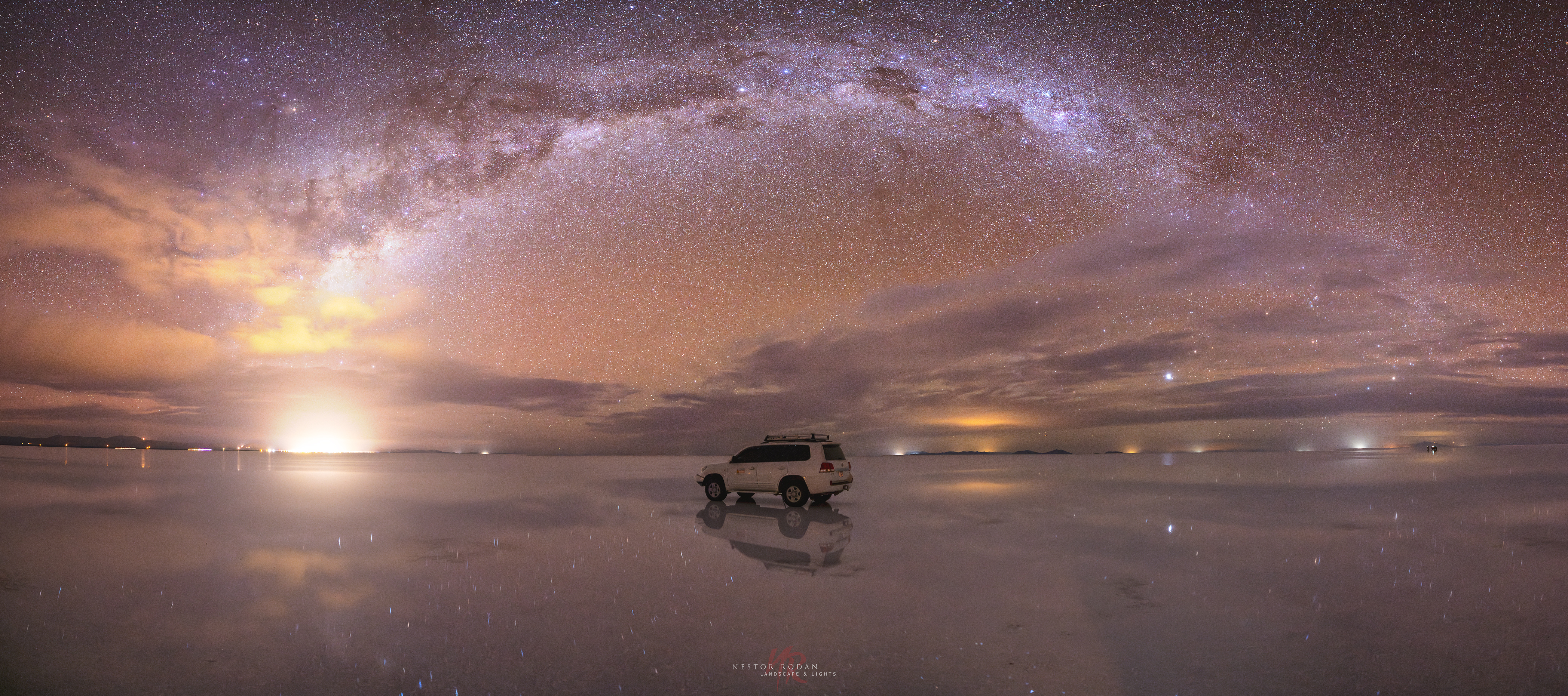
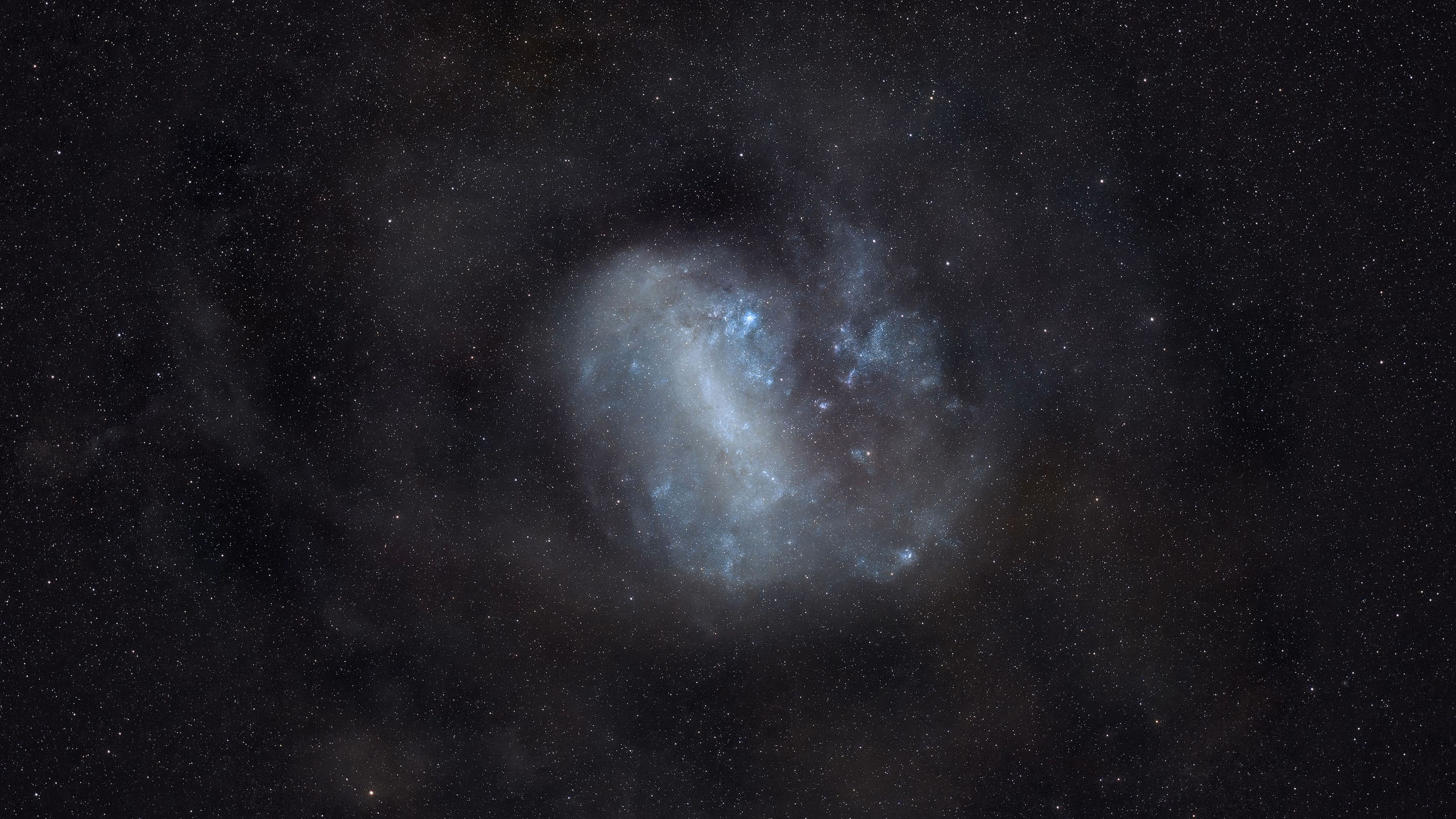
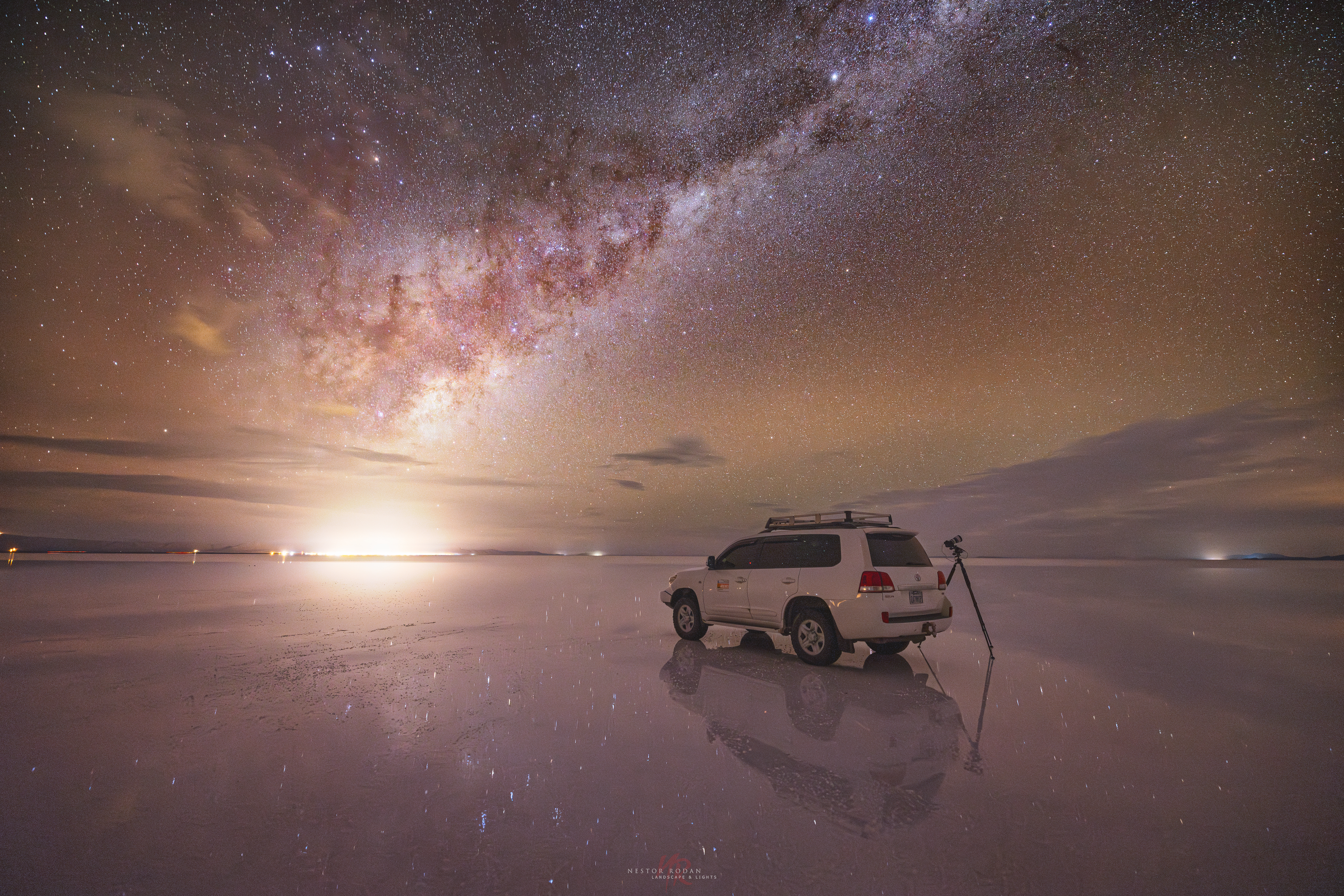
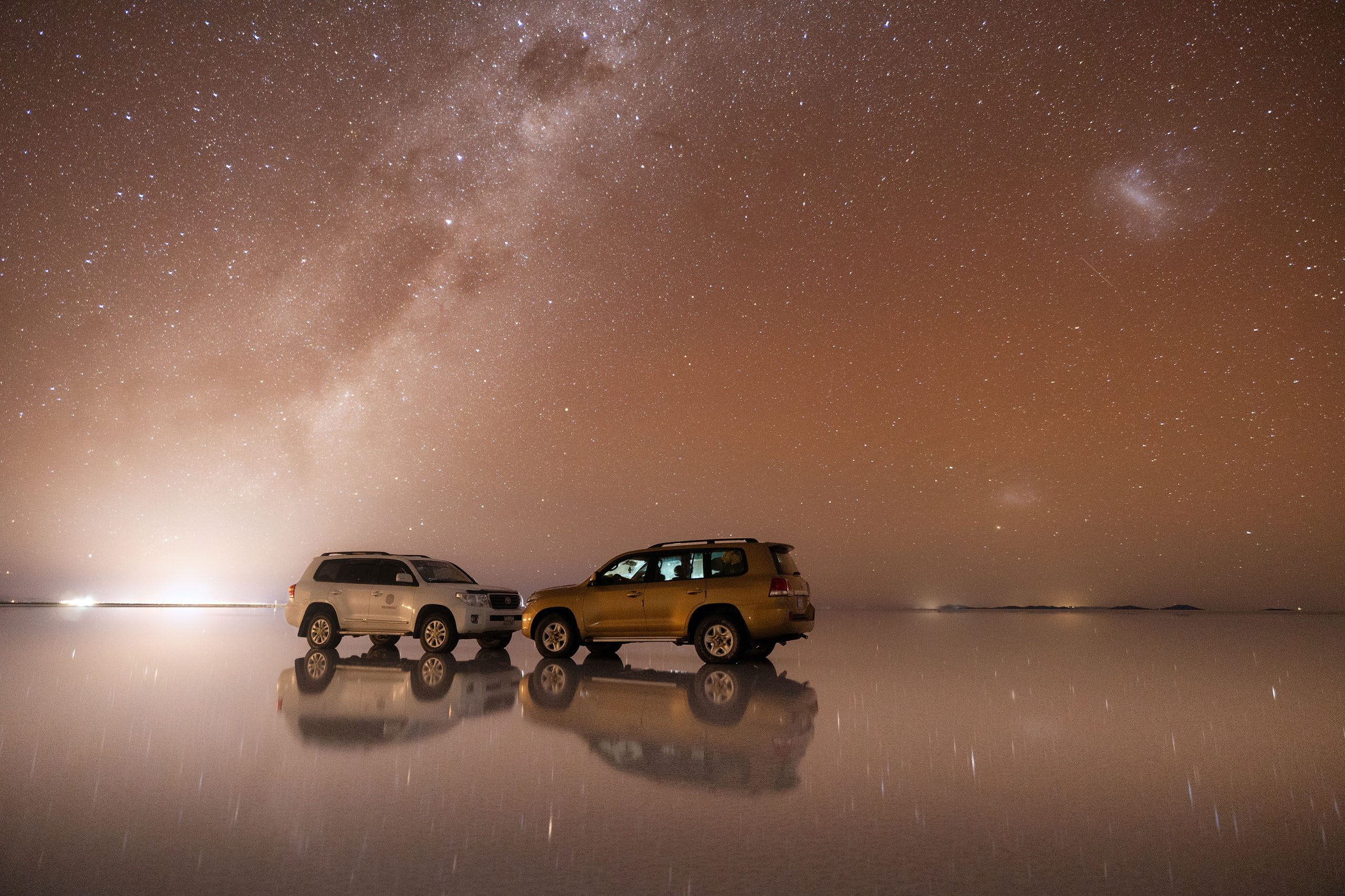
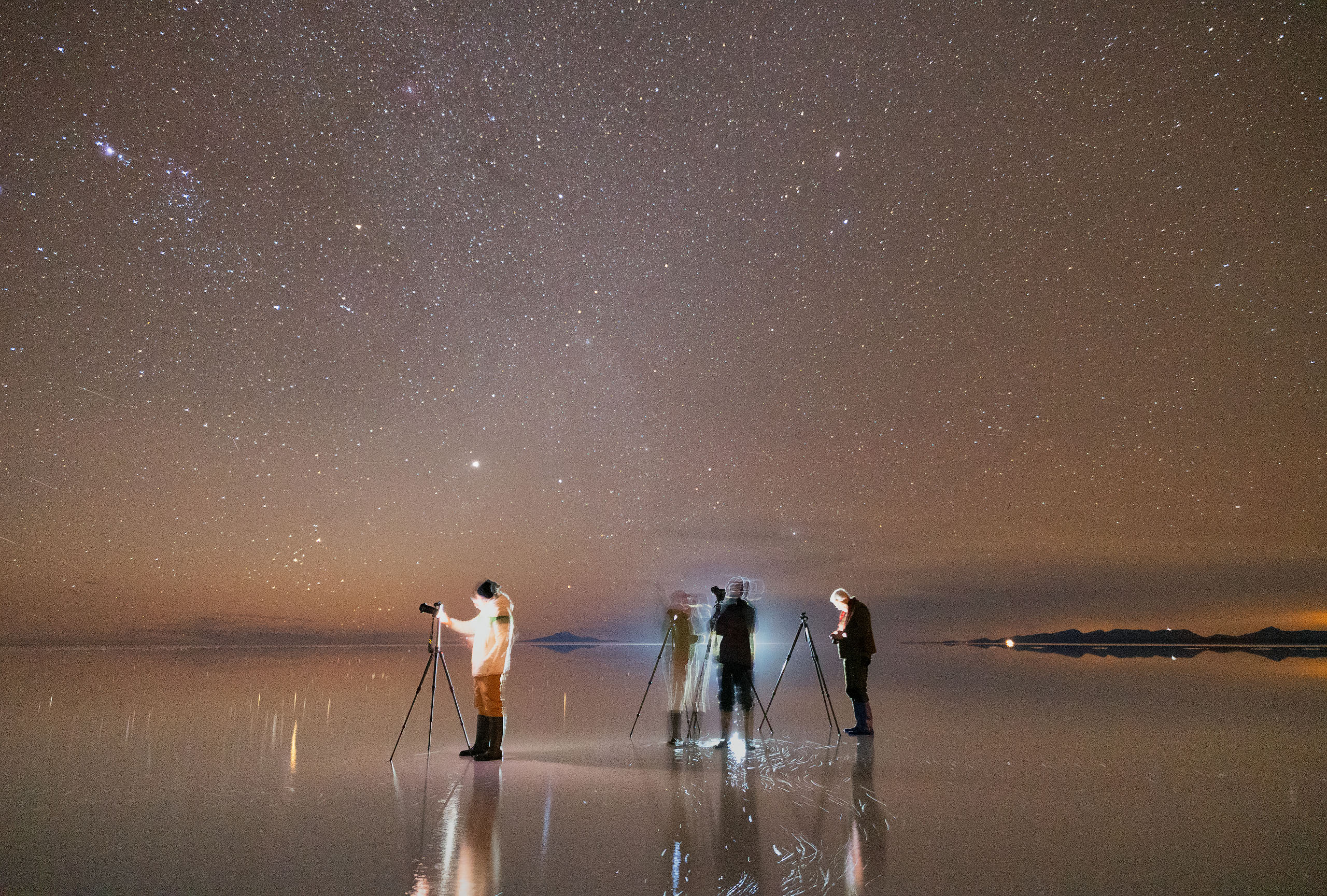
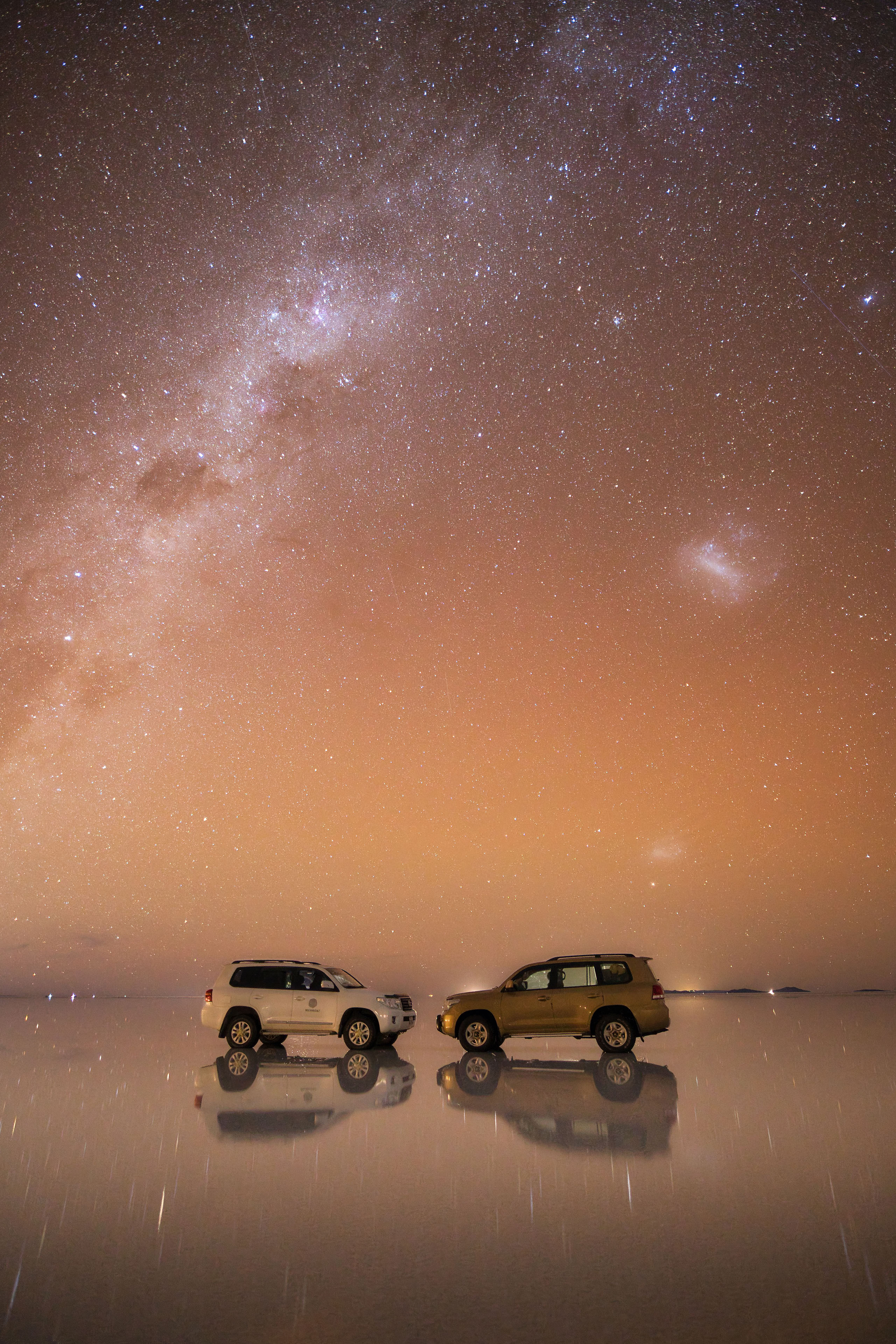
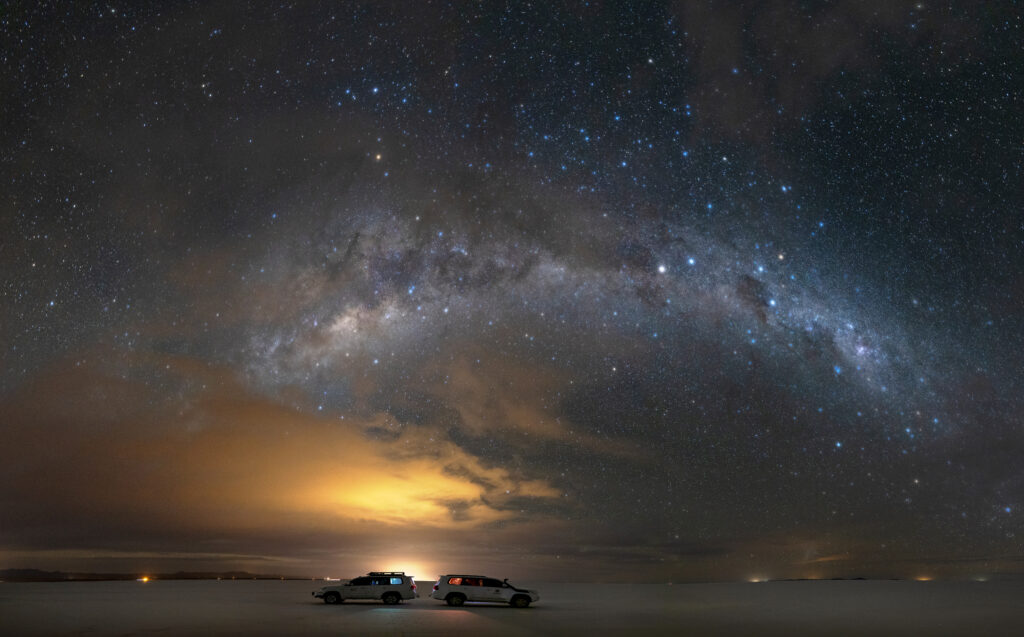
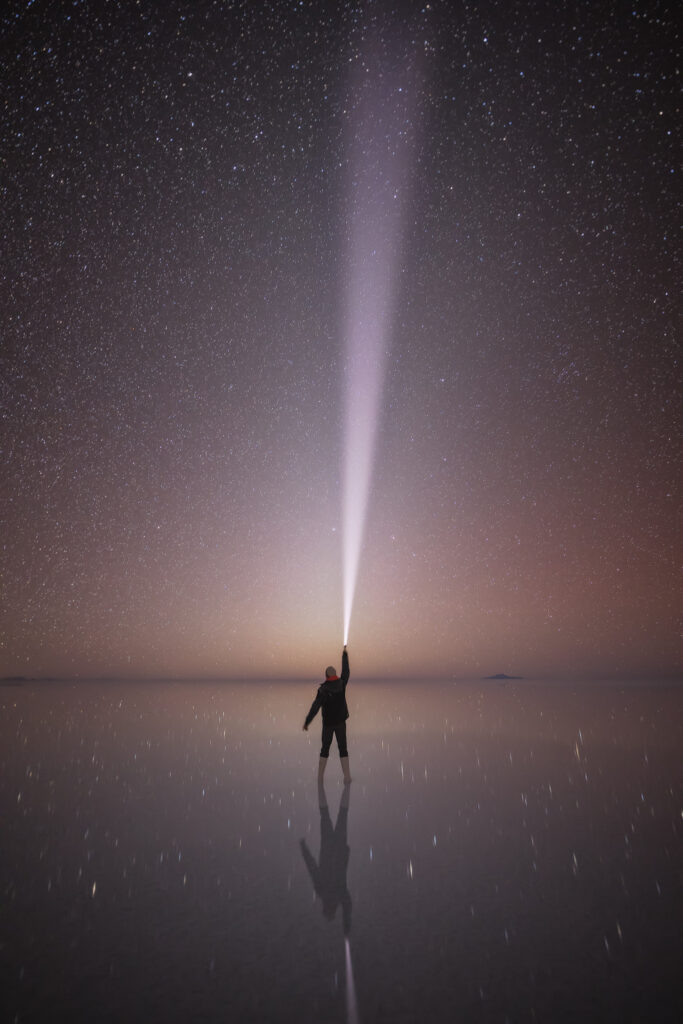
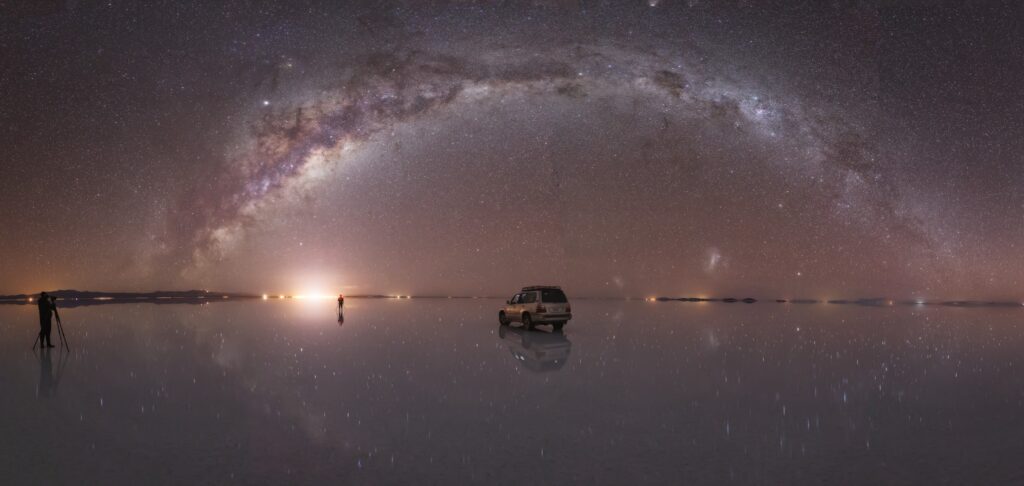
The goal of this night will be to capture the complete arc of the Milky Way reflected in the waters of the salt flat, and to explore the textures and shapes that the salt forms on the surface. A first encounter with the southern hemisphere sky before the great nights ahead.
Day 4 will begin with a quiet morning: rest after the first long night, backup of the material onto an external hard drive, and free time to stroll around Uyuni.
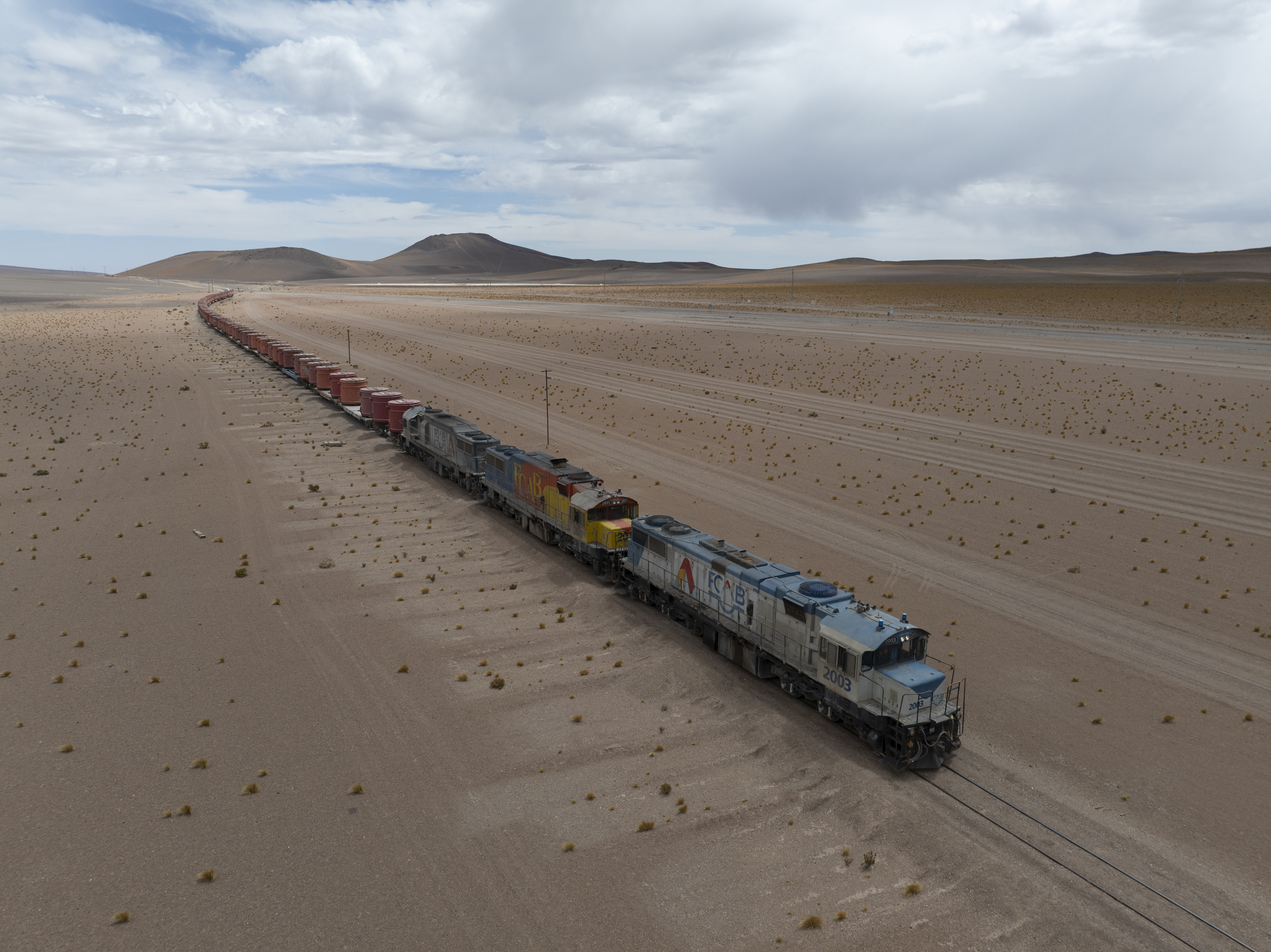
In the afternoon we will head to the Train Cemetery. Locomotives and wagons from the 19th century, rusted by the salty wind and the UV radiation of the altiplano — the same machines that transported silver and tin minerals to Chilean ports when Bolivia still had access to the sea. A place that radiates history and texture in every centimetre of corroded metal.
The light between 15:00 and 17:30 h is raking and warm, perfect for working with a wide-angle lens at ground level and a telephoto lens for rust details. As the day fades, the locomotives become the perfect foreground for the sunset, either from within the cemetery itself or moving to the edge of the salt flat.
With the moon at 4%, darkness arrives quickly after twilight. If the group has energy, staying to do light painting on the oxidised metal with the stars as a backdrop is one of the most powerful images of the trip.
Every night, astrophotography will optionally be available even if it is not on the programme.
Day 5 will begin before dawn. We will set out while darkness still lingers, arriving at the salt flat in time to watch the sky open in orange and pink tones over the infinite white, on the way to the island.
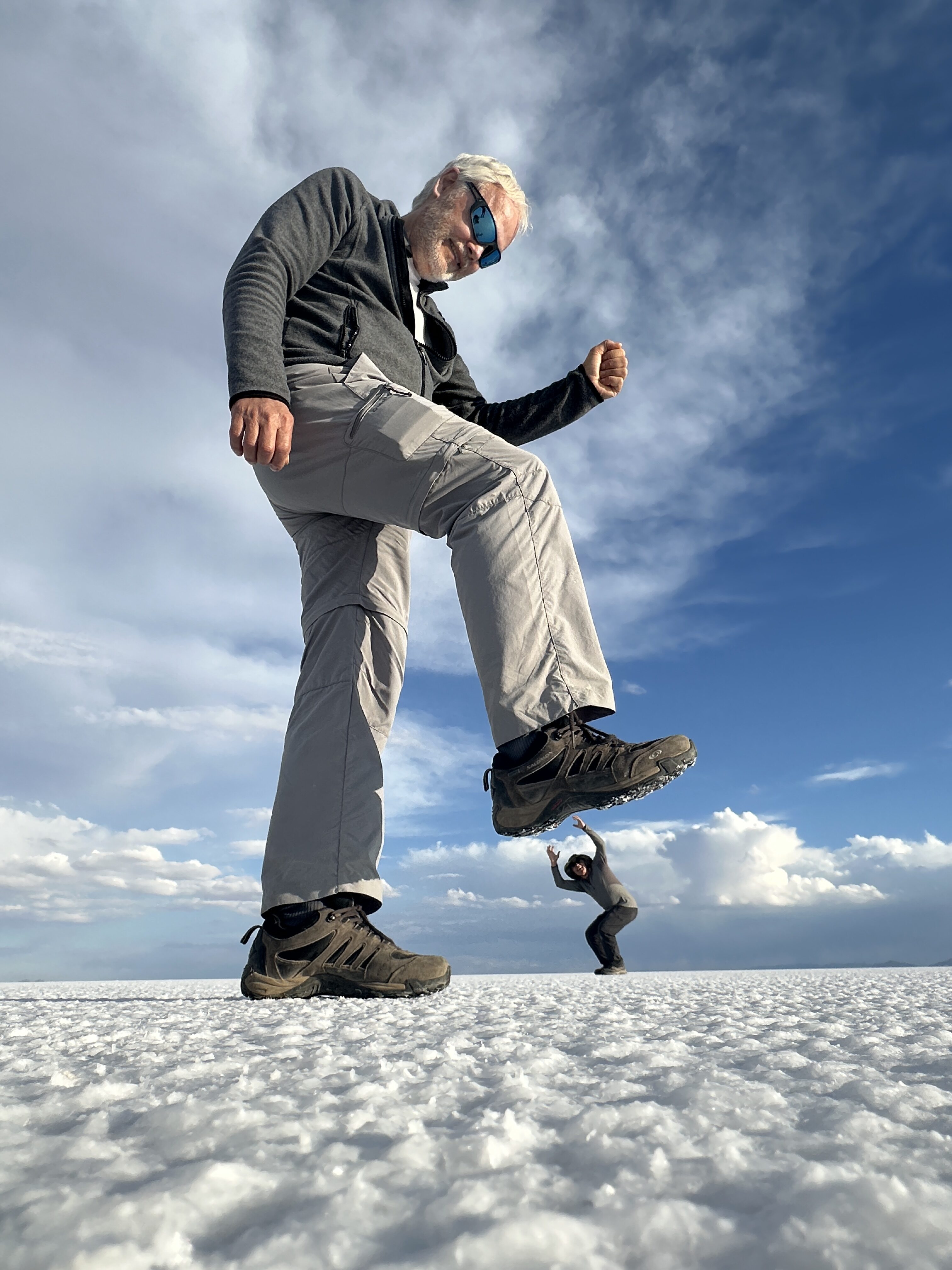
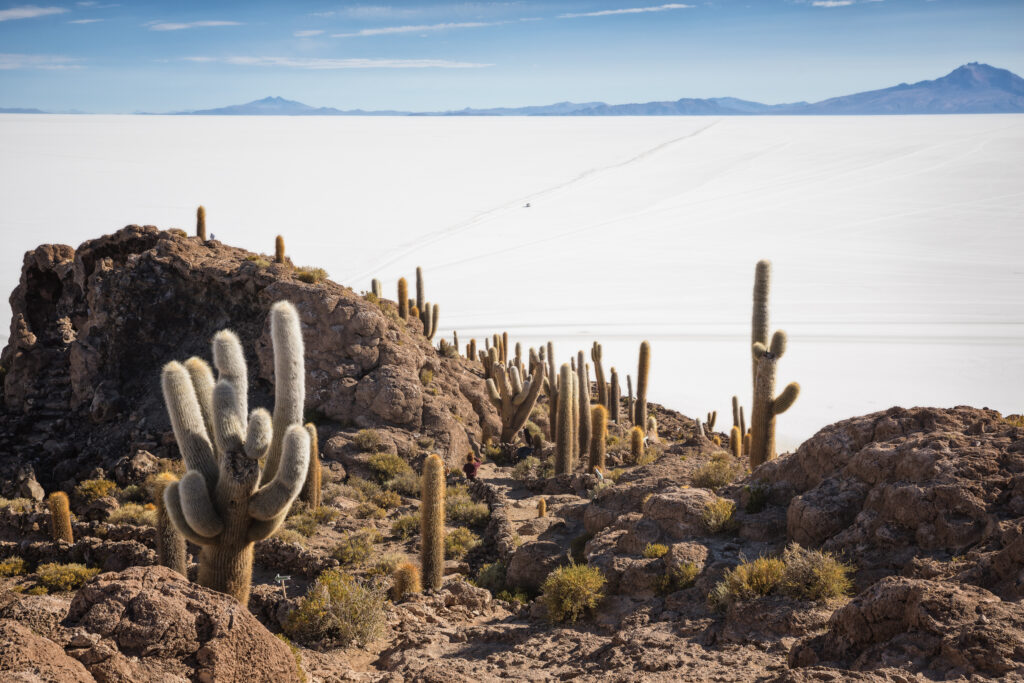
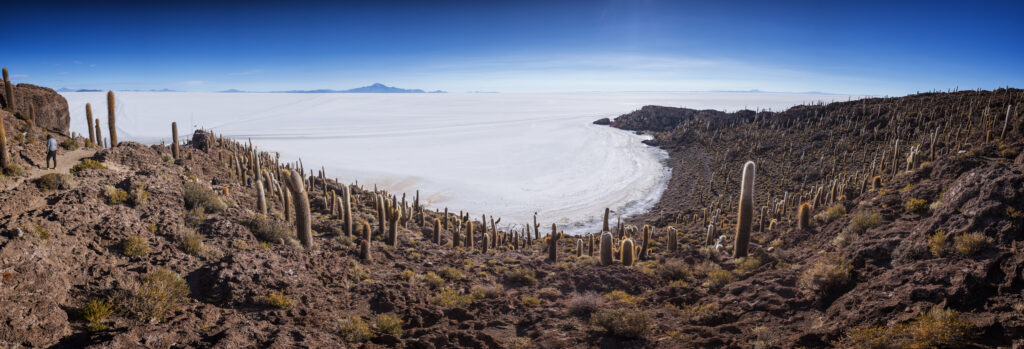
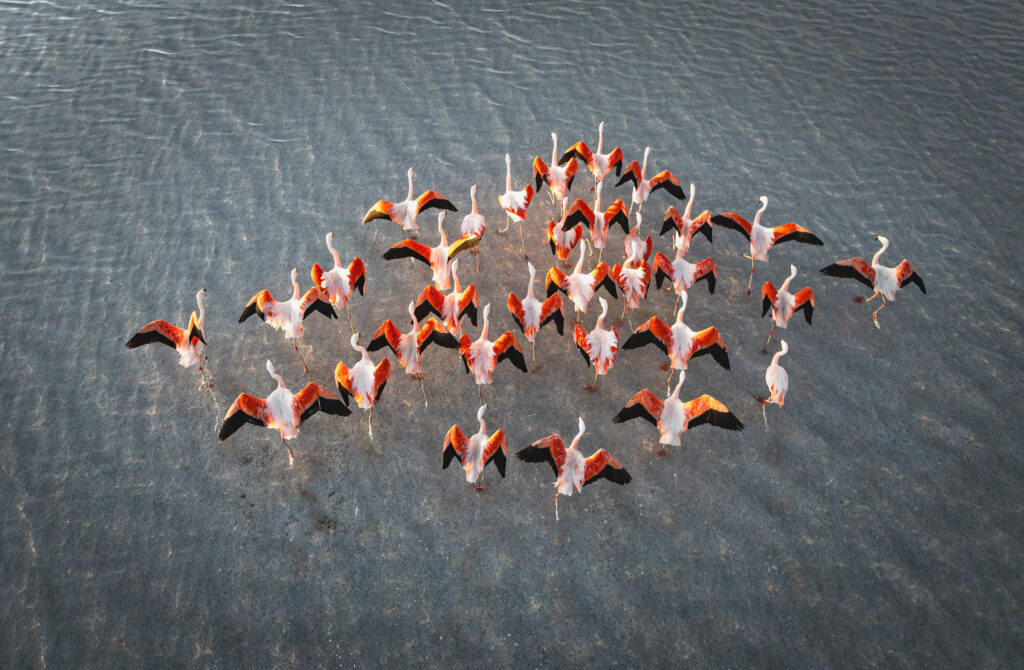
Incahuasi Island will occupy our entire morning and afternoon. Columnar cacti up to 10 metres tall and over 1,200 years old, growing on a fossilised coral reef in the middle of the salt flat. We will work every angle: the path between the cacti with extreme perspective, the views over the salt flat from the top of the island, compositions against the deep blue altiplano sky. If flamingos are in the area, we will photograph those too. Reference focal lengths: 16–35mm for general context and 70–200mm for the volcanoes on the horizon and cactus details. Lunch will be on the island or directly on the salt flat.
As the afternoon fades, what may well be the most iconic sunset of the trip will arrive: the centuries-old cacti silhouetted against a crimson sky, the white of the salt flat collecting the last colours of the day during the golden hour.
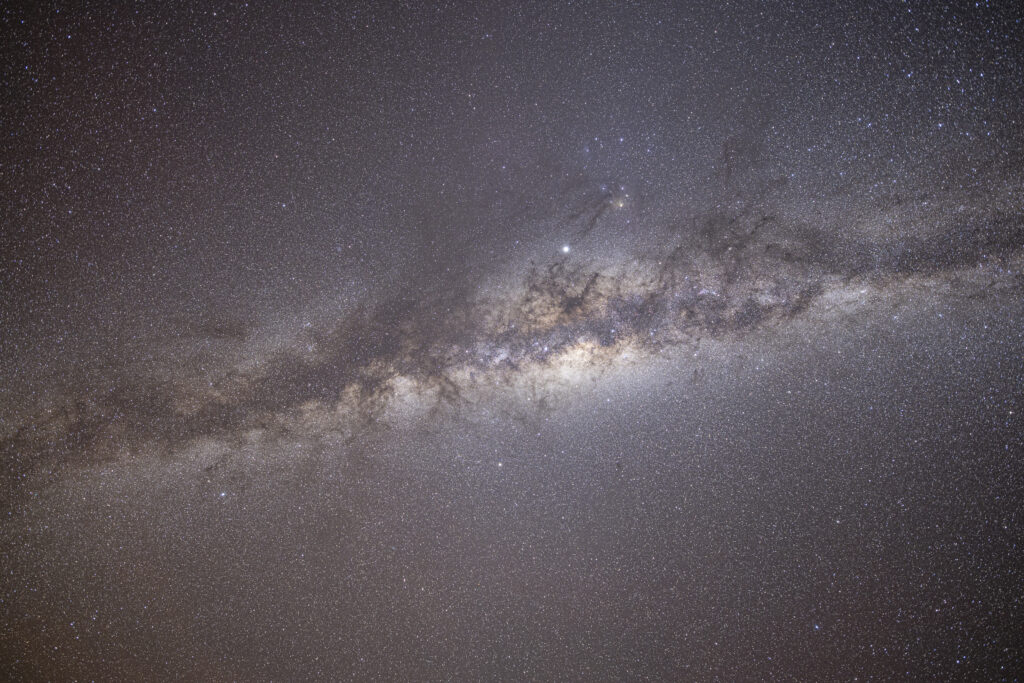
When darkness falls, the second best night of the trip begins, with just 1% moon. We will confirm the option on the spot depending on conditions and the group’s energy: staying on the island with the cacti as foreground and the rising Milky Way — with optional light painting —, or moving to the pure centre of the salt flat to work with a 360° horizon and maximum field of view. Temperature will drop to −12°C / −15°C. Battery warmers are mandatory from the very first moment.
After the long day before, Day 6 begins with a well-deserved morning of rest. Time to recover, review the material and recharge energy for what is coming that night.
The first activity of the day is at 17:30 h: heading out to the salt flat to photograph the sunset. Tonight coincides with the exact new moon, turning the following hours into the most anticipated session of the entire trip.
We will work the hexagonal salt structures, the reflections on the water, the complete arc of the Milky Way and the deep southern hemisphere sky in its full extent. With 0% lunar illumination and a completely clear horizon, the salt flat becomes the best natural observatory on the planet. A night to photograph without rush, with intention and with all the time needed.
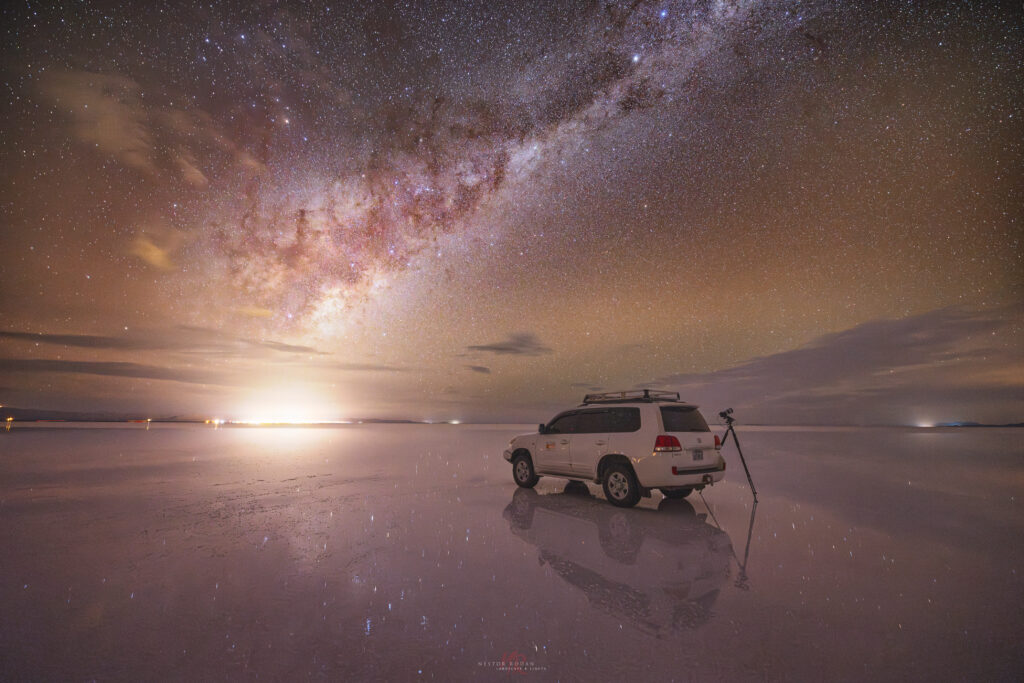
We will set out early in 4×4 vehicles heading south into the Eduardo Avaroa National Reserve. The route crosses one of the most inhospitable and cinematic landscapes of the Bolivian altiplano before reaching Laguna Verde, whose waters take on a colour between intense emerald and sky blue due to the high concentration of minerals: copper, arsenic and magnesium. A colour that seems impossible, and that shifts in hue as the wind stirs the sediment on the bottom.
At dawn, something difficult to forget takes place: Volcán Licancabur (5,916m), with its perfect snow-capped cone, reflects on the cold waters of the lagoon. A natural symmetry that only exists during the first minutes of light, when the wind has not yet rippled the surface. Alongside it, Laguna Blanca — milky white from calcium carbonate — offers a chromatic contrast that further enhances the scene.
This is one of those locations that demands arriving before dawn and simply waiting for the light to do its work.
Day 8 begins with another morning of rest. The last one of the trip. Time to review the material, complete the final backup and prepare the equipment for the return journey.
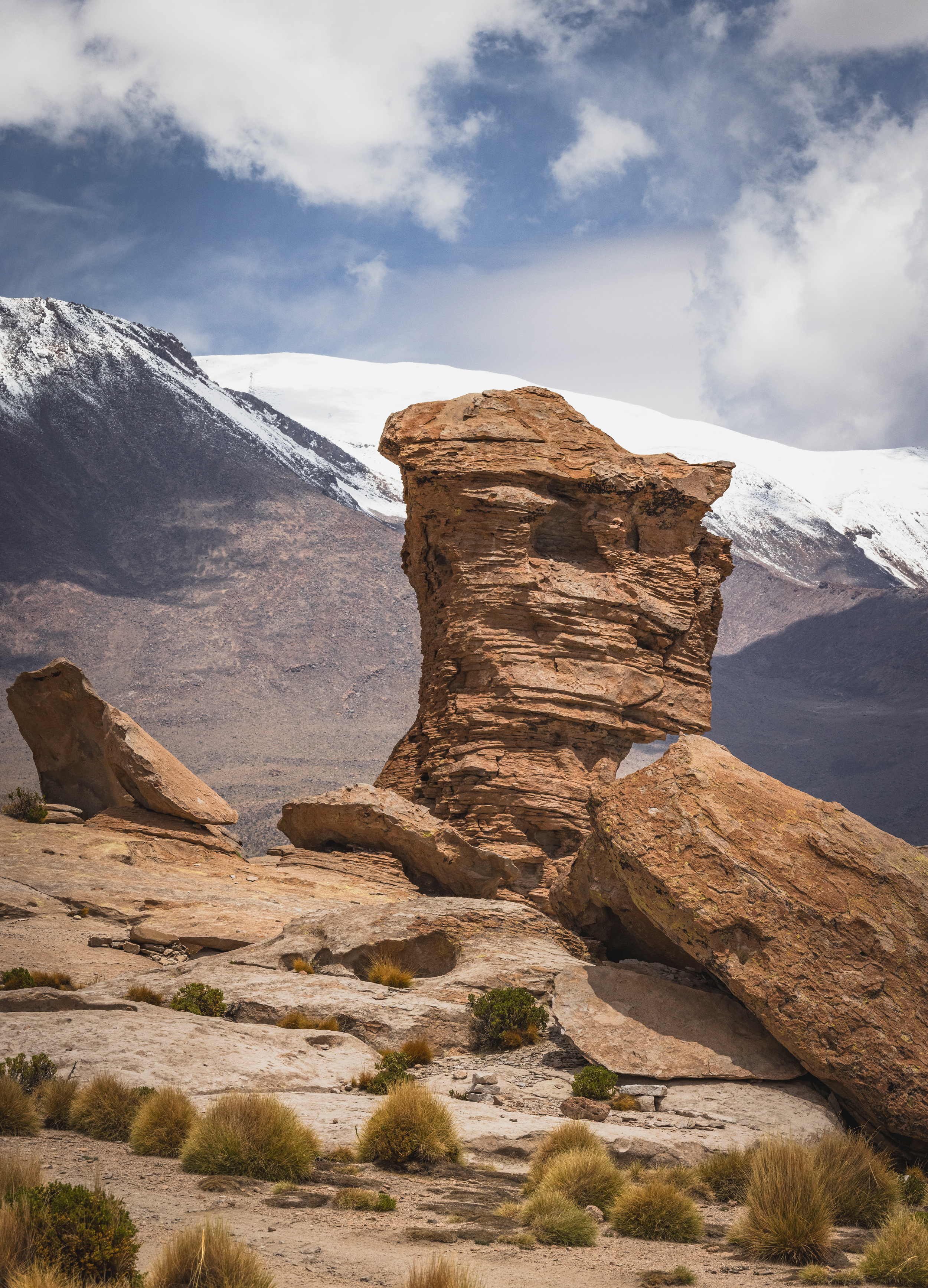
In the afternoon, for those with energy, we propose an optional excursion to the Stone Tree and the Dalí Desert. A 7-metre volcanic rock sculpted over millennia by sand-laden wind, with the base so eroded that the silhouette seems to defy physics. The desert surrounding it — multicoloured volcanic sand, turquoise lagoons, snow-capped volcanoes on the horizon — is the most surreal setting in the entire reserve. The kind of landscape that makes you stop and stare without quite knowing why.
At 17:30 h we will head out to photograph the last sunset of the trip. Without the pressure of the first days, with the eye already calibrated and the shots already made: the perfect moment to enjoy the light at ease.
When night falls, the last night session will also arrive. With the moon at 4% the sky remains excellent. This is not a night to repeat what has already been photographed, but to experiment: compositions not yet tried, light painting, different framings. The last night always holds a surprise.
On this day we will rise early one last time, but without a camera in hand. From Uyuni we will board the return flight to our city of origin, closing an expedition that, in all likelihood, will have changed the way we see light, silence and the horizon.
Your guides
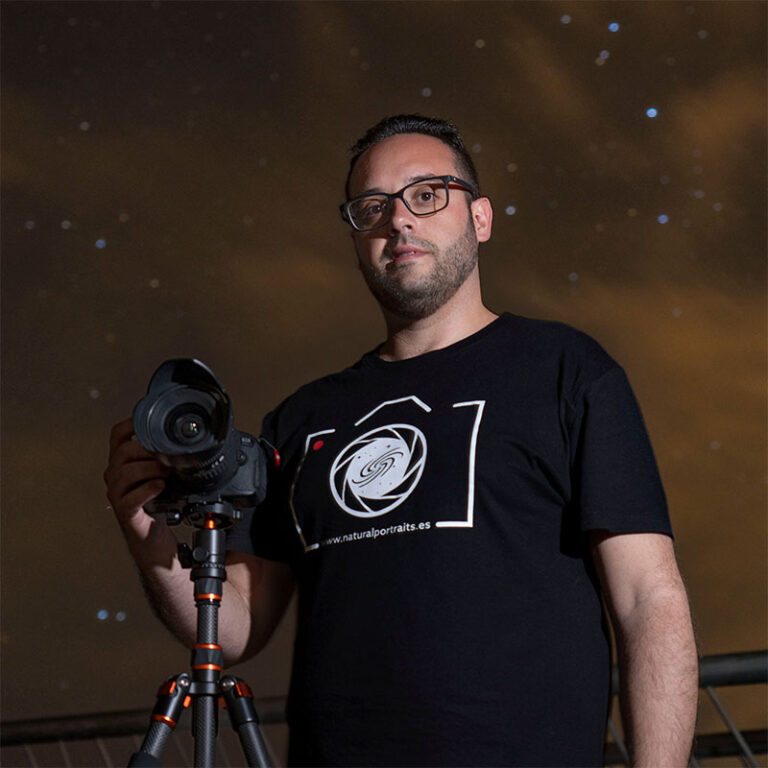
Professional Photographer
Luis Miguel Azorín
My name is Luis Miguel Azorín and I am the content creator behind the YouTube channel "Natural Portraits" With a restless mind and a great…