
Patagonian Autumn 2027
Expeditions · Sudamerica
Patagonian Autumn 2027
Torres del Paine - Glaciar Grey - Perito Moreno - Fitz Roy -El Chaltén
At a glance
About the expedition
Some places never leave you. Patagonia is one of them.
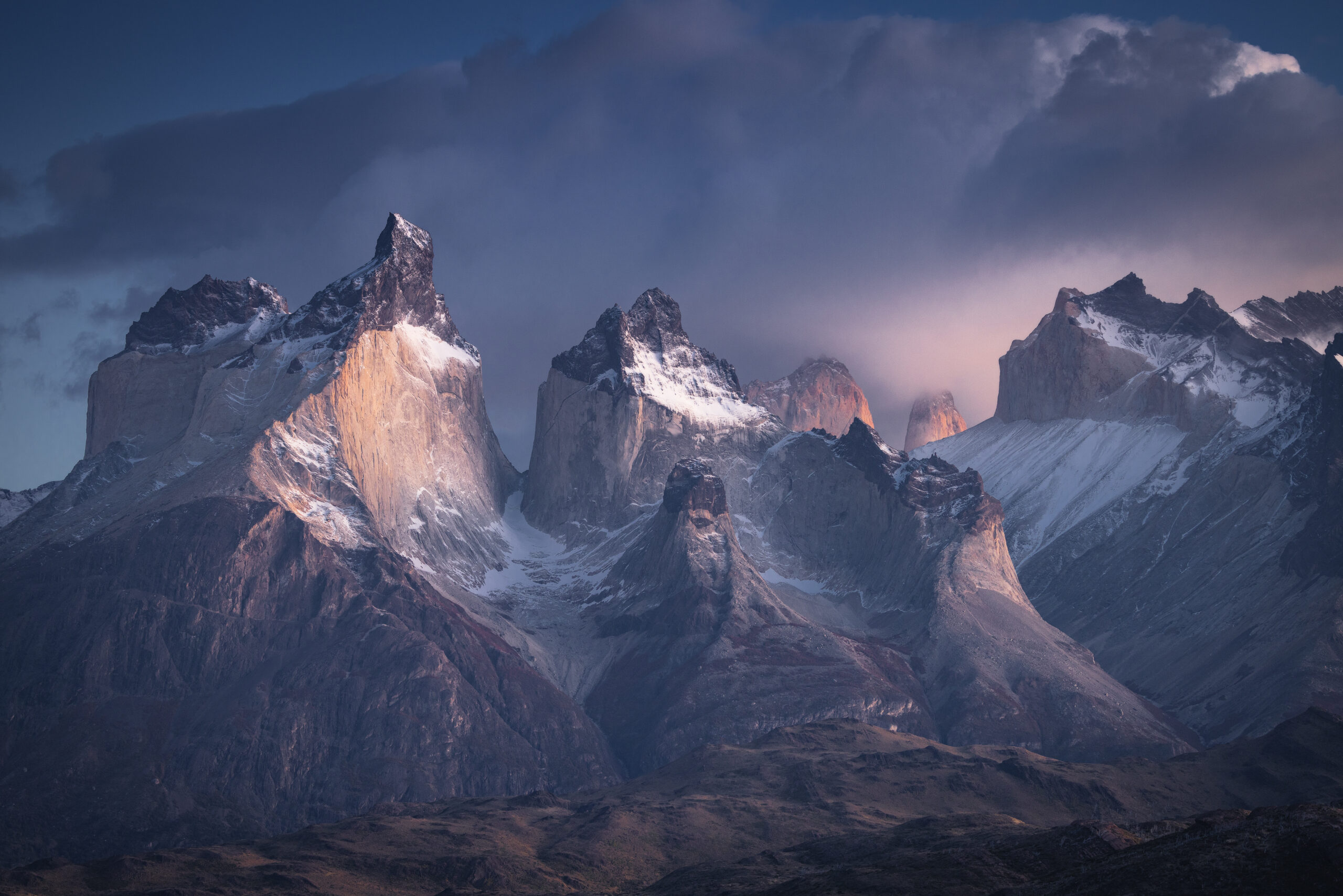
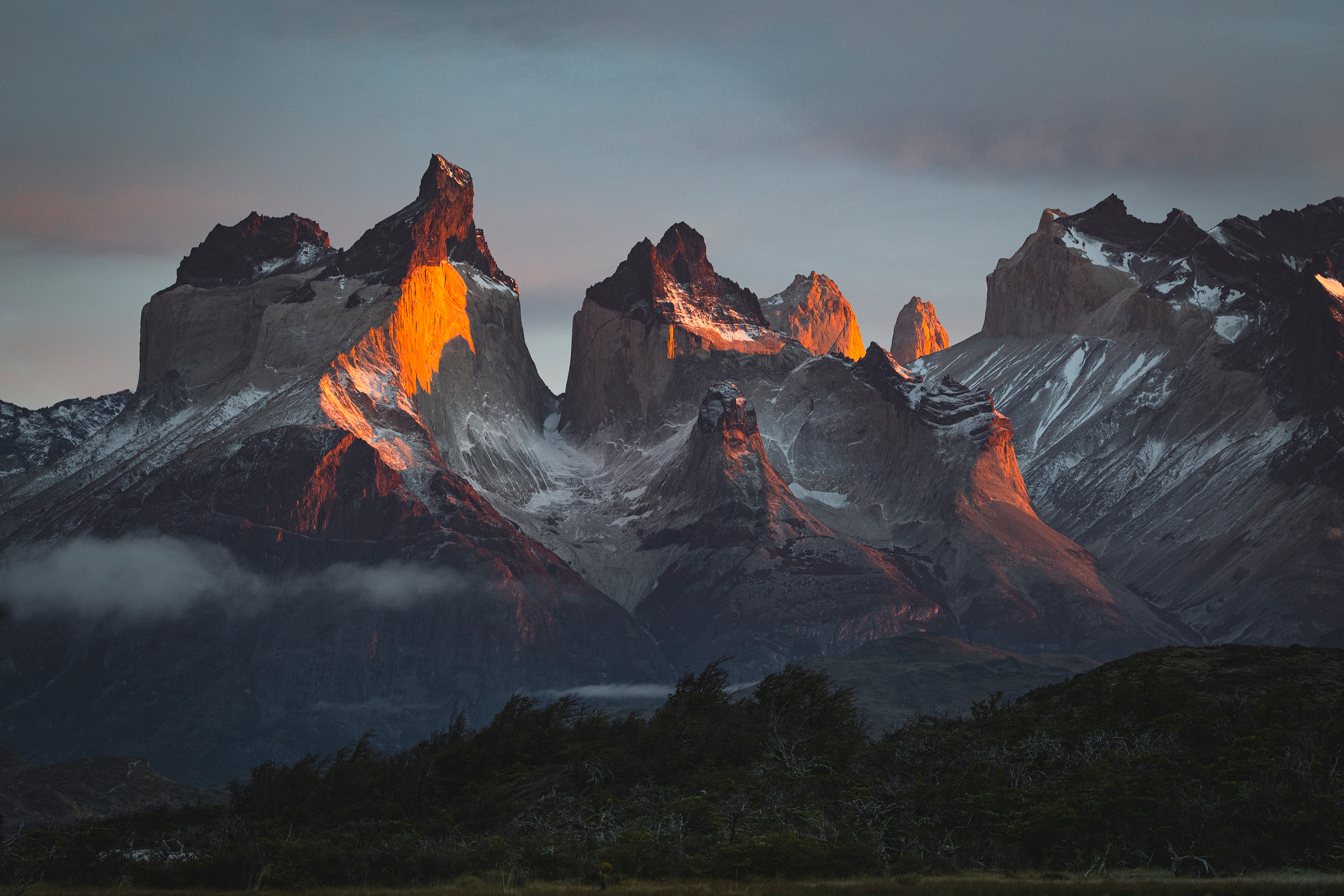
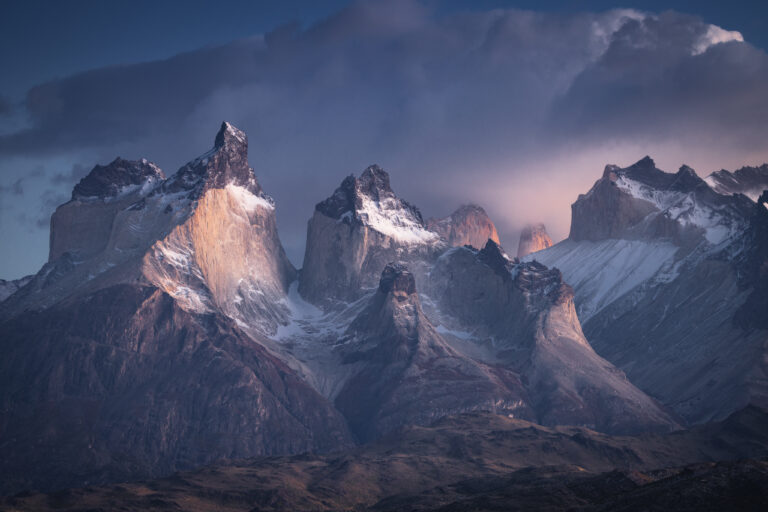
Its granite Towers pierce the sky with a geological arrogance that stops your pulse cold. The wind sweeps the steppe with a raw violence that belongs to another world entirely. And yet —right at that edge— the autumn light turns everything into something extraordinary.
In my more than five expeditions to this region I have learned that Patagonia does not reveal itself to those who arrive in a hurry.
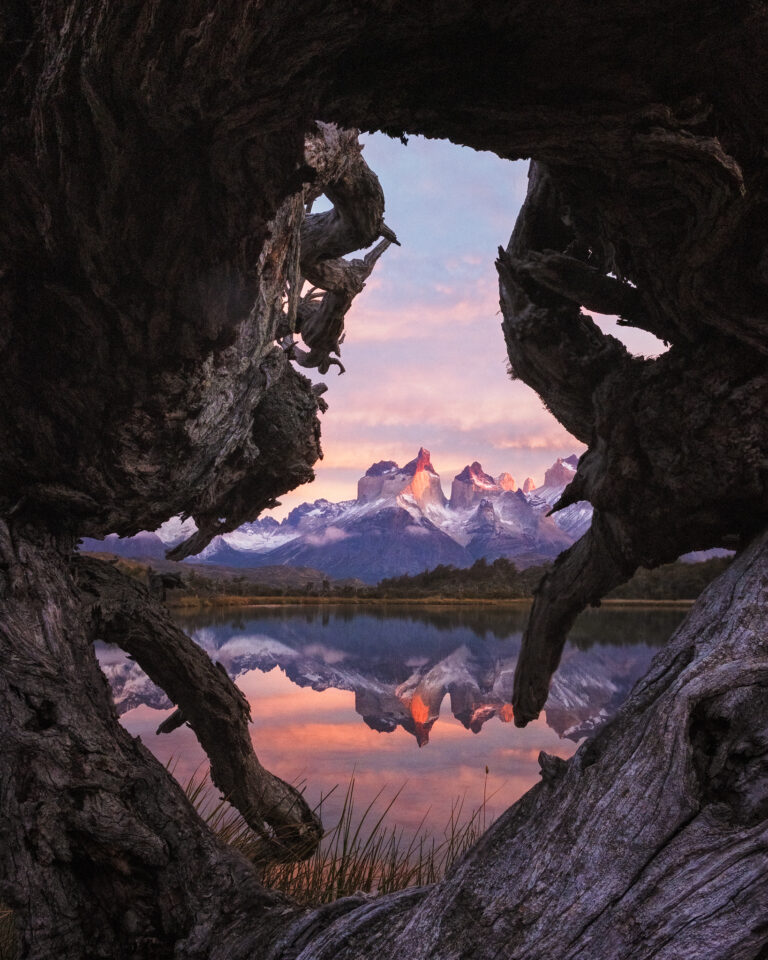
It gives itself to those who know how to wait: to those who hold position for the precise moment the clouds part above the Cuernos del Paine, to those who accept an alarm before dawn in Chaltén when the Fitz Roy begins to glow coral with the first light, to those who know exactly which bank of Lago Pehoé produces the perfect reflection before the wind shatters it.
This expedition is not tourism.
It is a sixteen-day photographic immersion, guided by field knowledge, with the best spots in Chile and Argentina selected through years of itineraries, mistakes, and discoveries.
You will travel with someone who has already made the errors — so that all you need to do is shoot.
The timing is no accident.
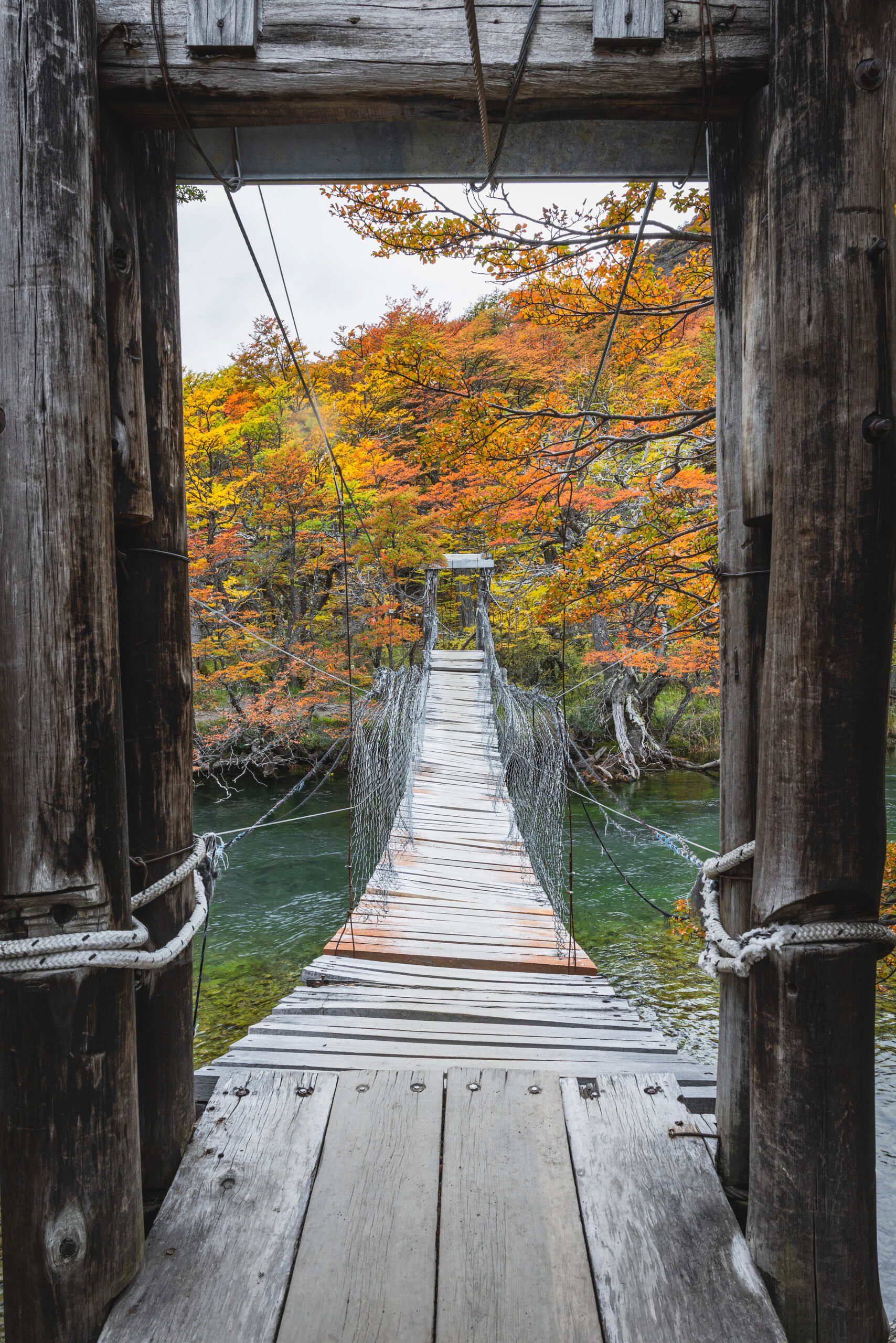
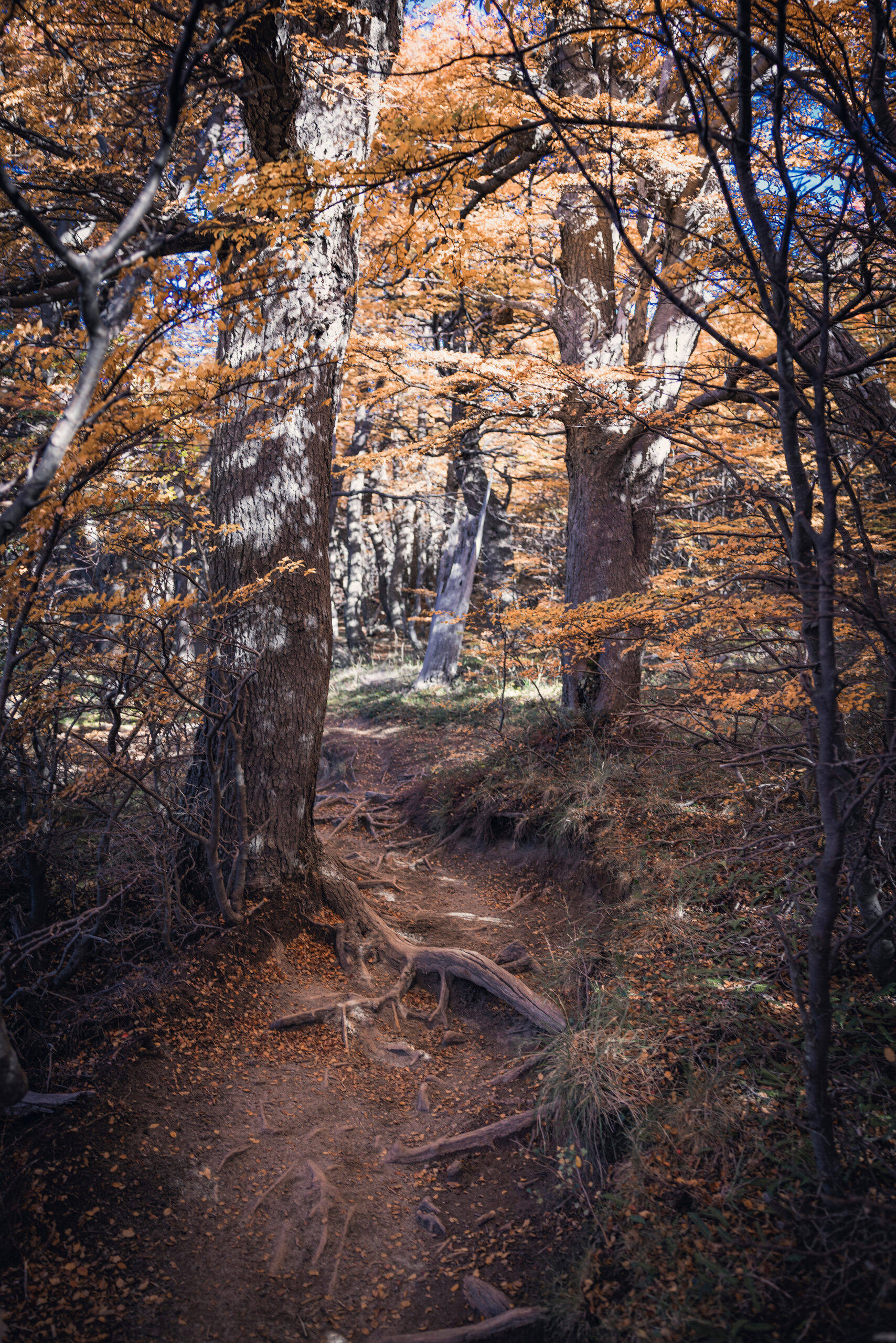
Late March is austral autumn in Patagonia: the lenga and ñire beech forests begin to burn in ochres, oranges, and reds. The wind eases. The days become far more manageable for photography —golden hour lasts longer and strikes lower— and the parks hold dramatically fewer visitors.
It is the perfect window for the photographs that most people never capture because they travel in the wrong season.
La Patagonia es uno de ellos.
Sus Torres de granito se clavan en el cielo con una arrogancia geológica que paraliza el pulso. El viento barre la estepa con una violencia propia de otro mundo. Y sin embargo —justo en ese borde— la luz de otoño lo convierte todo en algo extraordinario.
En mis más de cinco expediciones a esta región he aprendido que la Patagonia no se entrega al que llega con prisa.
Se regala al que sabe esperar: al que aguarda el momento preciso en que las nubes abren un resquicio sobre los Cuernos del Paine, al que acepta madrugar en Chaltén cuando el Fitz Roy se tiñe de coral con la primera luz, al que conoce exactamente en qué margen del Lago Pehoé se produce el reflejo perfecto antes de que el viento lo rompa.
Esta expedición no es turismo.
Es una inmersión fotográfica de dieciséis días, guiada desde el conocimiento de campo, con los mejores spots de Chile y Argentina seleccionados tras años de itinerarios, errores y hallazgos.
Viajarás con alguien que ya ha cometido los fallos para que tú solo tengas que disparar.
La fecha no es casual.
Finales de marzo es otoño austral en la Patagonia: los bosques de lenga y ñire comienzan a arder en ocres, naranjas y rojos. El viento amaina. Los días se hacen más manejables para la fotografía —la hora dorada dura más y golpea más bajo— y los parques tienen muchísimos menos visitantes.
Es la ventana perfecta para hacer las fotografías que la mayoría nunca obtiene porque viaja en la temporada equivocada.
- Torres del Paine
- Glaciar Grey
- Perito Moreno
- Fitz Roy
- El Chaltén
Itinerary
Day by day
-
1
Day 1 · Monday, March 16 · MADRID — BUENOS AIRES / SANTIAGO
Departure from Madrid. The journey begins with your mind already fixed on the southern end of the world. Depending on your chosen connection, you will transit through Buenos Aires or Santiago de Chile before continuing toward the…
Read the full day
Departure from Madrid. The journey begins with your mind already fixed on the southern end of the world. Depending on your chosen connection, you will transit through Buenos Aires or Santiago de Chile before continuing toward the far south of South America. A long flight best spent resting — what comes next demands energy.
-
2
![Picos nevados de las Torres del Paine al atardecer, Patagonia, Chile]()
Day 2 · Tuesday, March 17 · ARRIVAL IN PUNTA ARENAS · TRANSFER TO TORRES DEL PAINE NP
We land in Punta Arenas in the early morning — gateway to Chilean Patagonia. Rental vehicles collected and we drive to Torres del Paine National Park. The road itself is already a preview: the Patagonian steppe stretches infinite…
Read the full day
We land in Punta Arenas in the early morning — gateway to Chilean Patagonia. Rental vehicles collected and we drive to Torres del Paine National Park. The road itself is already a preview: the Patagonian steppe stretches infinite beneath a cinematic sky, and the first guanacos appear roadside as if welcoming us to the south.
On this drive we begin training the eye. The steppe holds a horizontal, clean light that invites you to stop the car and shoot. We are not in a hurry. We know exactly where to pull over.
Check-in at our accommodation inside the park. We review the gear, calibrate the tripods and walk through the plan for the days ahead.
En este trayecto empezamos a afinar el ojo. La estepa tiene una luz horizontal y limpia que invita a parar el coche y disparar. No tenemos prisa. Sabemos exactamente dónde parar.
Instalación en el alojamiento dentro del parque. Revisamos el material, calibramos los trípodes y repasamos el plan de los días siguientes.
-
3
![Vista desde cueva de roca erosionada hacia picos montañosos nevados reflejados en lago al atardecer en Patagonia]()
Day 3 · Wednesday, March 18 · CUERNOS DEL PAINE · SALTO GRANDE · LAGUNA AMARGA · LAGO AZUL
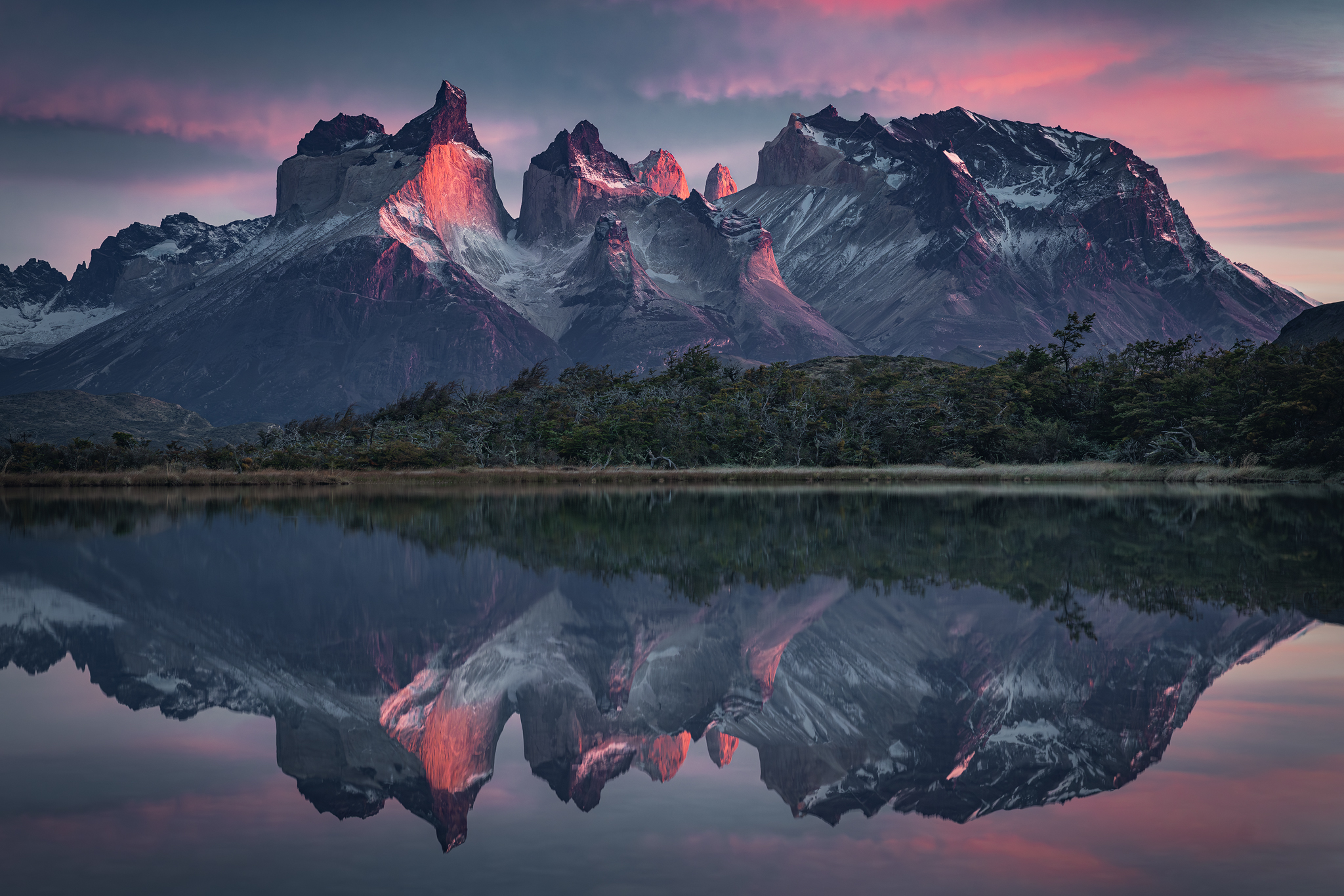
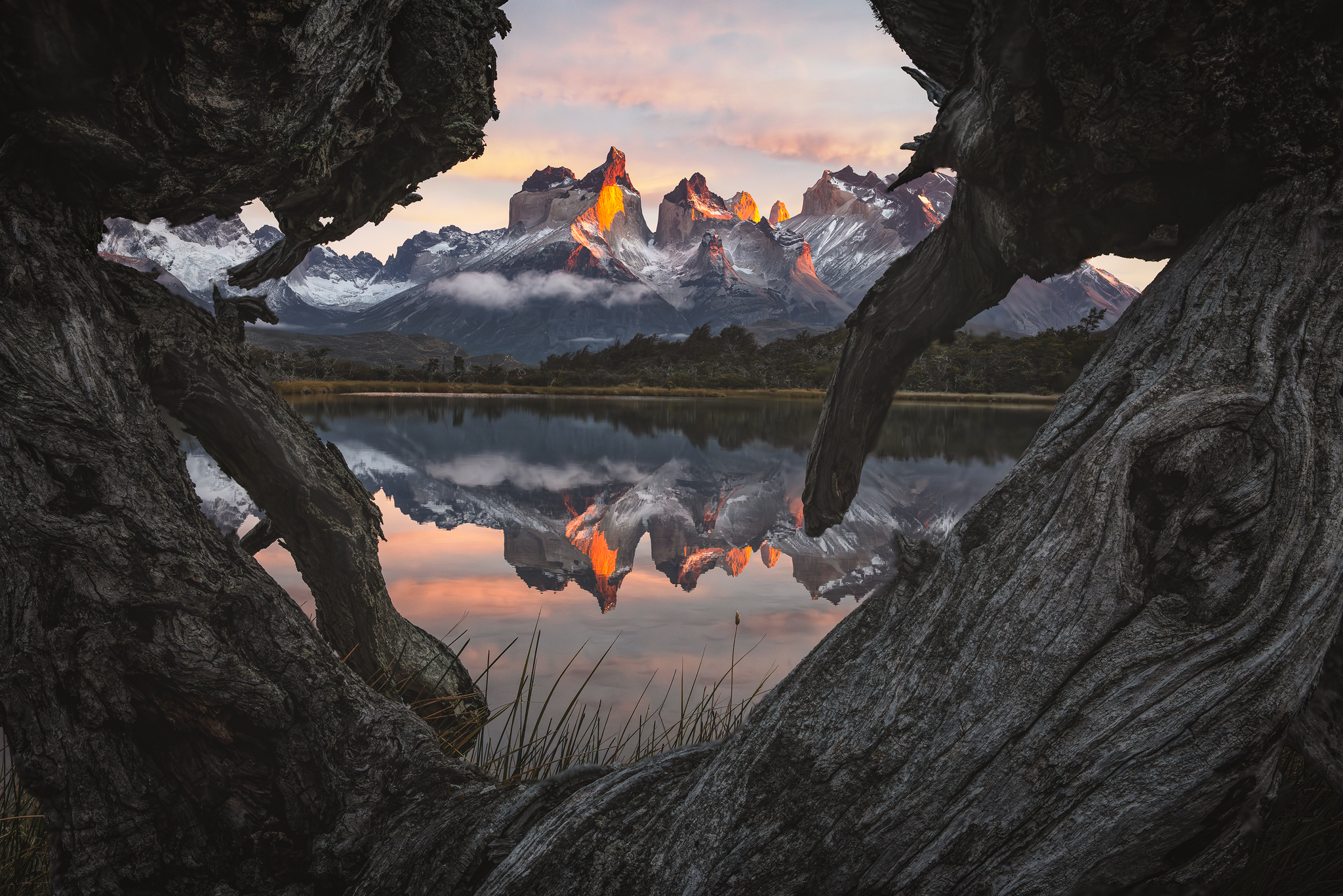
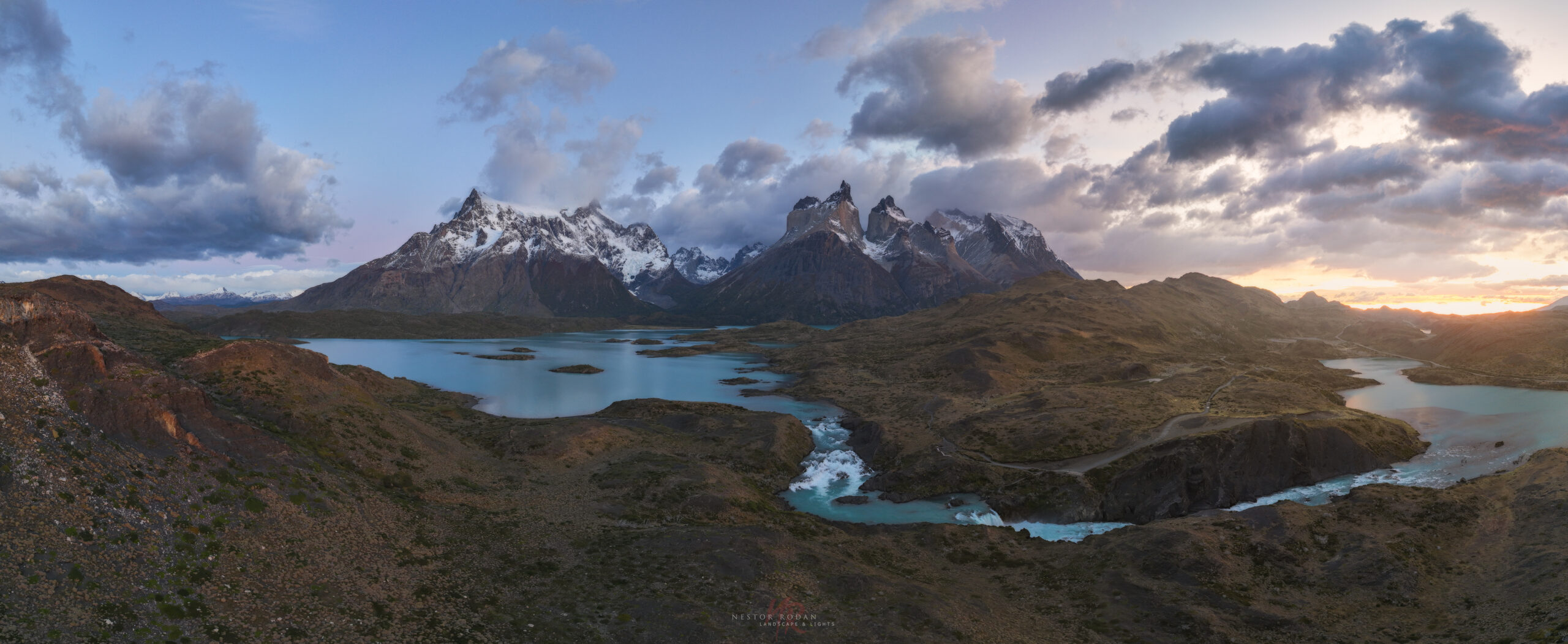
The alarm goes off before dawn. It will do so many times during this expedition, and it will always be worth it. We position ourselves on the shore of Lago Pehoé to capture the reflection of the Cuernos del Paine in its still…
Read the full day
The alarm goes off before dawn. It will do so many times during this expedition, and it will always be worth it. We position ourselves on the shore of Lago Pehoé to capture the reflection of the Cuernos del Paine in its still waters. With good weather and calm winds —and at this time of year the odds are considerably better than in summer— the natural mirror is of a perfection that takes your breath away.
Lo hará muchas veces durante esta expedición, y
siempre valdrá la pena.
Nos colocamos en la orilla del Lago Pehoé para captar
el reflejo de los Cuernos del Paine en sus aguas quietas.
Con buena meteorología y viento en calma —y en esta época del año las probabilidades son notablemente mejores que en verano—
el espejo natural es de una perfección que corta la respiración.
-
4
Day 4 · Thursday, March 19 · DAWN AT LAGO PEHOÉ · SOUTH LAGO GREY · GREY GLACIER
The alarm goes off before dawn. It will do so many times during this expedition, and it will always be worth it. We position ourselves on the shore of Lago Pehoé to capture the reflection of the Cuernos del Paine in its still…
Read the full day
The alarm goes off before dawn. It will do so many times during this expedition, and it will always be worth it. We position ourselves on the shore of Lago Pehoé to capture the reflection of the Cuernos del Paine in its still waters. With good weather and calm winds —and at this time of year the odds are considerably better than in summer— the natural mirror is of a perfection that takes your breath away.
I have witnessed this reflection five times. Only twice did the wind leave it intact for more than ten minutes. Knowing where and when to position yourself changes everything.
In the morning we walk south along Lago Grey, where a cove receives icebergs calved from the glacier and stranded on shores of dark sand. The chromatic contrast between the blue-white ice and the grey-green water of the lake is one of those visual discoveries that are hard to forget.
We continue to the Grey Glacier viewpoints, eastern arm of the Southern Patagonian Ice Field — the third largest reserve of fresh water on the planet. From several vantage points we contemplate and photograph this tongue of ice in perpetual motion, with the Paine massif as a backdrop.
He visto este reflejo cinco veces. Solo en dos de ellas el viento lo dejó intacto más de diez minutos. Saber dónde y cuándo posicionarse lo cambia todo.
Por la mañana caminamos hacia el sur del Lago Grey, donde una ensenada recibe los icebergs que se desprenden del glaciar y quedan varados en orillas de arena oscura. El contraste cromático entre el hielo azul-blanco y el agua gris verdosa del lago es uno de esos hallazgos visuales que difícilmente se olvidan.
Continuamos hasta los miradores del Glaciar Grey, brazo oriental del Campo de Hielo Patagónico Sur —el tercer mayor reservorio de agua dulce del planeta. Desde distintos emplazamientos contemplamos y fotografiamos esta lengua de hielo en movimiento perpetuo, con el macizo del Paine como telón de fondo.
-
5
![Glaciar Perito Moreno con enorme pared de hielo azul, bloques desprendidos flotando en laguna glaciar y embarcación de expedición al pie]()
Day 5 · Friday, March 20 · GREY GLACIER
We sail until we are positioned right in front of the glacier face. Just metres from a wall of ice sixty metres high that thunders, cracks and collapses without warning. The water changes colour as we approach —from grey-green to…
Read the full day
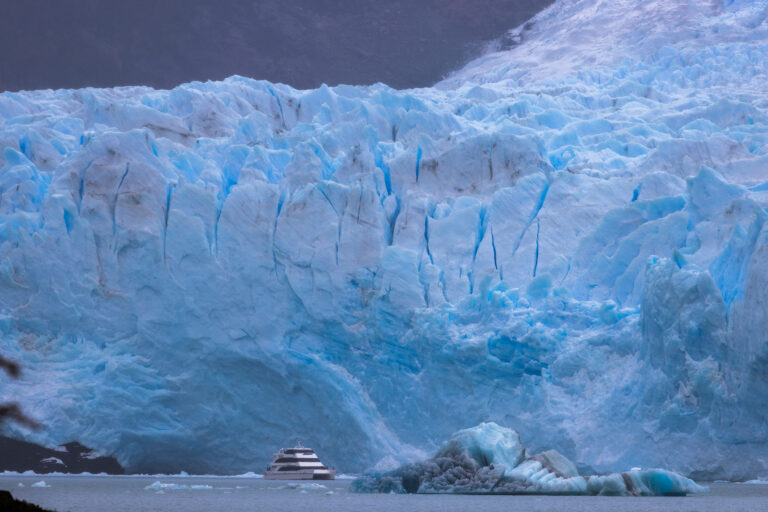
We sail until we are positioned right in front of the glacier face. Just metres from a wall of ice sixty metres high that thunders, cracks and collapses without warning. The water changes colour as we approach —from grey-green to deep blue— and the icebergs floating around us take on a scale that was impossible to imagine from land. The cold radiating from the ice mass is felt on your face. The shutter does not stop. It cannot stop.
It is one of those experiences that permanently changes the way you understand nature photography: when the distance disappears, the image takes on a completely different dimension.
Es una de esas experiencias que cambian para siempre la forma de entender la fotografía de naturaleza: cuando la distancia desaparece, la imagen cobra una dimensión completamente distinta.
-
6
![Torres del Paine con glaciar, lago turquesa y formaciones columna basáltica en la Patagonia chilena]()
Day 6 · Saturday, March 21 · TREKKING TO THE BASE OF THE TORRES DEL PAINE
Today we face the most demanding day of the Chilean section and the most iconic in the park: the ascent to the base lagoon of the Torres del Paine. A full trek —there and back— that lasts the entire day, climbing steep and rocky…
Read the full day
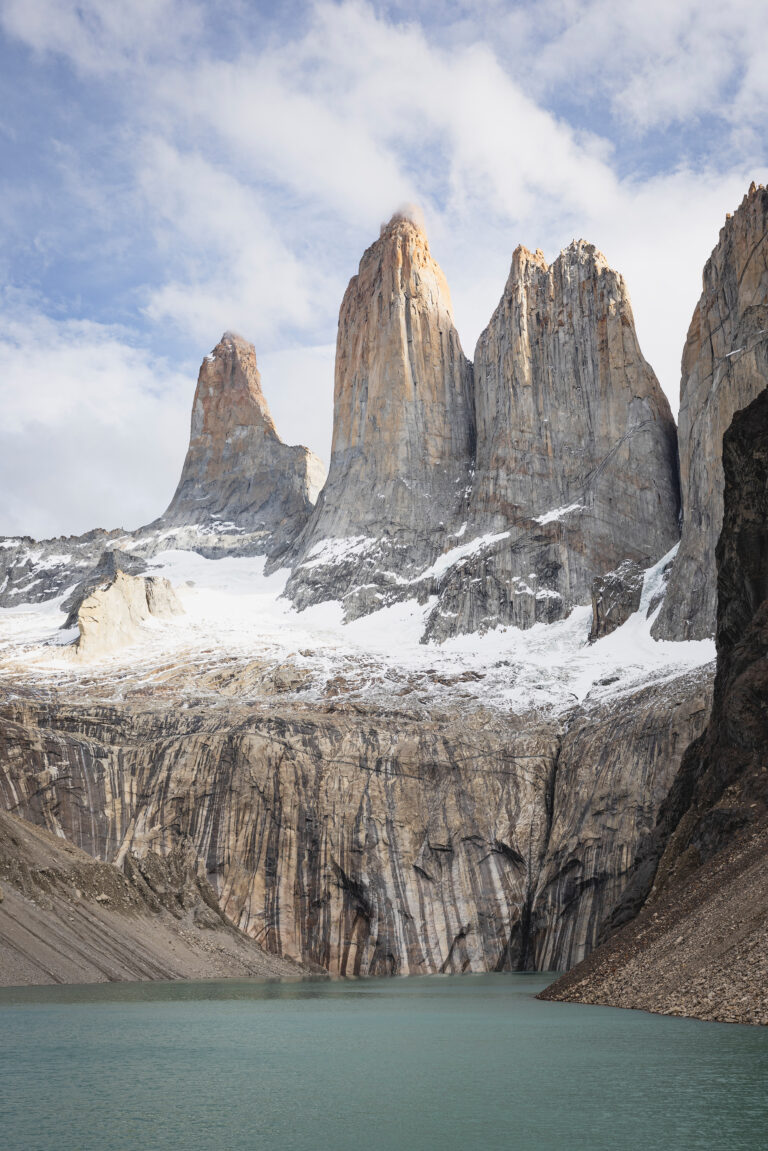
Today we face the most demanding day of the Chilean section and the most iconic in the park: the ascent to the base lagoon of the Torres del Paine. A full trek —there and back— that lasts the entire day, climbing steep and rocky terrain to one of the most photographed panoramas in the world.
The path offers constant views of the peaks and sheer faces of the massif. We cross valleys, hills and glacial moraine boulders with the Torres appearing progressively on the horizon. The final stretch —a field of granite boulders— is hard, but the reward is absolute.
Arriving at the base lagoon, the Torres rise vertically above brilliantly turquoise water. This is the image that gives the park its name and that, nevertheless, only reveals itself in full splendour to those who arrive here on their own legs. We wait for the light, read the clouds and shoot with all the time in the world.
The Torres del Paine base lagoon is one of those places that justify an entire expedition. No photograph fully prepares you for it. And yet, I keep coming back.
El camino ofrece perspectivas constantes de los picos y las laderas escarpadas del macizo. Atravesamos valles, colinas y bloques de morrena glaciar con la progresiva aparición de las Torres en el horizonte. El último tramo —un campo de bloques de granito— es duro, pero la recompensa es absoluta.
Al llegar a la laguna base, las Torres se elevan verticales sobre el agua de color turquesa brillante. Esta es la imagen que pone el nombre al parque y que, sin embargo, solo se muestra en todo su esplendor a quien llega hasta aquí con sus propias piernas. Esperamos la luz, leemos las nubes y disparamos con todo el tiempo del mundo.
La laguna base de las Torres es uno de esos lugares que justifican una expedición entera. No hay fotografía que la prepare del todo. Y sin embargo, yo sigo volviendo.
-
7
Day 7 · Sunday, March 22 · TRANSFER TO EL CALAFATE, ARGENTINA
We cross the border into Argentina and head to El Calafate, on the shores of Lago Argentino. The crossing landscape is breathtaking: condors circle above the lenga and ñire forests, and the Argentine steppe receives us with a…
Read the full day
We cross the border into Argentina and head to El Calafate, on the shores of Lago Argentino. The crossing landscape is breathtaking: condors circle above the lenga and ñire forests, and the Argentine steppe receives us with a silence and an amplitude that impress even those who have already travelled through the region.
El Calafate is the base for the Perito Moreno Glacier. Check-in at the hotel, gear review and planning for the following day — one of the most anticipated of the entire expedition.
El Calafate es la base para el Glaciar Perito Moreno. Instalación en el hotel, revisión del material y planificación de la jornada del día siguiente, una de las más esperadas de toda la expedición.
-
8
![Viajero en mirador observa el glaciar Perito Moreno con icebergs flotantes en el lago glaciar de Patagonia]()
Day 8 · Monday, March 23 · PERITO MORENO GLACIER — FULL DAY
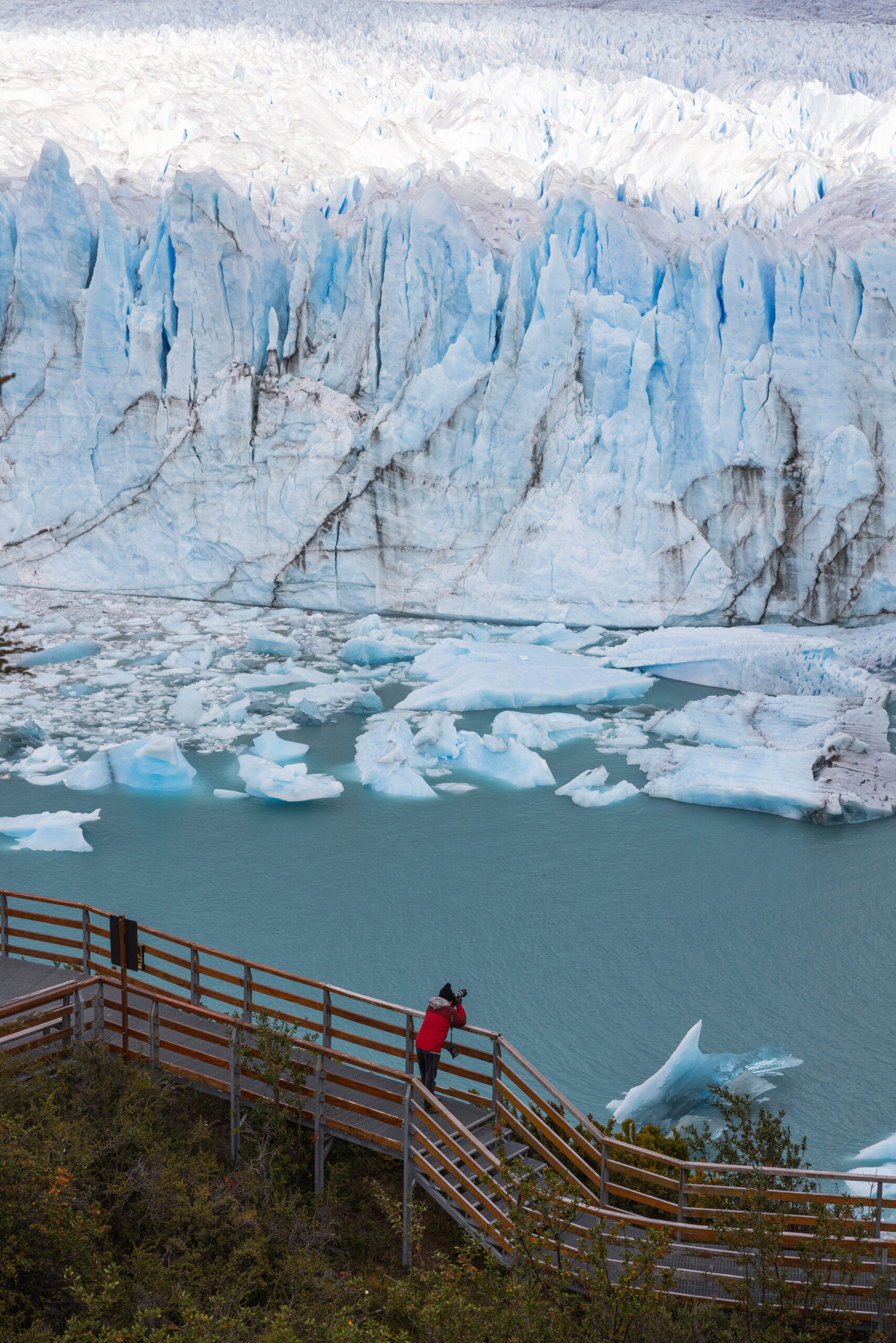
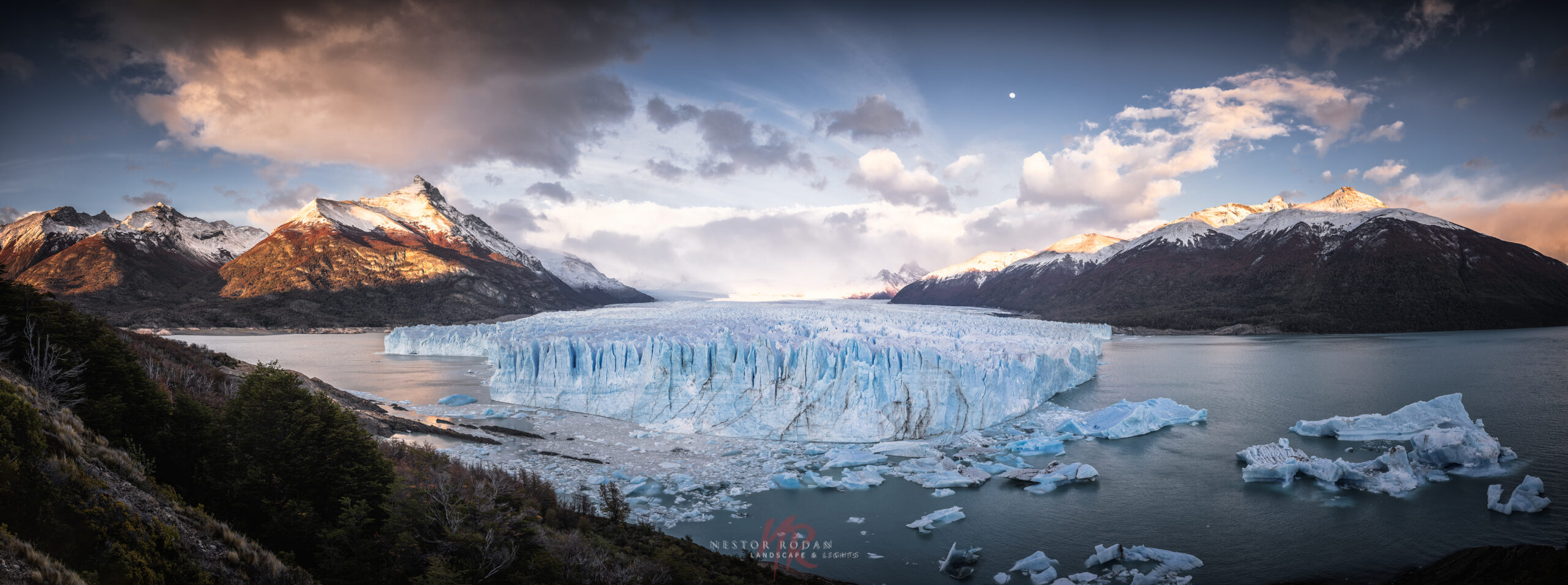
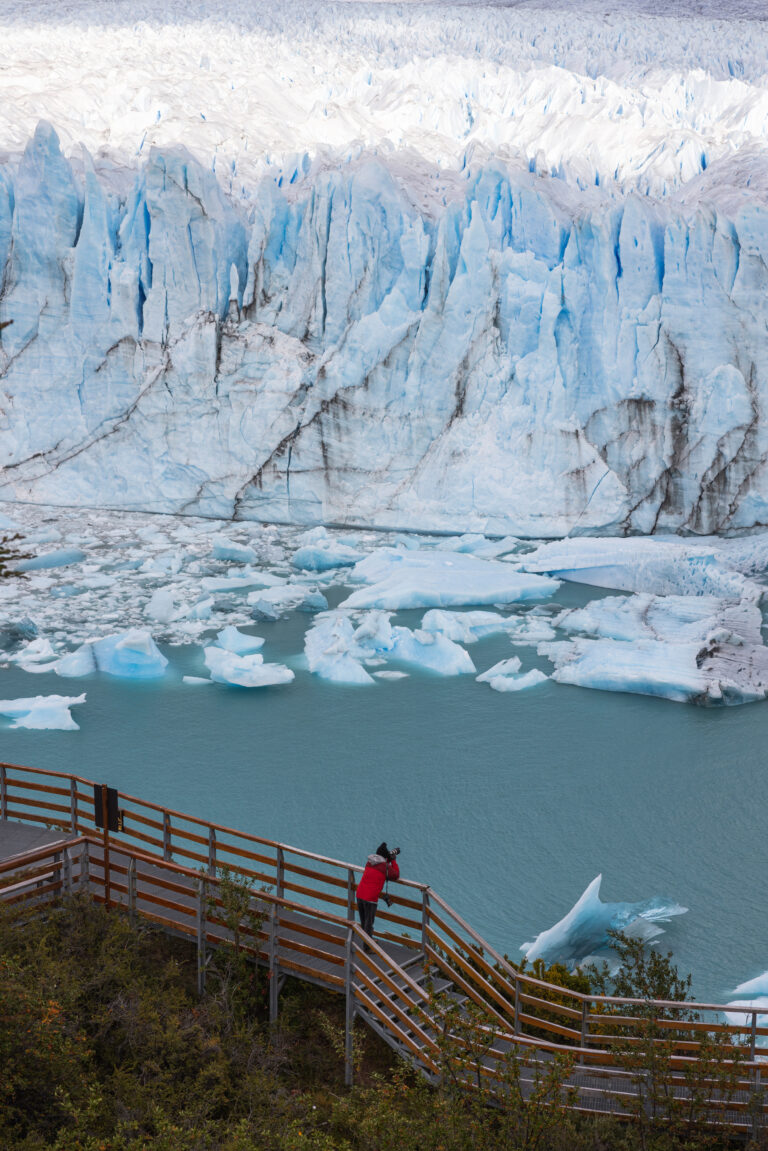
We dedicate the entire day —from dawn to park closing— to photographing Perito Moreno. One of the few advancing glaciers in the world, Perito Moreno is a spectacle in permanent motion: its ice walls sixty metres high thunder and…
Read the full day
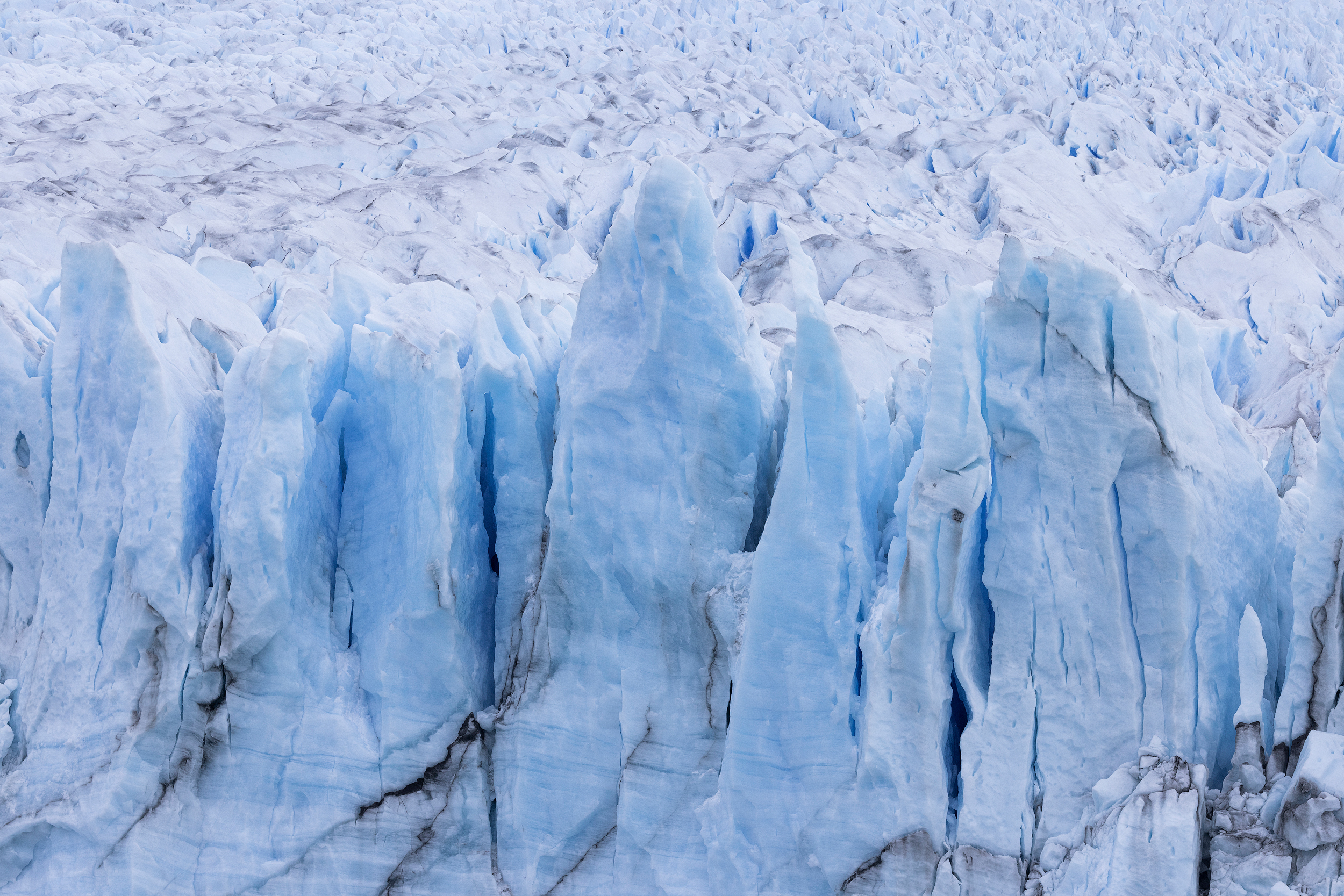
We dedicate the entire day —from dawn to park closing— to photographing Perito Moreno. One of the few advancing glaciers in the world, Perito Moreno is a spectacle in permanent motion: its ice walls sixty metres high thunder and collapse without warning, launching icebergs into the Canal de los Témpanos with a roar that resonates for kilometres around.
The park boardwalks offer different perspectives —frontal, lateral, elevated— and each demands a different photographic strategy. We work in small groups to move with agility, anticipate the calving events and maximise time in the best positions. Waiting is part of the technique: you read the ice, listen to its signals and be ready when the glacier decides to act.
Perito Moreno demands patience and anticipation. The best shot is not improvised: it is waited for. And on this expedition we have the entire day to wait for it.
Sunset over the glacier. The light falls raking and the ice turns orange, pink, golden. One of those ends of day that reconcile you with everything.
Las pasarelas del parque ofrecen distintas perspectivas —frontal, lateral, superior— y cada una exige una estrategia fotográfica diferente. Trabajaremos en grupos pequeños para movernos con agilidad, anticipar los derrumbes y maximizar el tiempo en los mejores emplazamientos. La espera es parte de la técnica: hay que leer el hielo, escuchar sus señales y estar listo cuando el glaciar decide actuar.
El Perito Moreno exige paciencia y anticipación. El mejor disparo no se improvisa: se espera. Y en esta expedición tenemos el día entero para esperarlo.
Atardecer sobre el glaciar. La luz cae rasante y el hielo se vuelve naranja, rosa, dorado. Es uno de esos finales de día que te reconcilian con todo.
-
9
![Picos nevados de granito en la Patagonia argentina al atardecer, con meseta desértica en primer plano y cielo nublado.]()
Day 9 · Tuesday, March 24 · TRANSFER TO EL CHALTÉN
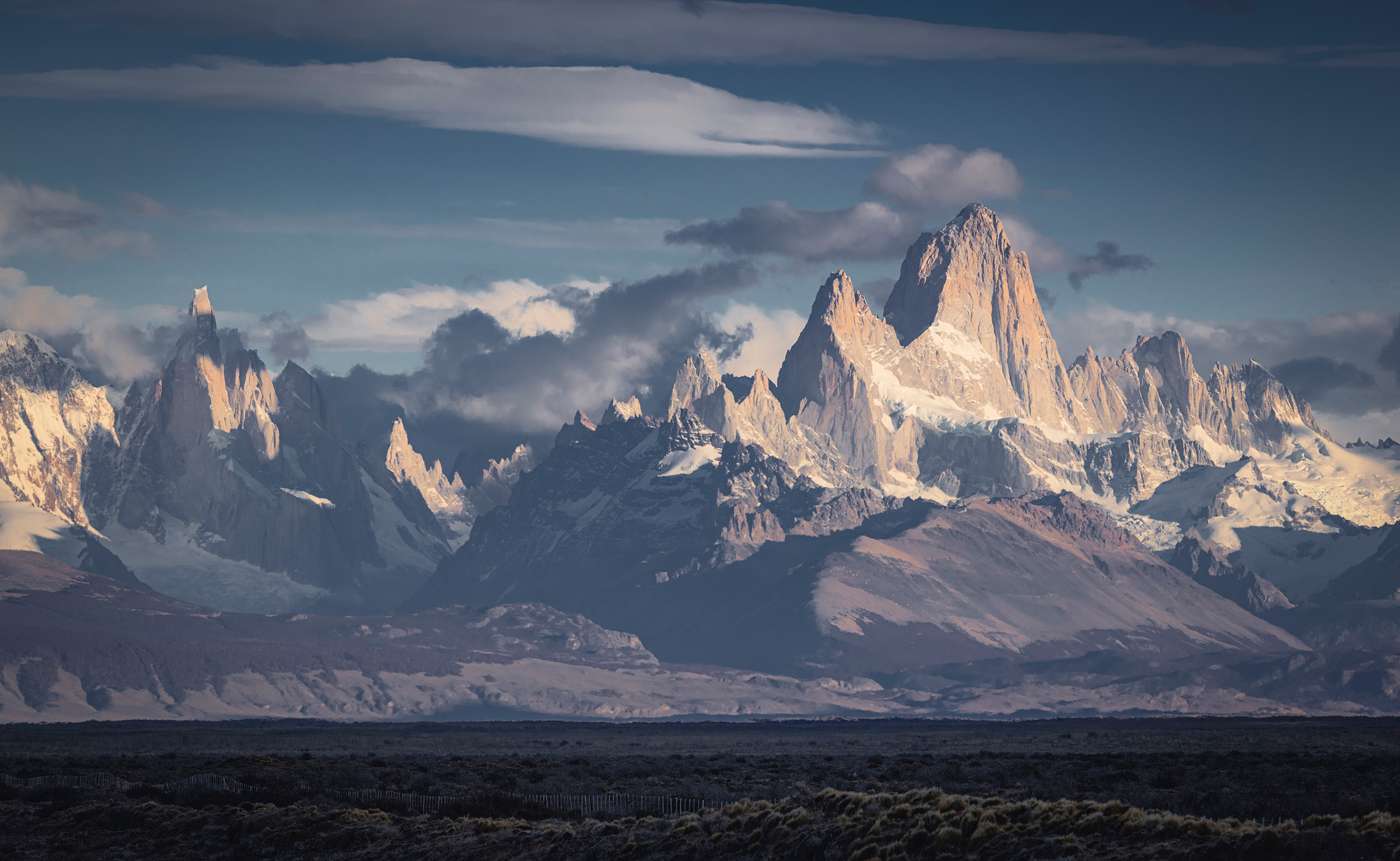
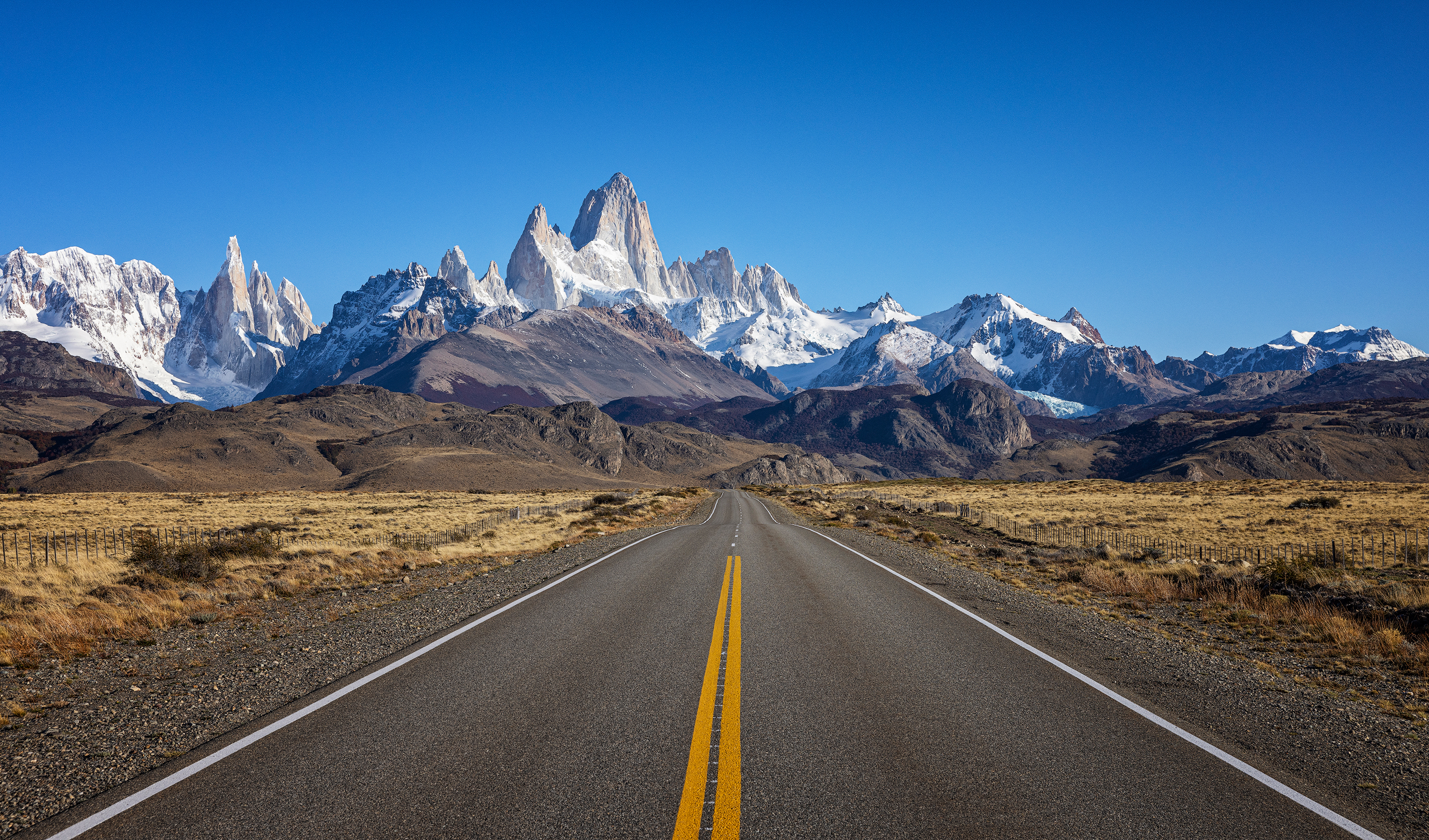
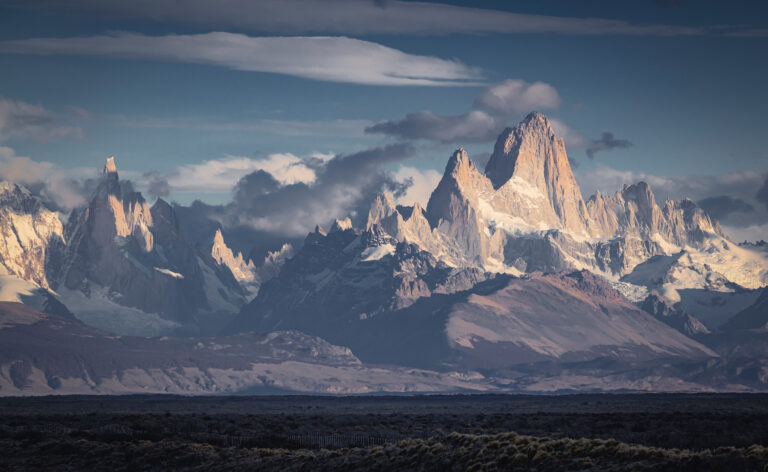
We head north to El Chaltén, trekking capital of Argentine Patagonia and base for the Fitz Roy massif —a collection of granite needles that rivals any mountain on the planet for sheer spectacle. The drive from El Calafate crosses…
Read the full day
We head north to El Chaltén, trekking capital of Argentine Patagonia and base for the Fitz Roy massif —a collection of granite needles that rivals any mountain on the planet for sheer spectacle. The drive from El Calafate crosses the steppe with views of Lago Viedma and the first glints of the massif on the horizon.
Check-in at the hotel. Detailed briefing on routes, photographic spots, expected weather conditions and contingency plans for the days ahead. In El Chaltén the weather decides, and I have learned to design the itinerary with enough flexibility to adapt. Possibility of night photography in the village surroundings and wildlife sighting at dusk.
Llegada al hotel. Explicación detallada de las rutas, spots fotográficos, condiciones climáticas esperadas y plan de contingencia para los días siguientes. En el Chaltén el clima manda, y yo he aprendido a diseñar el itinerario con suficiente flexibilidad para adaptarse. Posibilidad de fotografía nocturna en el entorno del pueblo y avistamiento de fauna al atardecer.
-
10
![Lago glaciar turquesa al pie de montañas nevadas y picos rocosos en la Patagonia]()
Day 10- Wednesday, March 35 - LAGUNA DE LOS TRES- FITZ ROY
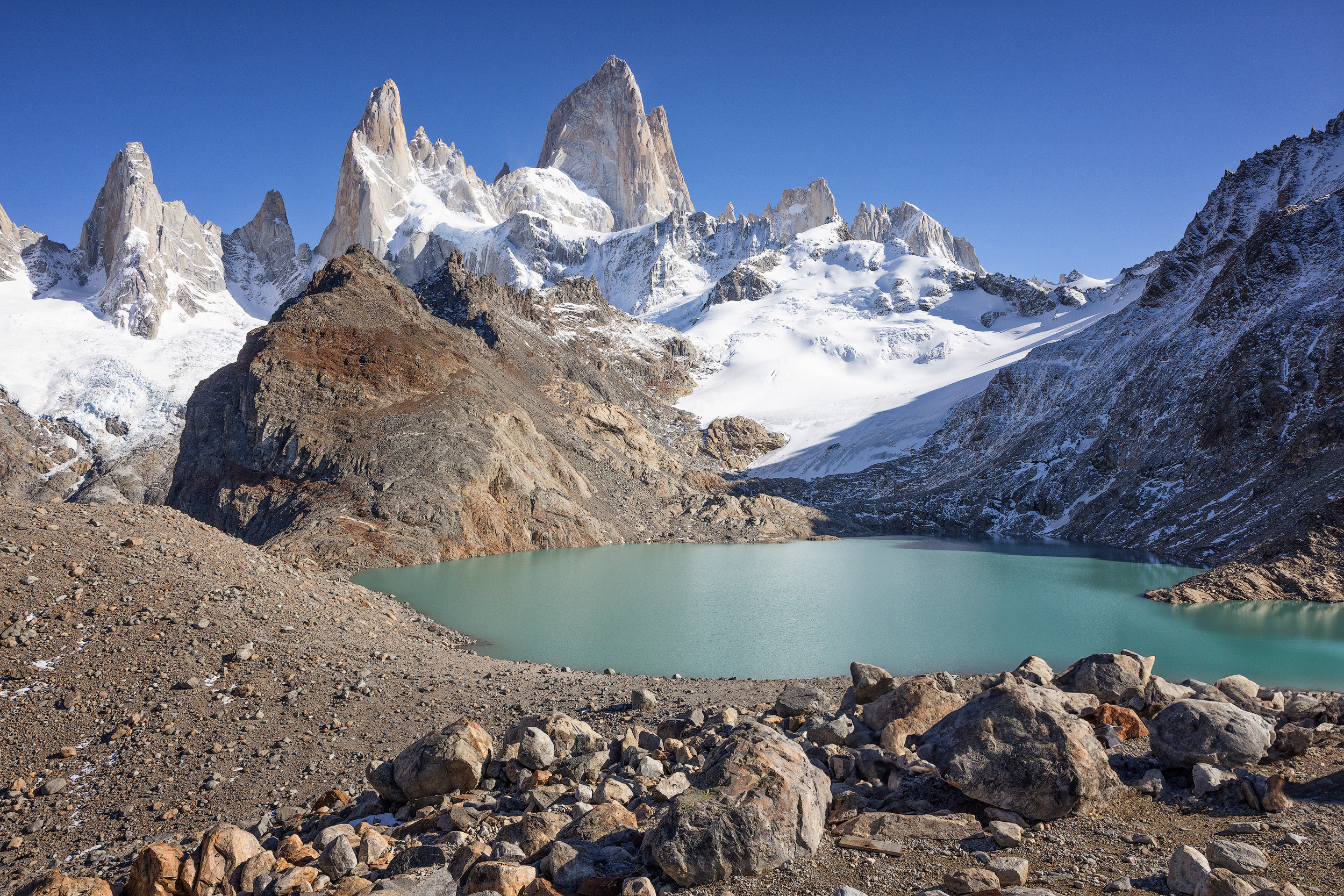
The trek to Laguna de los Tres is the great expedition of El Chaltén and one of the most breathtaking mountain treks in all of South America. We set off from the village and enter Los Glaciares National Park through lenga beech…
Read the full day
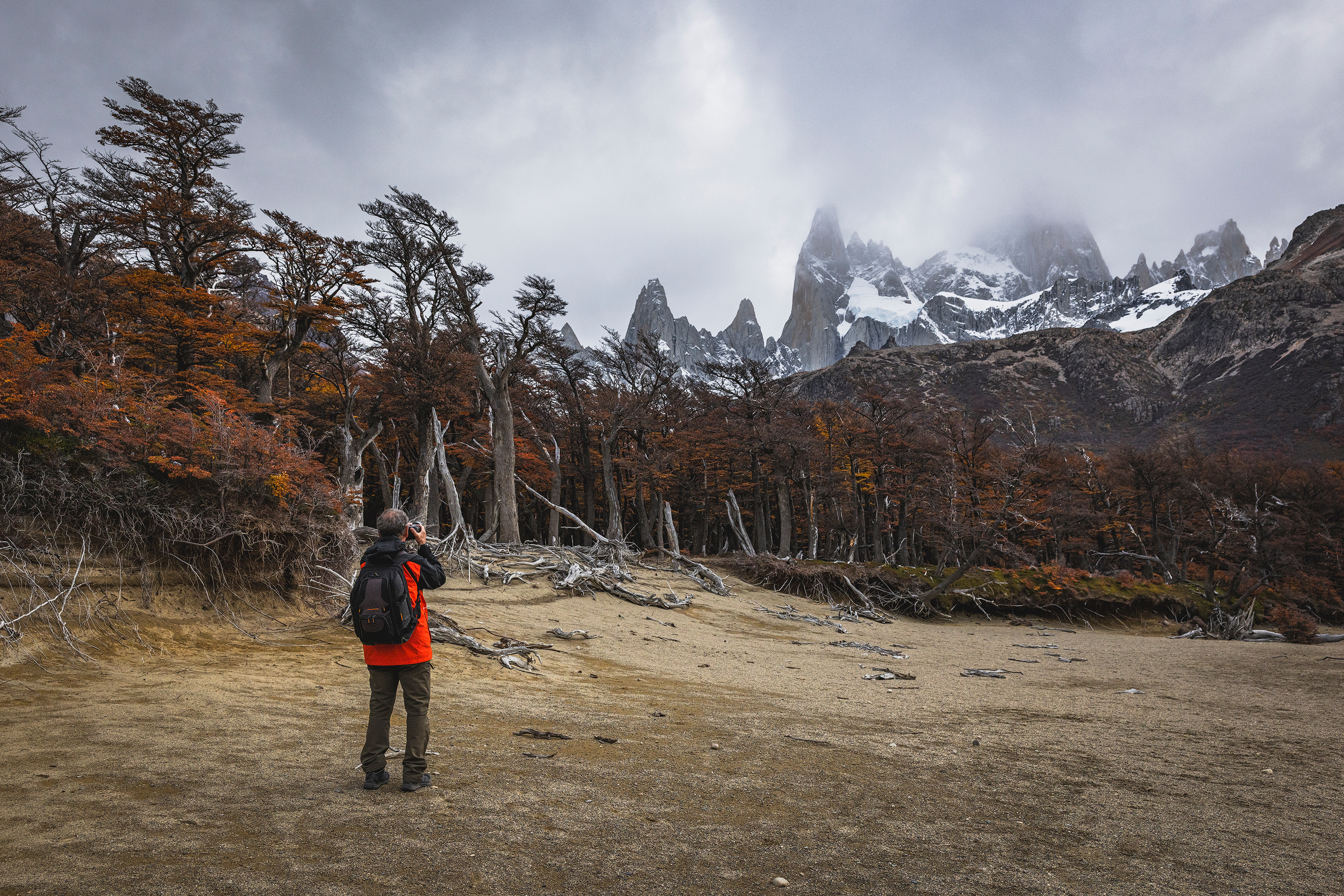
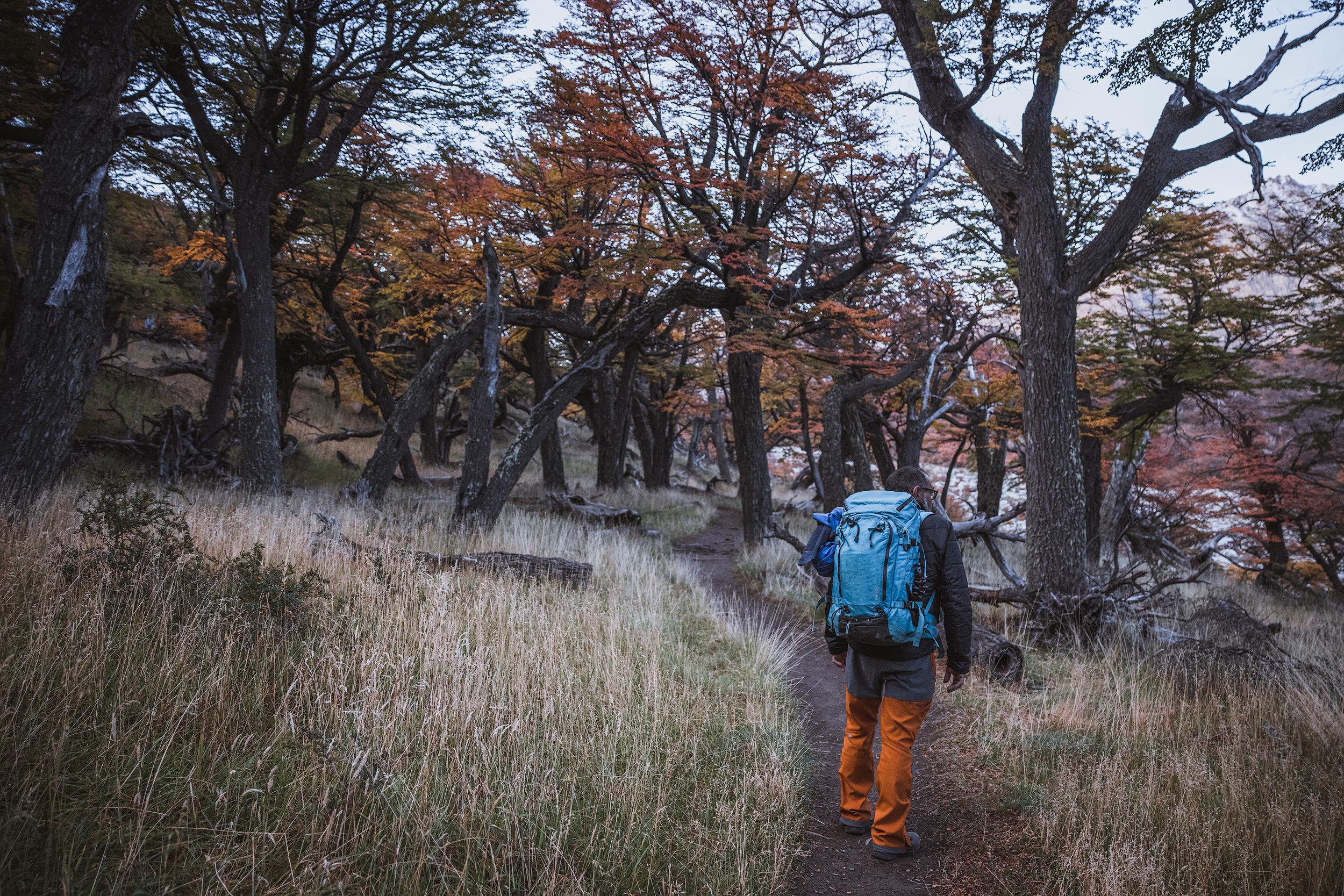
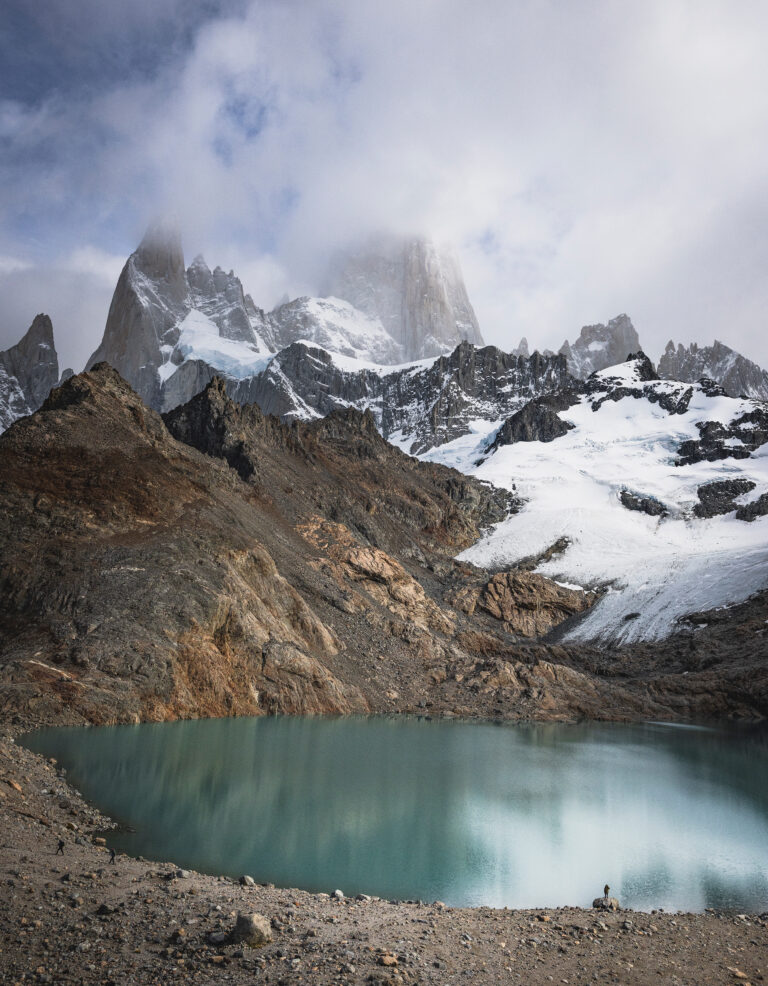
The trek to Laguna de los Tres is the great expedition of El Chaltén and one of the most breathtaking mountain treks in all of South America. We set off from the village and enter Los Glaciares National Park through lenga beech forests with progressive views opening onto the massif above.
The final section is the hardest: 400 metres of elevation gain along a steep, rocky trail that demands real effort. But when you crest the top and come face to face with Laguna de los Tres and the Fitz Roy with its hanging glacier, the effort dissolves. The reflection of the peaks in the turquoise water of the lagoon is one of those images that define landscape photography.
Fitz Roy is a mountain that enchants and frustrates in equal measure. It covers itself in cloud with ease and reveals itself with unexpected generosity. That is why you need several days here. That is why this expedition does not rush.
-
11
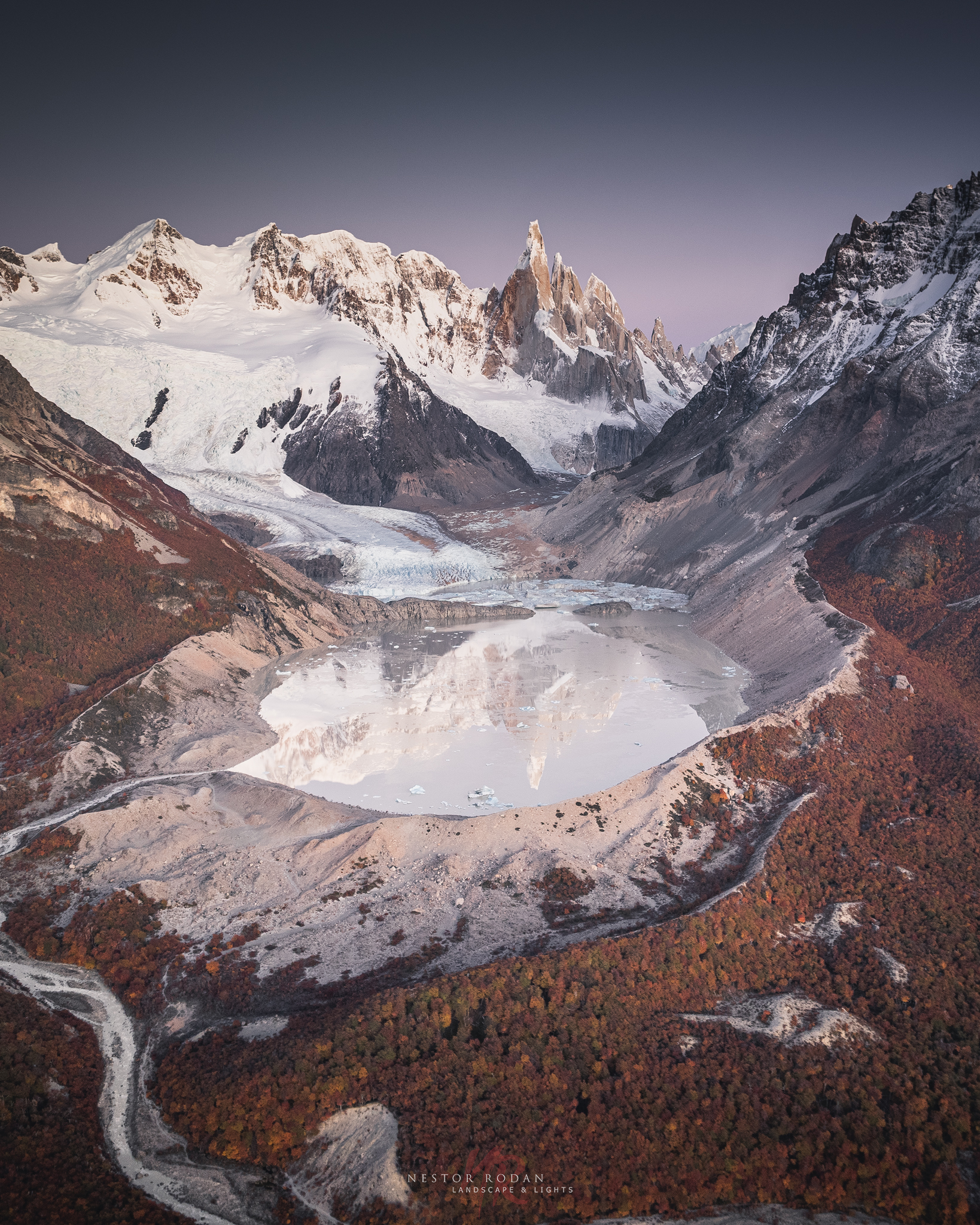
Day 11 · Thursday, March 26 · TREKKING LAGUNA TORRE — CERRO TORRE
Cerro Torre is the other giant of the Chaltén massif, and in many ways the most dramatic: a needle of granite ending in a frozen summit permanently shrouded in cloud. The route to Laguna Torre follows the glacial valley floor…
Read the full day
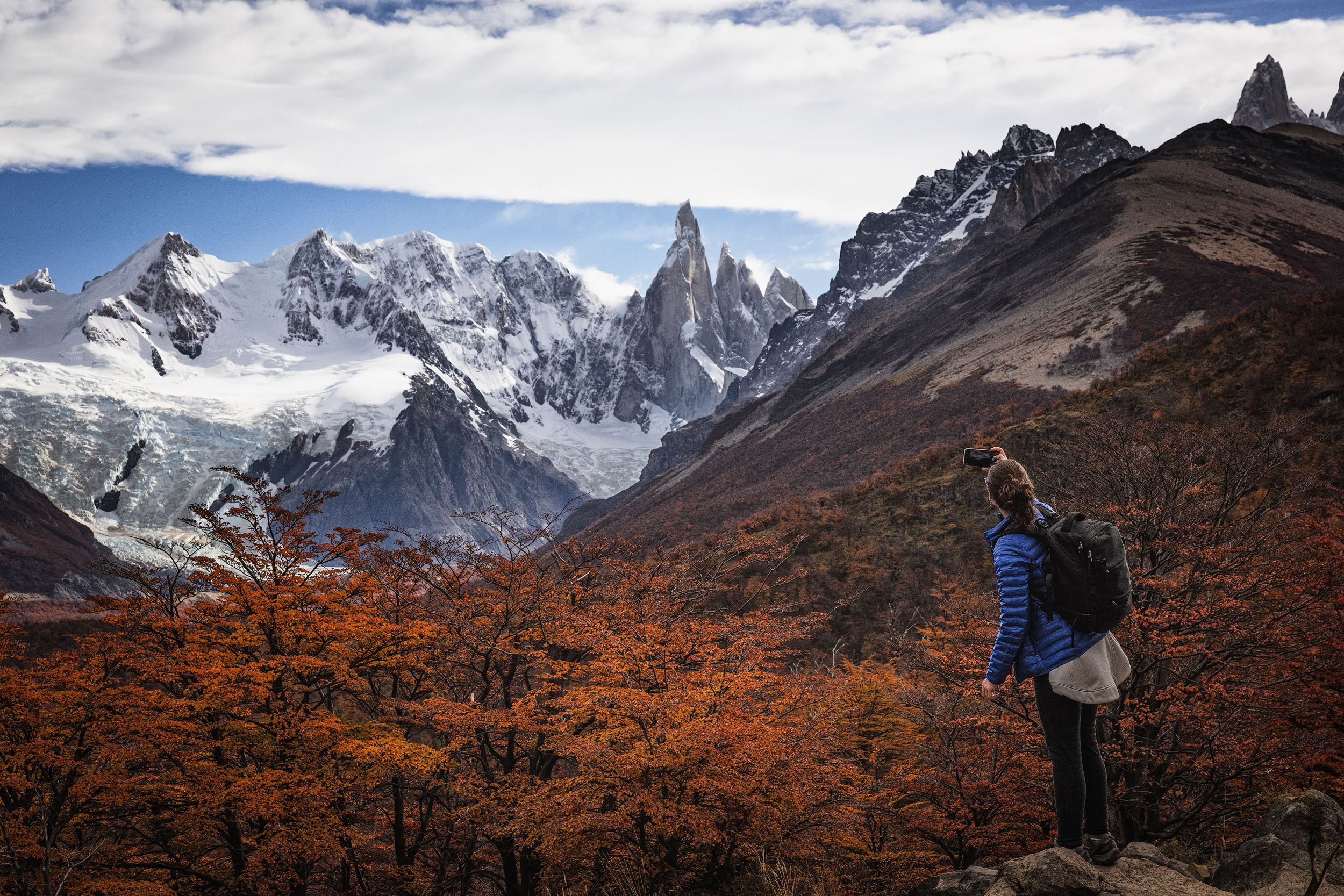
Cerro Torre is the other giant of the Chaltén massif, and in many ways the most dramatic: a needle of granite ending in a frozen summit permanently shrouded in cloud. The route to Laguna Torre follows the glacial valley floor with constant views of the peak and the Torre Glacier, which sends its tongues of ice down to the blue water of the lagoon below.
We walk through ñire beech forests already deep into their autumn colours —one of the most underrated visual spectacles in all of Patagonia— while Cerro Torre appears and disappears between ribbons of cloud. This too is photography: knowing how to wait for the moment the peak reveals itself, capturing the mist as a compositional element, working with uncertainty.
-
12
Day 12 · Friday, March 27 · CERRO DE LOS CÓNDORES · LAGUNA CAPRI · ARROYO DEL SALTO
We rise early to reach a privileged position near Cerro de los Cóndores and capture the first light of dawn breaking over the Chaltén massif. The reddish granite of the summits catches the sunrise in a way that exists nowhere…
Read the full day
We rise early to reach a privileged position near Cerro de los Cóndores and capture the first light of dawn breaking over the Chaltén massif. The reddish granite of the summits catches the sunrise in a way that exists nowhere else on Earth: a progressive ignition, from blood red to orange to pure gold.
After breakfast we ascend to Laguna Capri —one of the park's essential trails, with around 200 metres of elevation gain— to find the reflection of Fitz Roy in its waters with autumn painting the forest behind it. We continue to Arroyo del Salto and the Fitz Roy Viewpoint to multiply angles and compositions throughout the day.
This is a long, intense and enormously generous day for photography. The clouds play with the sharp peaks throughout —here the weather is a creative collaborator, not an obstacle— and the lenga and ñire forests in full colour change are a warm carpet of light beneath our feet.
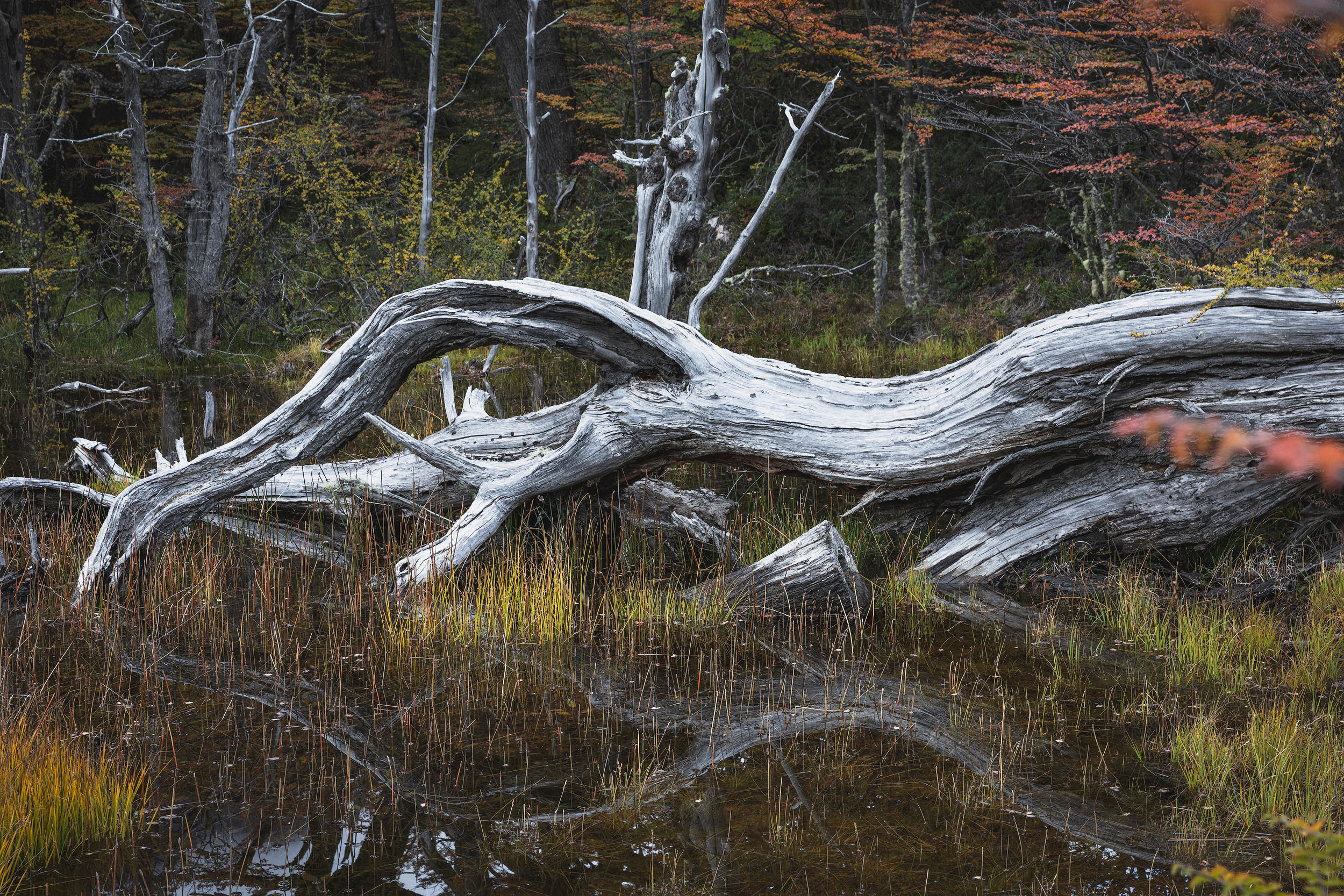
In the ñire forests we have the opportunity to photograph birds unique to these ecosystems: the Magellanic woodpecker, the thorn-tailed rayadito, the dark-bellied cinclodes. The Patagonian forest in autumn is a complete photographic studio.
-
13
Day 13 · Saturday, March 28 · HUEMULES TRAIL · PIEDRAS BLANCAS VIEWPOINT
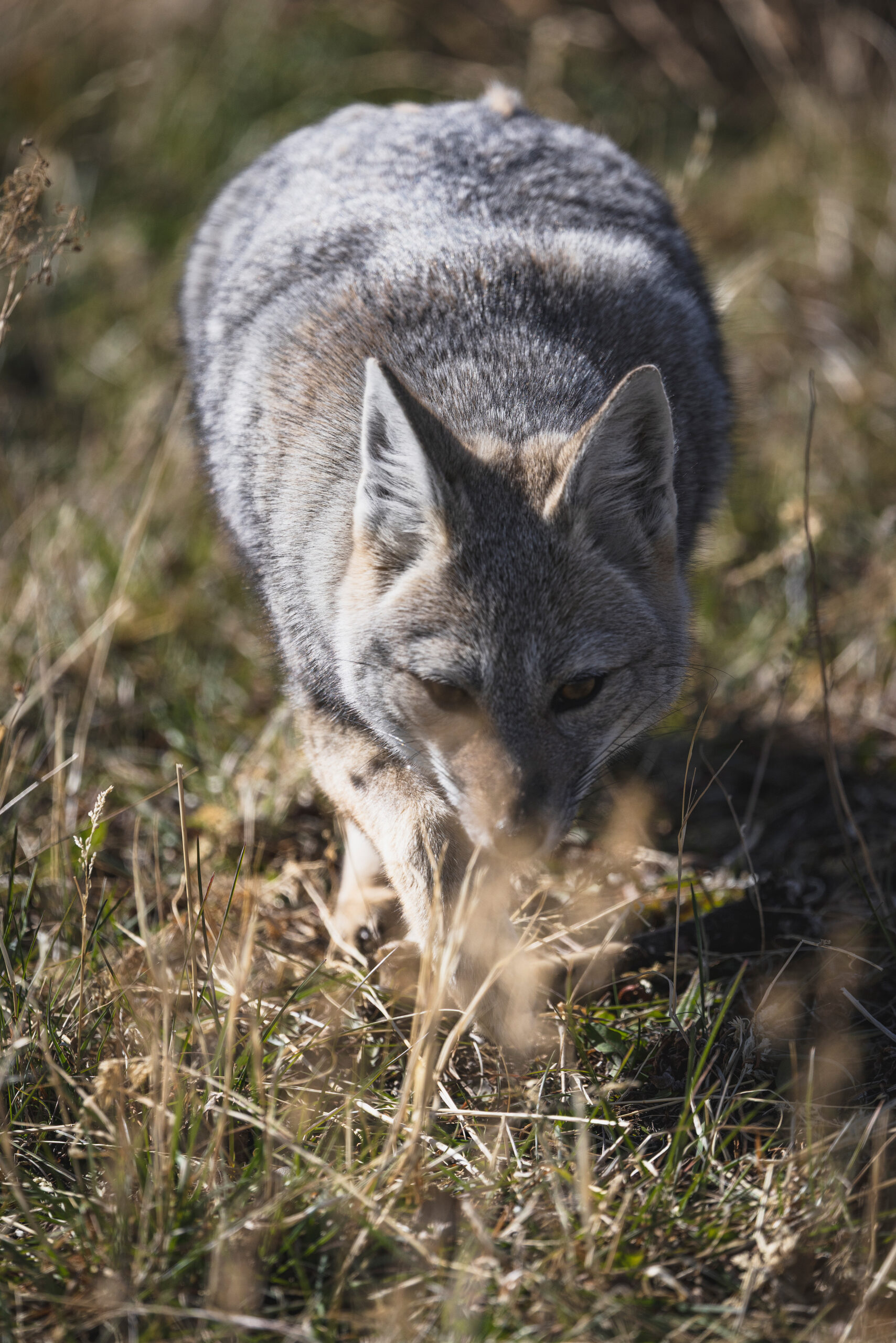
The huemul is the southern Andean deer of Patagonia, one of the most elusive and threatened animals on the continent. The trail that bears its name takes us along a low-difficulty but enormously beautiful path, with the Río de…
Read the full day
The huemul is the southern Andean deer of Patagonia, one of the most elusive and threatened animals on the continent. The trail that bears its name takes us along a low-difficulty but enormously beautiful path, with the Río de las Vueltas and the Chaltén massif as constant companions. At this time of year, with far fewer visitors in the park, the sighting possibilities are real.
In the afternoon we reach the Piedras Blancas Viewpoint, with views of the glacier of the same name. The contrast between the ice, the polished rock faces and the forest blazing with autumn colour gives us compositions of a chromatic richness that is simply not available at any other time of year.
-
14
Day 14 · Sunday, March 29 · DAWN CERRO TORRE / FITZ ROY · TRANSFER TO PUNTA ARENAS
Final dawn in El Chaltén. The mountains save their best cards for those who insist: we have reserved this second dawn in the massif precisely because Fitz Roy and Cerro Torre are unpredictable, and having two attempts on…
Read the full day
Final dawn in El Chaltén. The mountains save their best cards for those who insist: we have reserved this second dawn in the massif precisely because Fitz Roy and Cerro Torre are unpredictable, and having two attempts on favourable weather days can make the difference between a good photograph and an extraordinary one.
These iconic summits are frequently covered by clouds rolling in from the Pacific. Having two dawns is not a luxury: it is a photographic decision. If the first morning was perfect, this one is confirmation. If the first was clouded, this is your chance.
At midday, the long drive back to Punta Arenas begins. The return journey, with fresh memories and a mind full of images, has its own quiet poetry. Night in Punta Arenas before the homebound flight.
-
15
Day 15 · Monday, March 30 · RETURN FLIGHTS
Free morning in Punta Arenas to explore the historic centre, the Strait of Magellan, or simply to sit with the memories —and the photographs— of these extraordinary days. In the afternoon, return flights depart via Buenos Aires…
Read the full day
Free morning in Punta Arenas to explore the historic centre, the Strait of Magellan, or simply to sit with the memories —and the photographs— of these extraordinary days. In the afternoon, return flights depart via Buenos Aires or Santiago.
-
16
Day 16 · Tuesday, March 31 · ARRIVAL AT HOME
End of an expedition that does not leave you easily. Patagonia will have given you more than you expected and less than you will need to come back. That, precisely, is what distinguishes a trip from an experience.
Gallery
What's included
Included
- Hotel 3 stars (lodge) B&B. Shared room.
- Transport by 9-seater minivan or 5-seater 4x4.
- Fuel and tolls included.
- National park entrance fees and trekking access fees included.
- Professional photography guide with all expenses included.
- Lago Grey boat trip ticket included.
Not included
- International flights
- Meals beyond breakfast
- Travel and activity insurance
- Any service not listed in the included section
Your guide
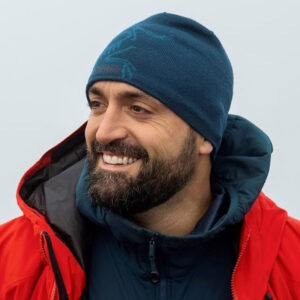
Néstor Rodan
Néstor Rodan is a landscape photographer and photographic travel guide from León, Spain. With deep expertise in the landscapes of northwest Iberia and a passion for extreme, cold-climate destinations like Baikal, Greenland, and Lofoten, he combines storytelling and technical mastery—including drone photography—as a Canon ambassador. Recognized internationally, he leads transformative real-world photography experiences.
View profileSee their 7 trips
-
![]() Algarve, Portugal, February 2027
Feb 9-14, 2027 · 7 seats free
Algarve, Portugal, February 2027
Feb 9-14, 2027 · 7 seats free
-
![]() Vietnam and Cambodia · September 2027
Aug 29 - Sep 14, 2027 · 3 seats free
Vietnam and Cambodia · September 2027
Aug 29 - Sep 14, 2027 · 3 seats free
-
![]() Aveiro - Portugal · January 2027
Jan 21-24, 2027 · 5 seats free
Aveiro - Portugal · January 2027
Jan 21-24, 2027 · 5 seats free
-
![]() Ethiopia · December 2026
Dec 4-11, 2026 · 1 seats free
Ethiopia · December 2026
Dec 4-11, 2026 · 1 seats free
-
![]() Costa Rica · January 2027
Jan 14-23, 2027 · 8 seats free
Costa Rica · January 2027
Jan 14-23, 2027 · 8 seats free
-
![]() RioTinto Mining · May 2027
May 7-9, 2027 · 8 seats free
RioTinto Mining · May 2027
May 7-9, 2027 · 8 seats free
-
![]() Whales of Baja California Sur
Mar 3-10, 2027 · 3 seats free
Whales of Baja California Sur
Mar 3-10, 2027 · 3 seats free


Frequently asked questions
What fitness level is required for this expedition?
Medium-high. The most demanding treks —Laguna de los Tres and Laguna Torre— involve full days of between 15 and 22 km with elevation gains of up to 800 metres. You do not need to be a mountaineer, but you do need experience in mountain hiking and a fitness level that allows you to walk for hours on uneven terrain. If you have any doubts about your level, write to us before booking: we will help you assess it honestly.
Why travel in March and not during the austral summer?
Because March is, photographically, the best time of year in Patagonia. The lenga and ñire beech forests begin to burn in ochres, oranges and reds. The wind is noticeably more stable than in December or January. Golden hour lasts longer and strikes lower. And the parks hold a fraction of the summer visitors. Most photographers travel in high season. We travel when the light commands.
How many participants does the expedition have?
A maximum of 8 people. This is not a catalogue figure: it is a photographic decision. With small groups we move with agility, occupy the best positions without interference and adapt the pace to the conditions of the day. Patagonia is not photographed in a herd.
Do I need to be a professional or expert photographer?
No. This expedition is designed for photographers with curiosity, not photographers with a CV. What matters is that you are willing to learn, to rise early and to wait for the moment. During our field days we work on composition, light and technique naturally, on location, without a classroom and without unnecessary theory.
12:04 Is travel insurance required?
Yes, and it is mandatory. The expedition includes mountain treks in remote areas of Chile and Argentina, so the insurance must specifically cover mountain activities, medical assistance abroad and evacuation in areas of difficult access. If you need guidance on which insurance to take out, we will advise you when formalising your booking.
How do I book my place?
Places are limited —maximum 8 participants— and on expeditions of this nature they fill months in advance. To book, write to us at info@zeroexpeditions.com or through the contact form on the website. We will ask for a deposit to confirm your place and send you all the practical information to prepare for the trip. From that point on, we take care of the rest.
Another question? Ask the assistant or write to us on WhatsApp.