
Namibia · July 2027
Namibia · July 2027
Dunes, wildlife and moonless nights · July 2027
At a glance
About the expedition
The nights come first
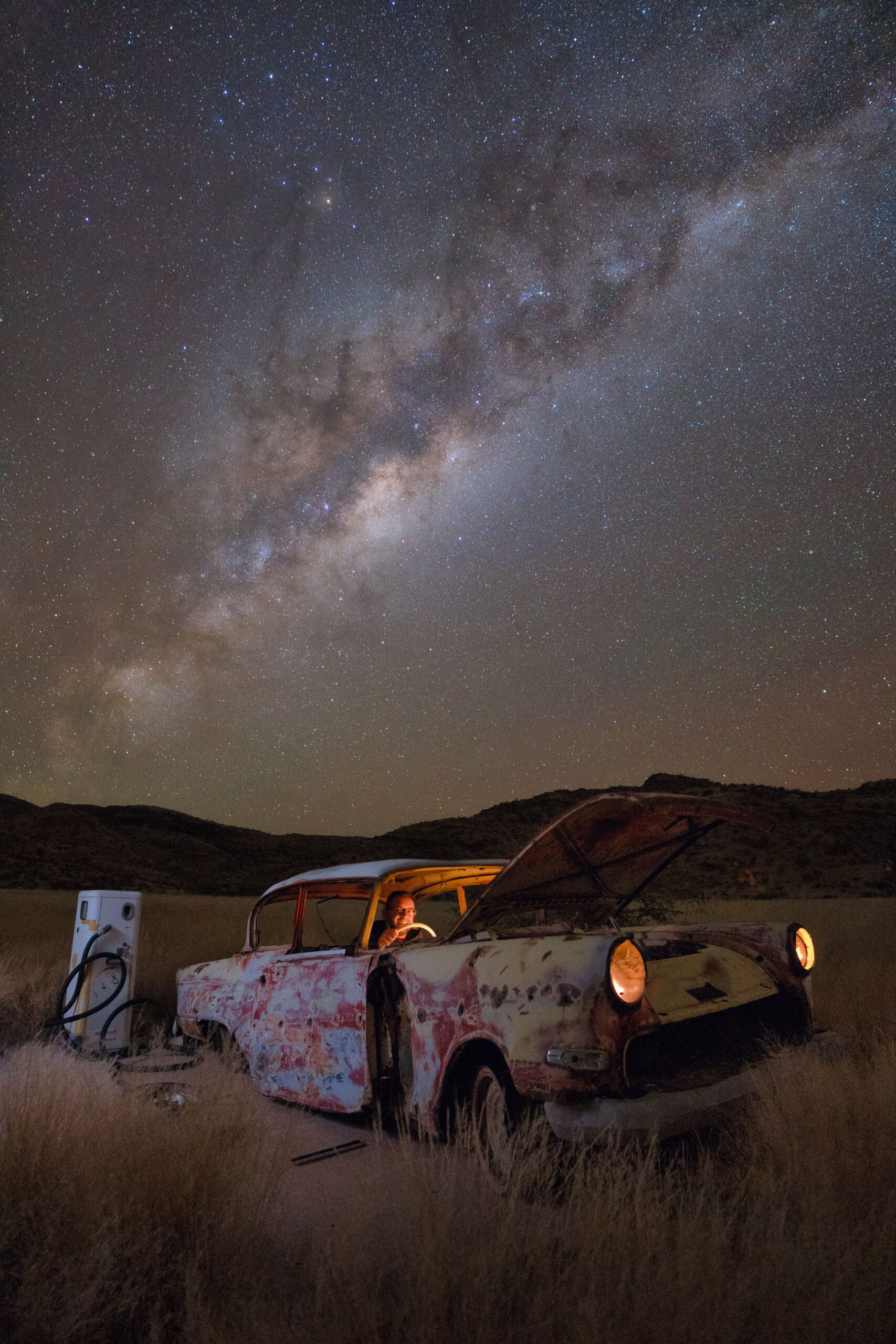
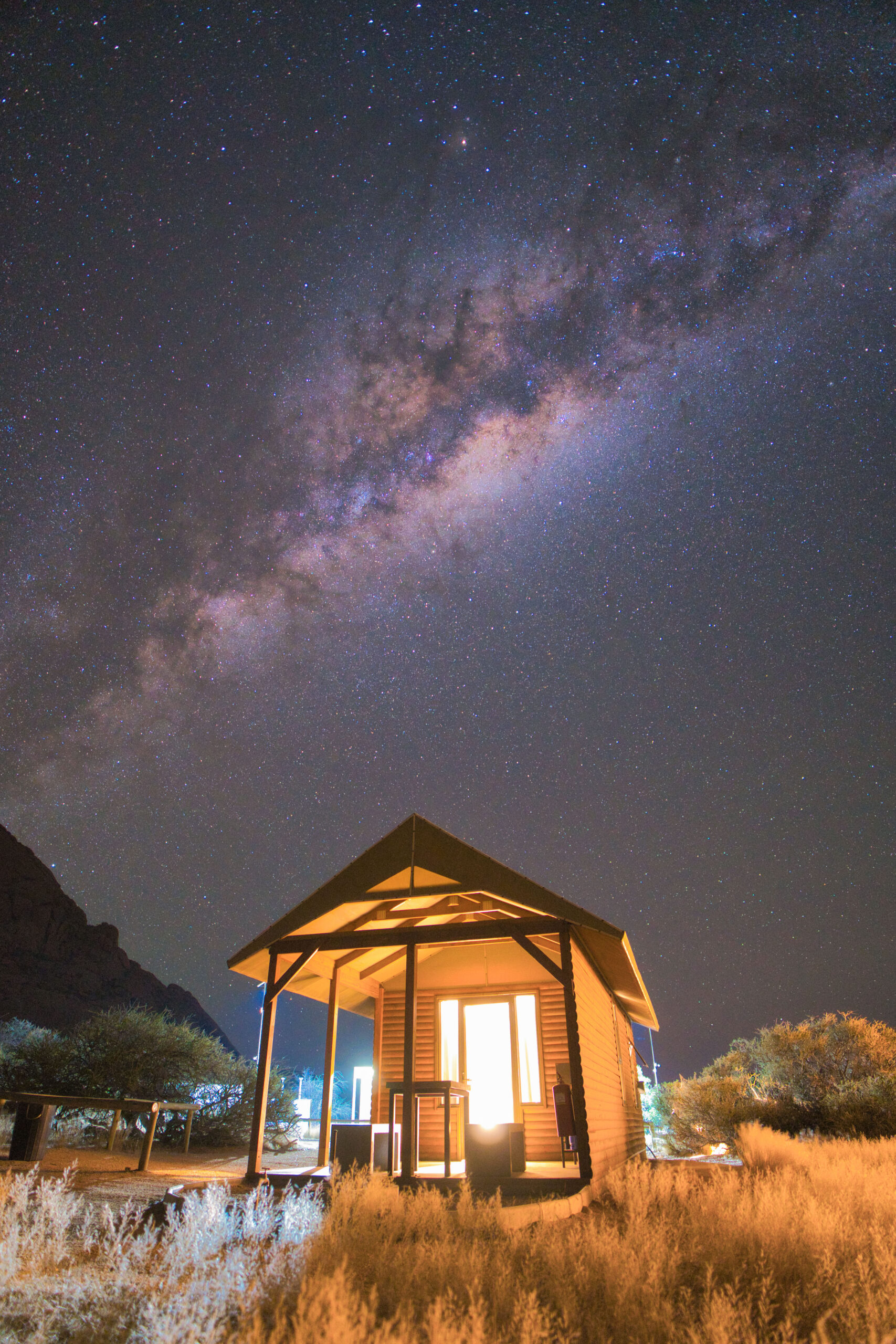
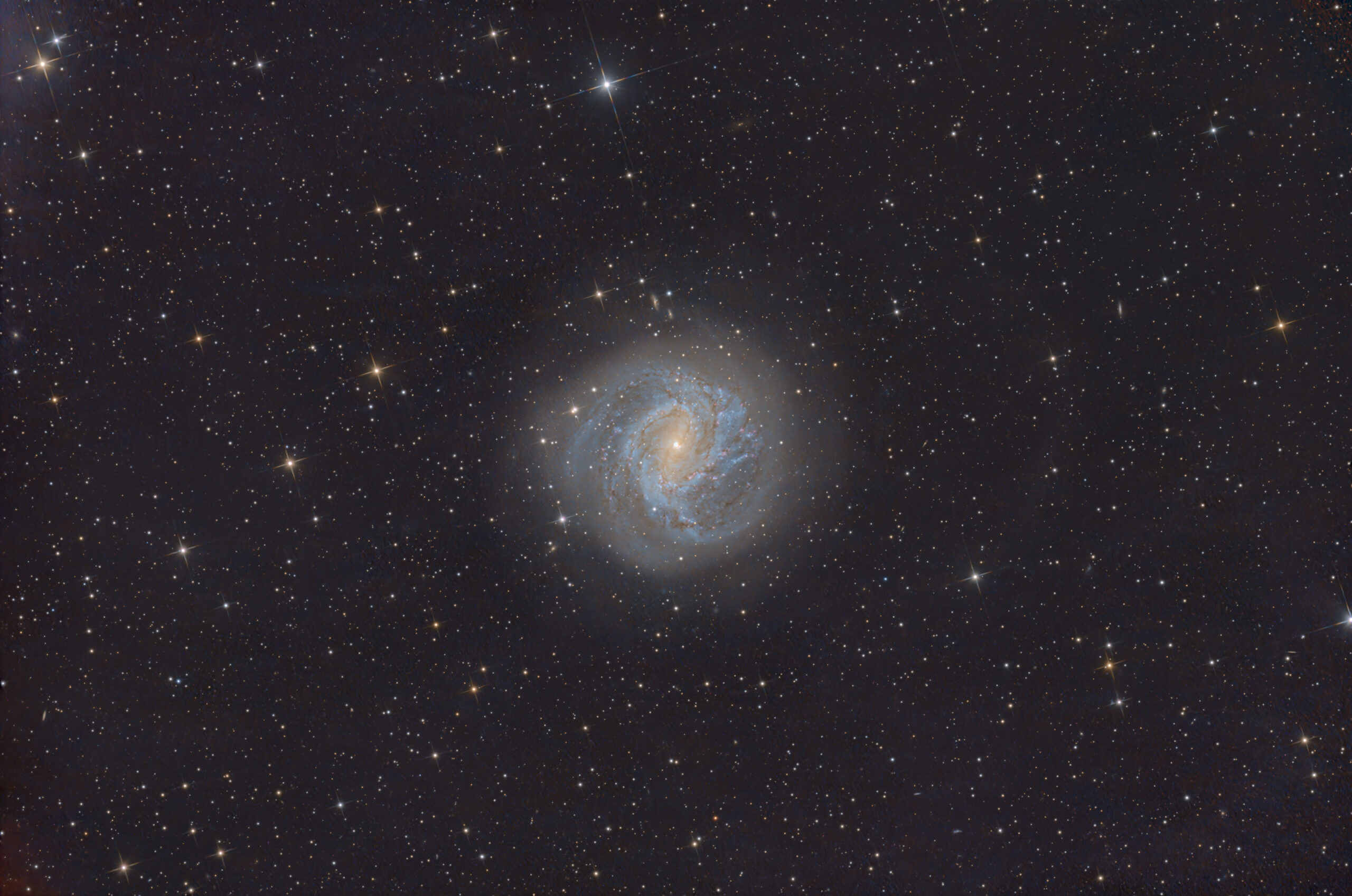
The expedition is planned around the new moon of July 4, 2027. Every night session of the trip —Spitzkoppe and Sossusvlei— takes place with lunar illumination below 11 %, in the middle of the austral winter, when the core of the Milky Way crosses the zenith at nightfall.
Photographic rhythm
The programme is organised by light, not by sights: sunrises and sunsets on location, middays to rest, edit and travel, and nights reserved for the sky. Timings are adjusted daily according to the weather and the group's interests.
Group and climate
Small group. July is winter in Namibia: mild, sunny days (20–24 °C) and cold nights that can drop below 0 °C in the desert. Travel with a layering system, as on any mountain night shoot.
Wildlife sightings depend on natural conditions: the dry season makes them highly likely, but none can be guaranteed.
- Etosha National Park: photographic safari in the dry season
- Spitzkoppe: 120-million-year-old granite landscapes
- Walvis Bay and the Atlantic coast
- Sandwich Harbour: dunes meeting the ocean
- Sossusvlei and Deadvlei
- Astrophotography planned around the new moon of 4 July 2027
- Very low lunar illumination during the main night sessions
- Southern Hemisphere winter and dry-season conditions
- Small-group Zero Expeditions experience
Itinerary
Day by day
-
1
![Silueta de una jirafa solitaria contemplando el atardecer naranja en el Parque Nacional de Etosha, Namibia]()
Day 1 · June 28 — Windhoek → Etosha
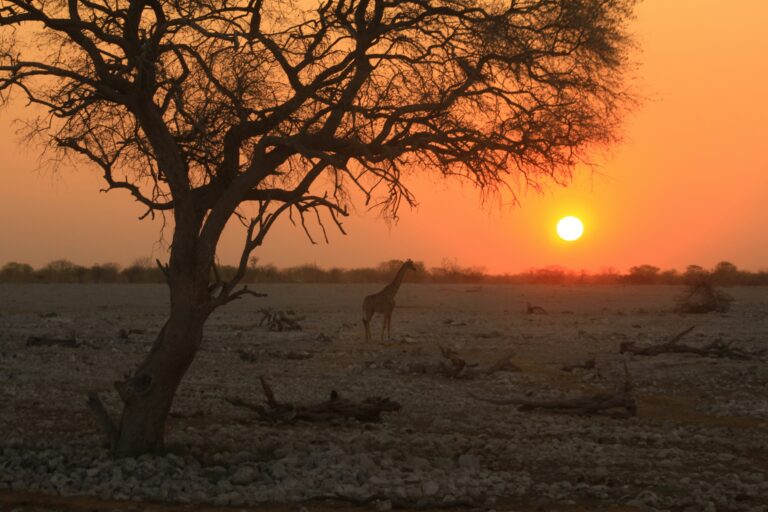
Arrival in Windhoek and departure for Etosha National Park (about 4 h 40 min). The name means “great white place” in Oshindonga, after the salt pan of nearly 5,000 km² that gives the park its name: a scar of calcite so vast it…
Read the full day
Arrival in Windhoek and departure for Etosha National Park (about 4 h 40 min). The name means “great white place” in Oshindonga, after the salt pan of nearly 5,000 km² that gives the park its name: a scar of calcite so vast it can be seen from space.
We arrive in time for a first sunset session on the outskirts of the park and, if the group is up for it, a first taste of the Namibian sky: still a third of the moon showing, just enough to calibrate gear and framings before the big nights of the trip.
-
2
![Jirafa adulta y cría en la sabana árida del Parque Nacional de Etosha, durante la estación seca.]()
Days 2 and 3 · June 29 and 30 — Photo safari in Etosha
Two full days of photographic safari. Late June is the height of the dry season: riverbeds run empty, water shrinks to the waterholes and the wildlife comes to them in a steady stream. That is the logic that makes Etosha one of…
Read the full day
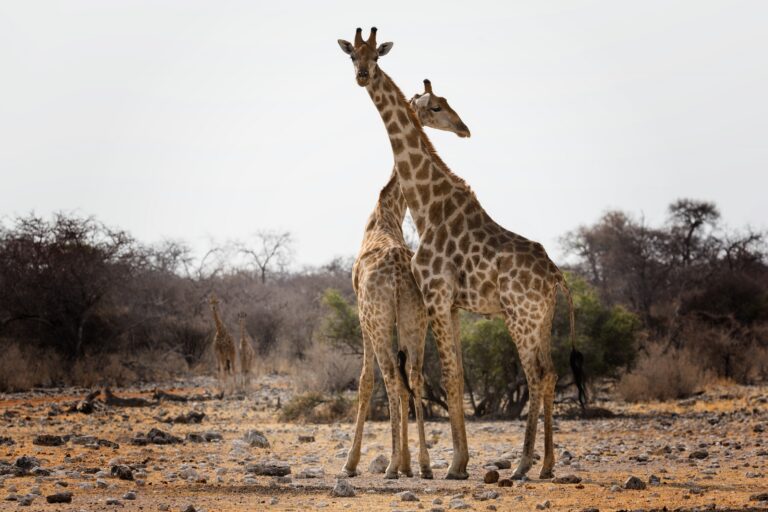
Two full days of photographic safari. Late June is the height of the dry season: riverbeds run empty, water shrinks to the waterholes and the wildlife comes to them in a steady stream. That is the logic that makes Etosha one of Africa's most photogenic safaris in winter: instead of chasing the animals, we choose the waterhole, the light and the background, and let the scene come to us.
Etosha holds one of the largest black rhino populations on the planet, alongside elephants that emerge from the white calcite dust —the so-called “ghost elephants”—, lions, giraffes, oryx and zebras. We will work the first and last hours of the day, when raking light and suspended dust turn every waterhole into a natural stage, with the option of night shots at floodlit waterholes where the lodging allows it.
A long telephoto and patience: here, waiting is the method.
-
3
![Viajero en silueta bajo formación rocosa natural con cielo estrellado y Vía Láctea visible en Namibia]()
Day 4 · July 1 — Etosha → Spitzkoppe
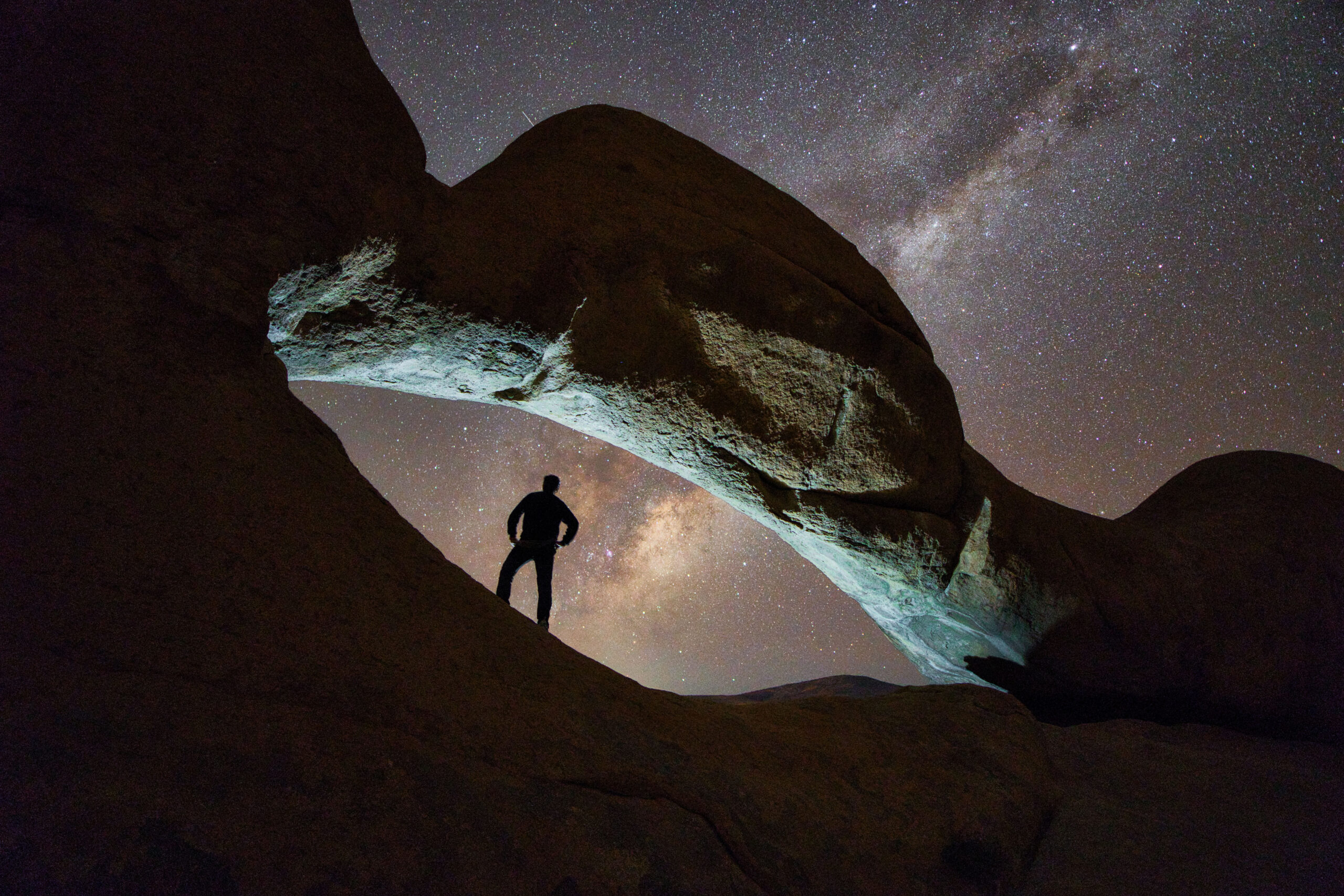
Departure for Spitzkoppe (about 4 h 30 min), the “Matterhorn of Namibia”: a granite inselberg more than 120 million years old rising 700 metres above the plain to 1,728 m. Its bare rock, polished by erosion, glows deep orange in…
Read the full day
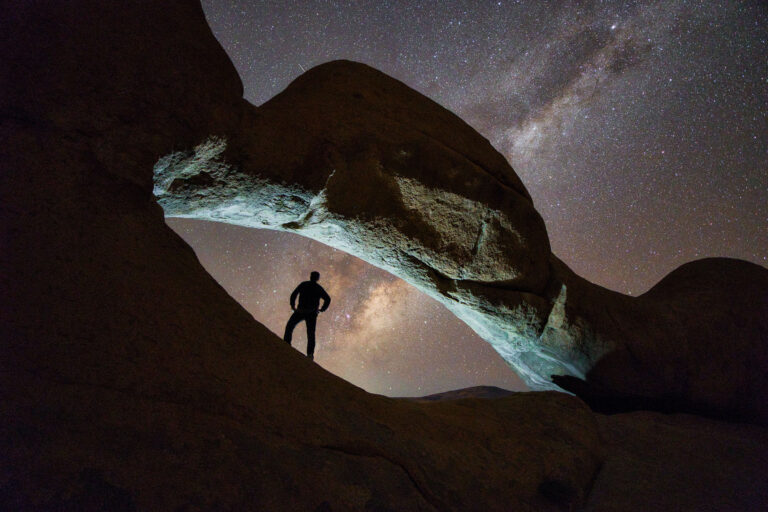
Departure for Spitzkoppe (about 4 h 30 min), the “Matterhorn of Namibia”: a granite inselberg more than 120 million years old rising 700 metres above the plain to 1,728 m. Its bare rock, polished by erosion, glows deep orange in the last light of day.
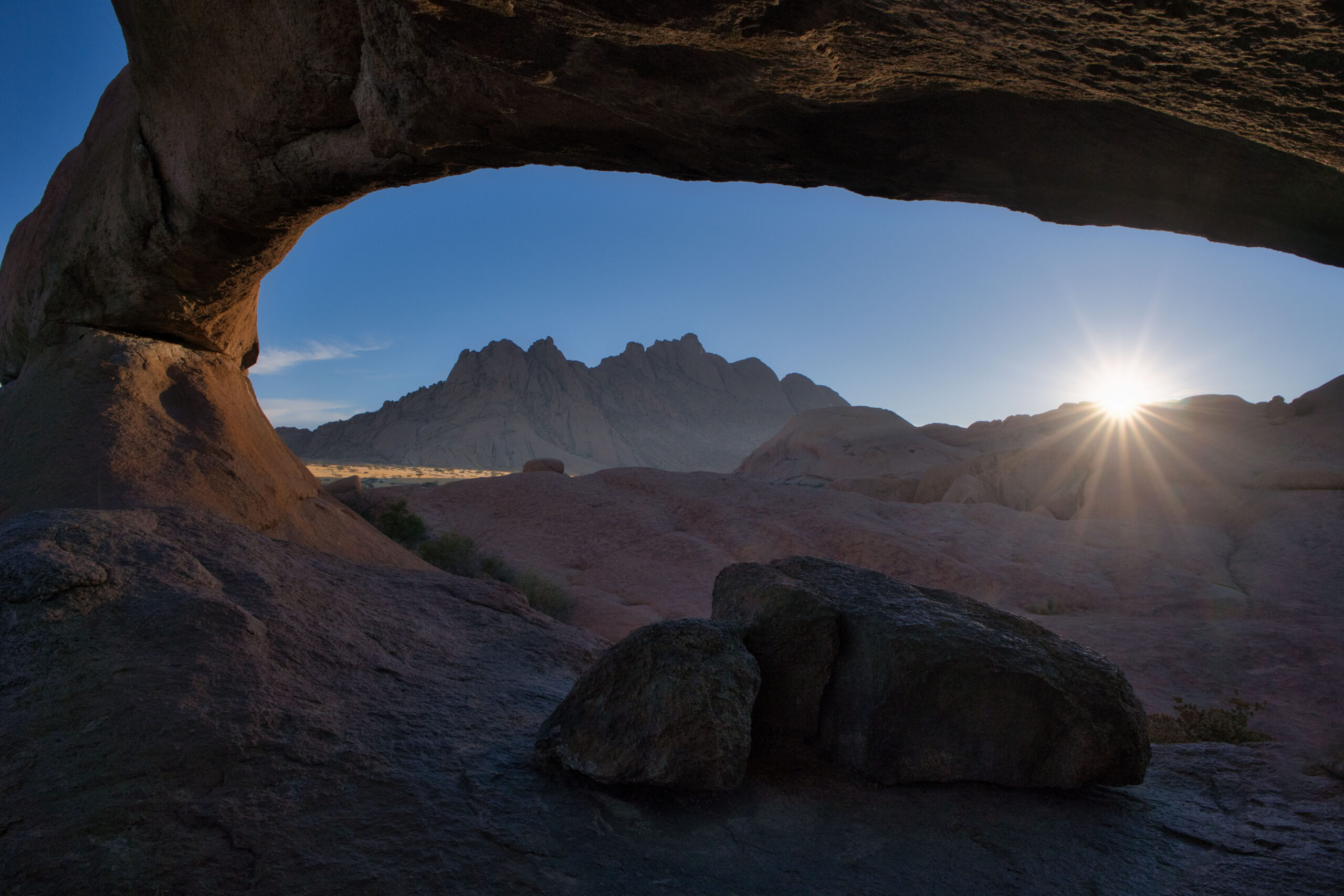
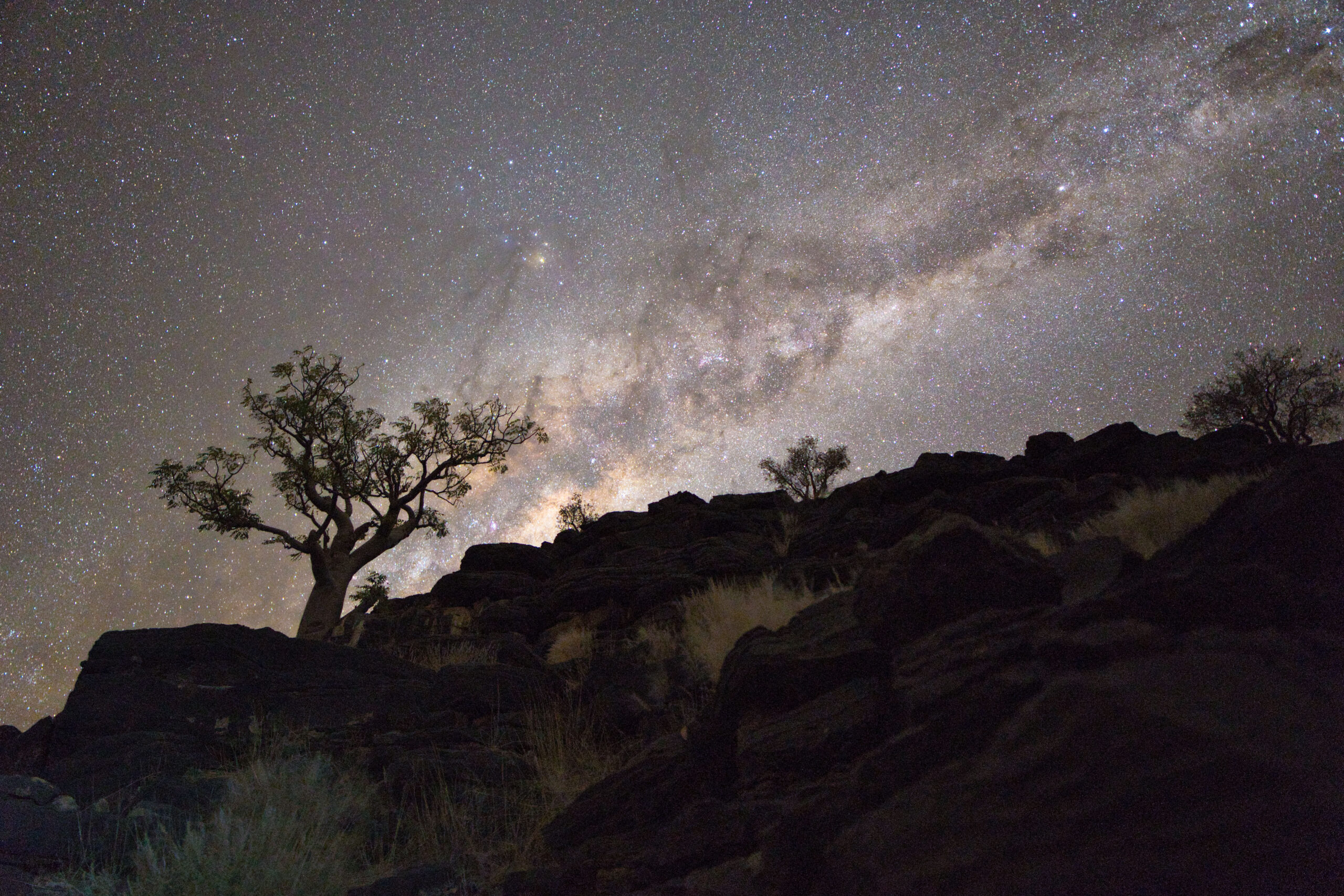
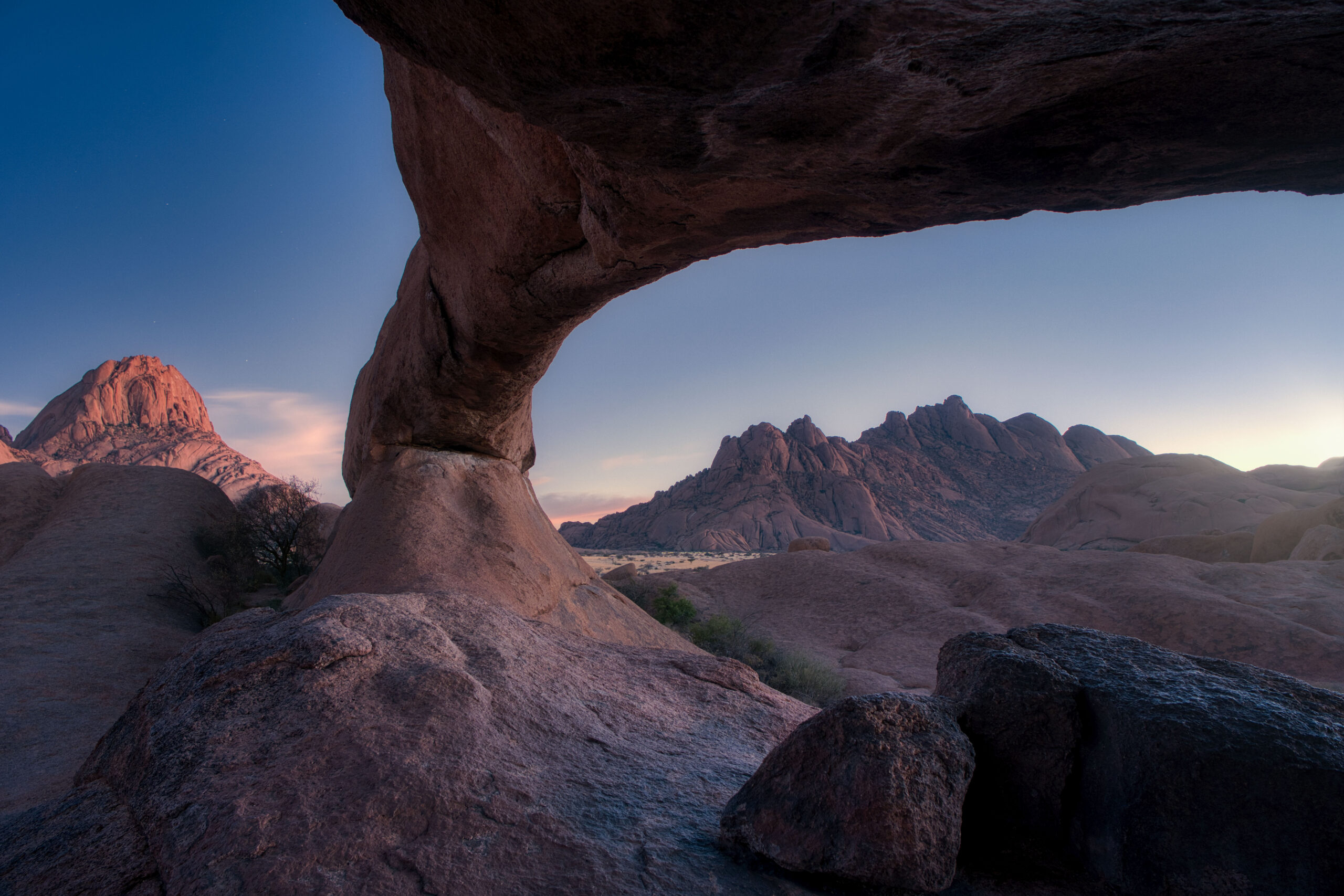
Sunset session among the domes and the first great night shoot of the trip: with the moon at 3 %, Spitzkoppe's granite arch —one of the most coveted natural frames in night photography anywhere— awaits us beneath the galactic core.
-
4
Day 5 · July 2 — A full day at Spitzkoppe
Sunrise among the granite, with the occasional fog the Atlantic pushes inland. During the day we explore the massif's scenic viewpoints and visit the rock paintings of the so-called Bushman's Paradise: hunting scenes and ritual…
Read the full day
Sunrise among the granite, with the occasional fog the Atlantic pushes inland. During the day we explore the massif's scenic viewpoints and visit the rock paintings of the so-called Bushman's Paradise: hunting scenes and ritual figures painted by the San people between 2,000 and 4,000 years ago, when these rocks were already a refuge with water in the middle of the plain.
Sunset and a second full night of astrophotography, now with virtually no moon. It is the ideal night for Milky Way panoramas, star trails over the domes and low-light-lit foregrounds.
-
5
![Gran congregación de flamencos rosas en aguas someras de Walvis Bay, Namibia]()
Day 6 · July 3 — Spitzkoppe → Walvis Bay
We drop down to the coast (about 2 h) and the landscape changes planet: the cold Benguela Current keeps this stretch of the Atlantic wrapped in fog and teeming with life. The Walvis Bay lagoon, a wetland protected under the…
Read the full day
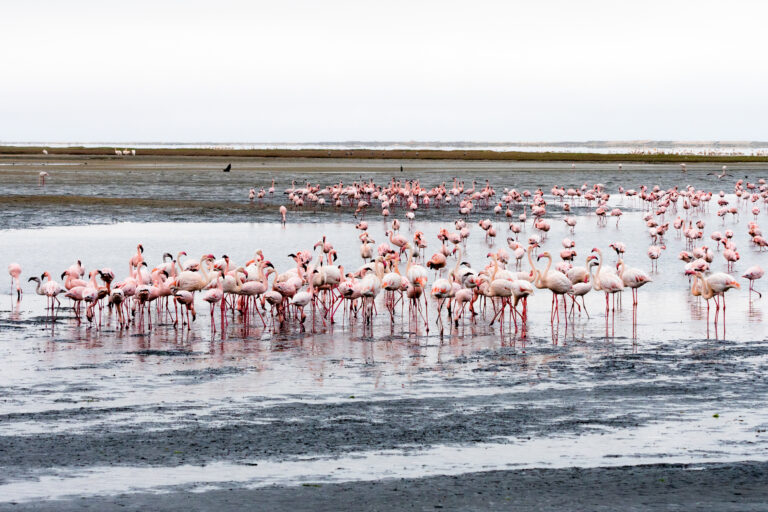
We drop down to the coast (about 2 h) and the landscape changes planet: the cold Benguela Current keeps this stretch of the Atlantic wrapped in fog and teeming with life. The Walvis Bay lagoon, a wetland protected under the Ramsar Convention, is one of the most important bird sanctuaries in southern Africa: thousands of flamingos —greater and lesser—, pelicans and waders just metres from the shore.
Afternoon devoted to coastal wildlife photography, including the Cape fur seal colony at Pelican Point. The soft light of the coastal fog, so different from the harshness of the interior, lends itself to pastel tones and minimalist compositions.
-
6
![Dunas de arena dorada con profundas sombras en el desierto de Namibia bajo cielo azul]()
Day 7 · July 4 — Walvis Bay, Swakopmund and Sandwich Harbour
Possible sunrise session at the Walvis Bay salt works, one of Africa's largest solar salt operations: its evaporation ponds shift from pink to magenta depending on the concentration of microorganisms — an impossible gradient that…
Read the full day
Possible sunrise session at the Walvis Bay salt works, one of Africa's largest solar salt operations: its evaporation ponds shift from pink to magenta depending on the concentration of microorganisms — an impossible gradient that calls for a drone and abstraction.
Mid-morning, Swakopmund: founded in 1892 as the port of the German colony, it preserves a historic centre of Central European architecture stranded between desert and ocean, with buildings such as the Woermannhaus and the old lighthouse.
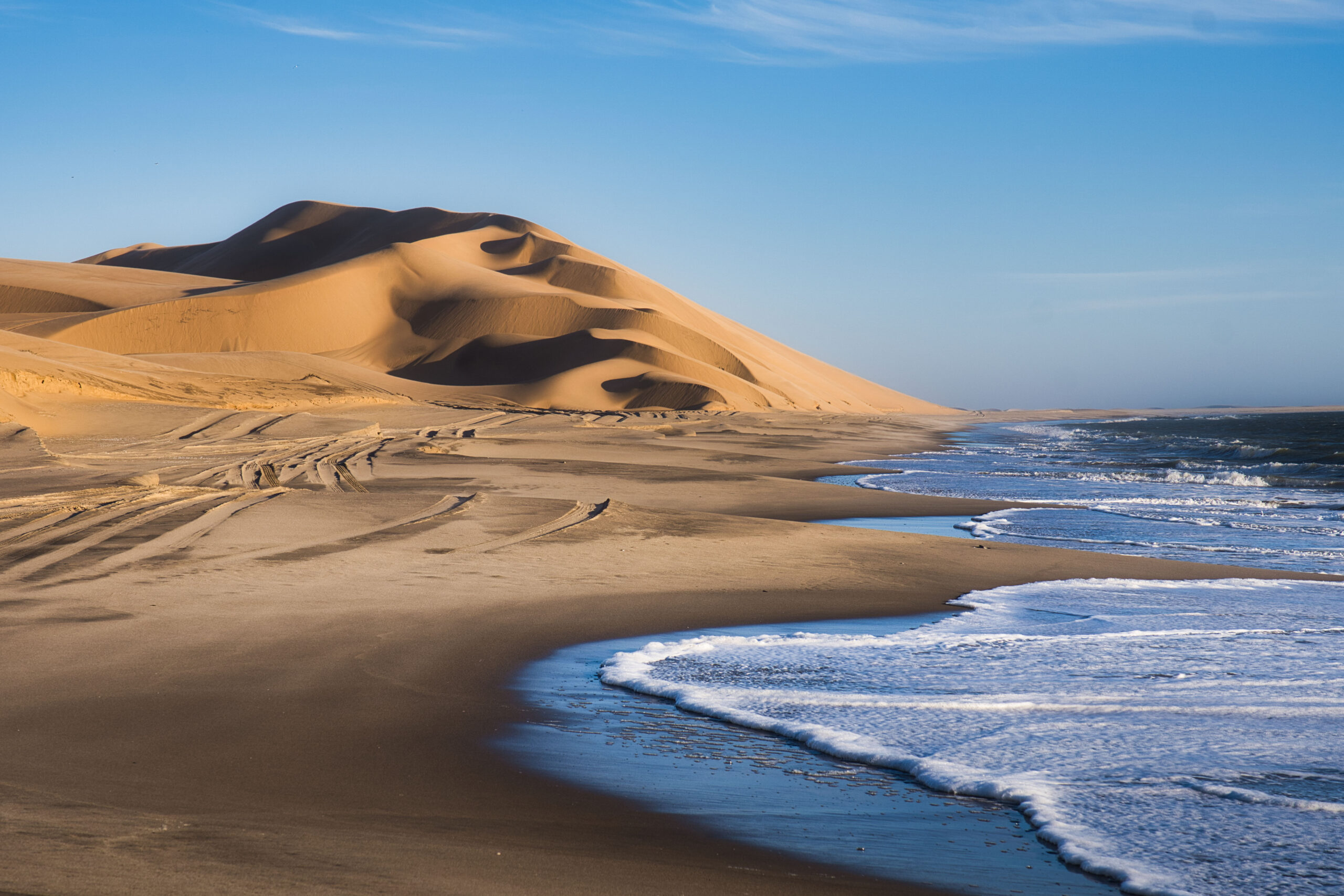
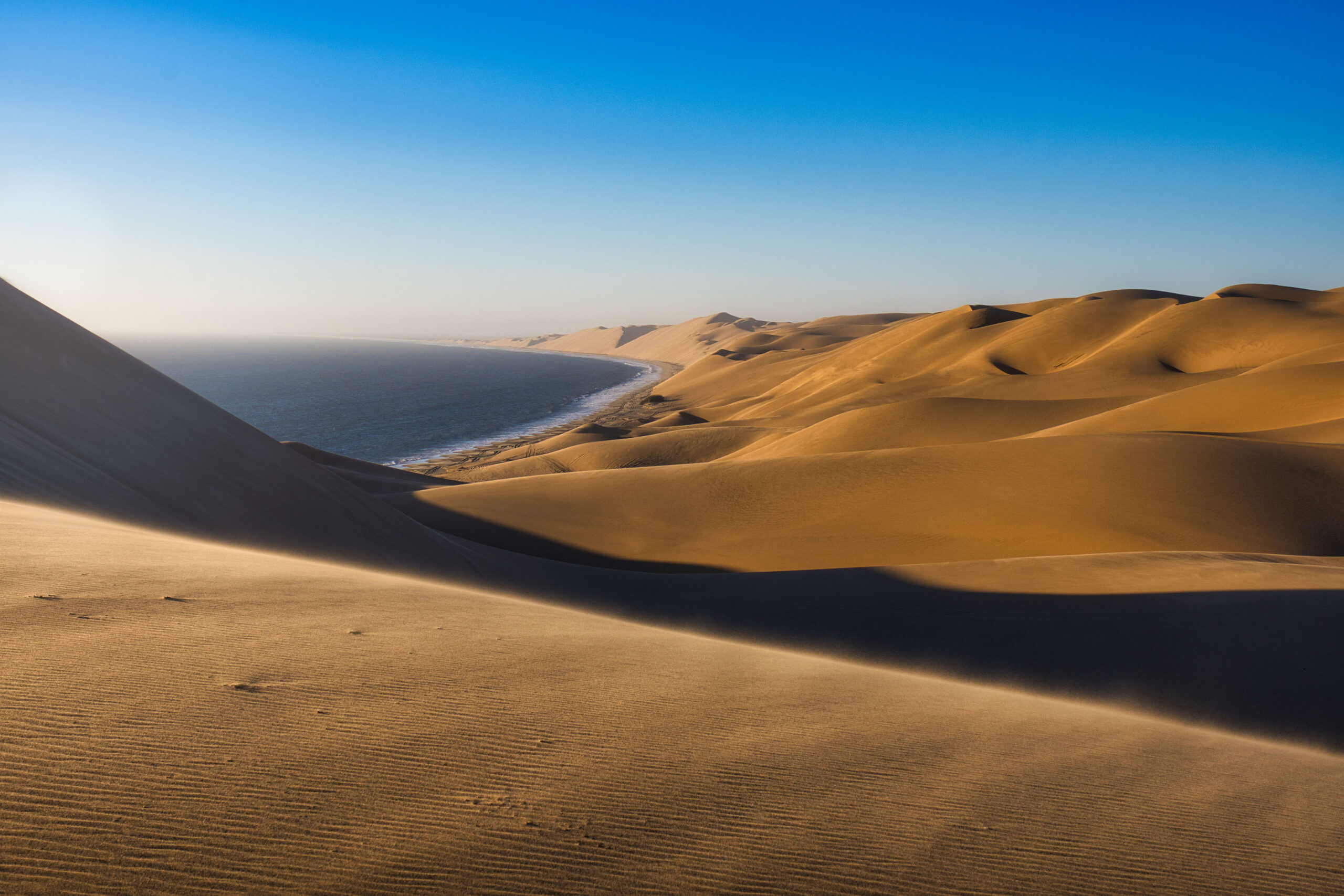
In the afternoon, a 4x4 excursion to Sandwich Harbour, one of the very few places on Earth where a sea of dunes falls straight into the ocean. We drive along the beach with the tide in our favour to photograph sunset where the Namib sinks into the Atlantic. Tonight is, precisely, the night of the new moon.
-
7
![Dos árboles muertos y retorcidos en el árido suelo blanco de Deadvlei, con dunas de arena roja al fondo en Namibia.]()
Day 8 · July 5 — Walvis Bay → Sossusvlei, via Solitaire
An inland leg towards Sossusvlei (about 5 h), crossing the Kuiseb passes and the Tropic of Capricorn. Obligatory stop at Solitaire, the only fuel stop on the route: a handful of houses, American cars devoured by rust, and the…
Read the full day
An inland leg towards Sossusvlei (about 5 h), crossing the Kuiseb passes and the Tropic of Capricorn. Obligatory stop at Solitaire, the only fuel stop on the route: a handful of houses, American cars devoured by rust, and the apple pie that baker Moose McGregor turned into a desert legend — the recipe lives on and is still said to be the best in Namibia.
Arrival in the Sesriem area, sunset session among the first dunes and a night shoot in the heart of the Namib. The region around Sossusvlei boasts some of the darkest, cleanest skies on the planet; with a brand-new moon at barely 4 %, the best run of night sessions of the trip begins.
-
8
![Dunas de arena del desierto de Namibia con vegetación dispersa y sombras marcadas por la luz lateral]()
Day 9 · July 6 — Deadvlei, the dunes and Sesriem Canyon
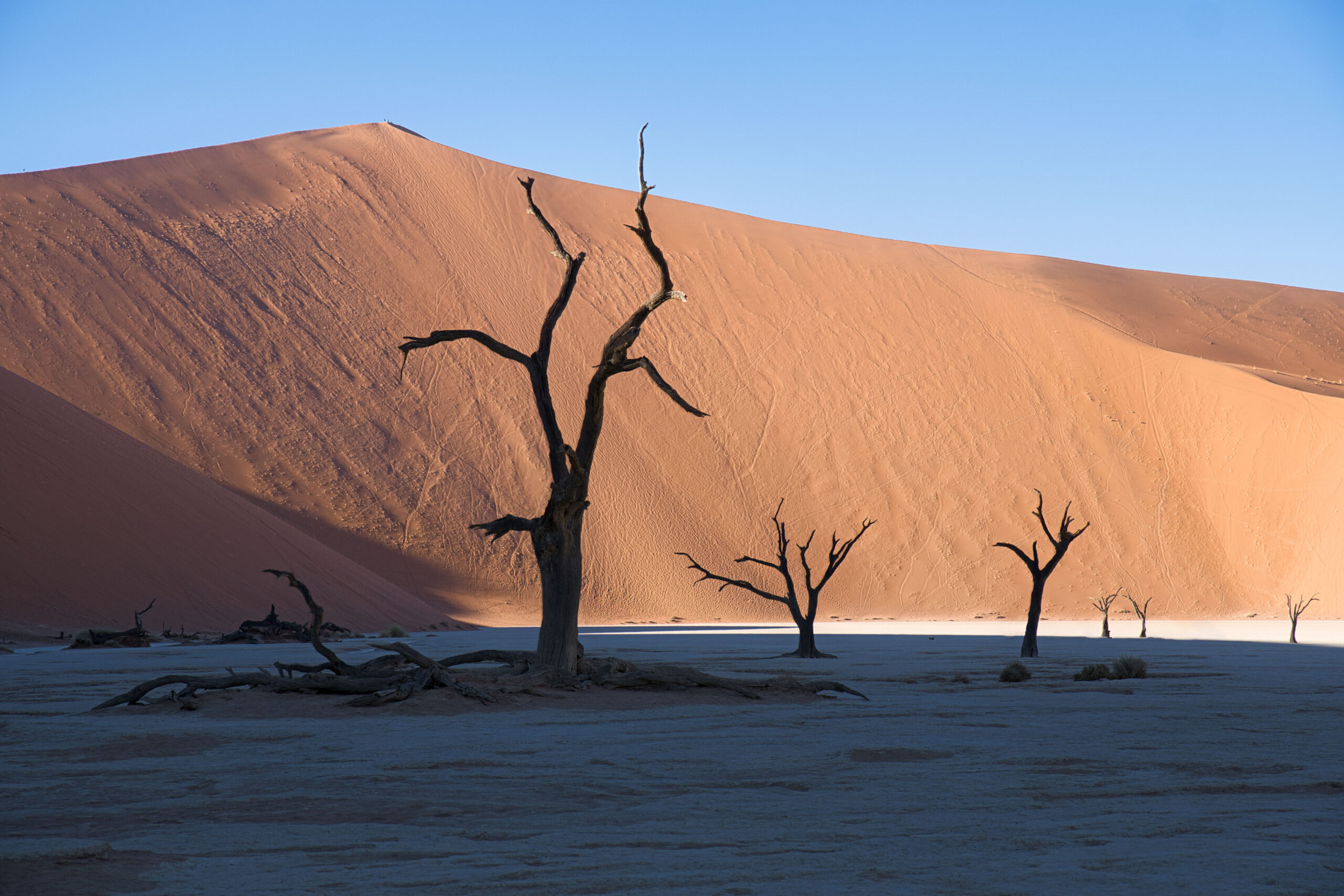
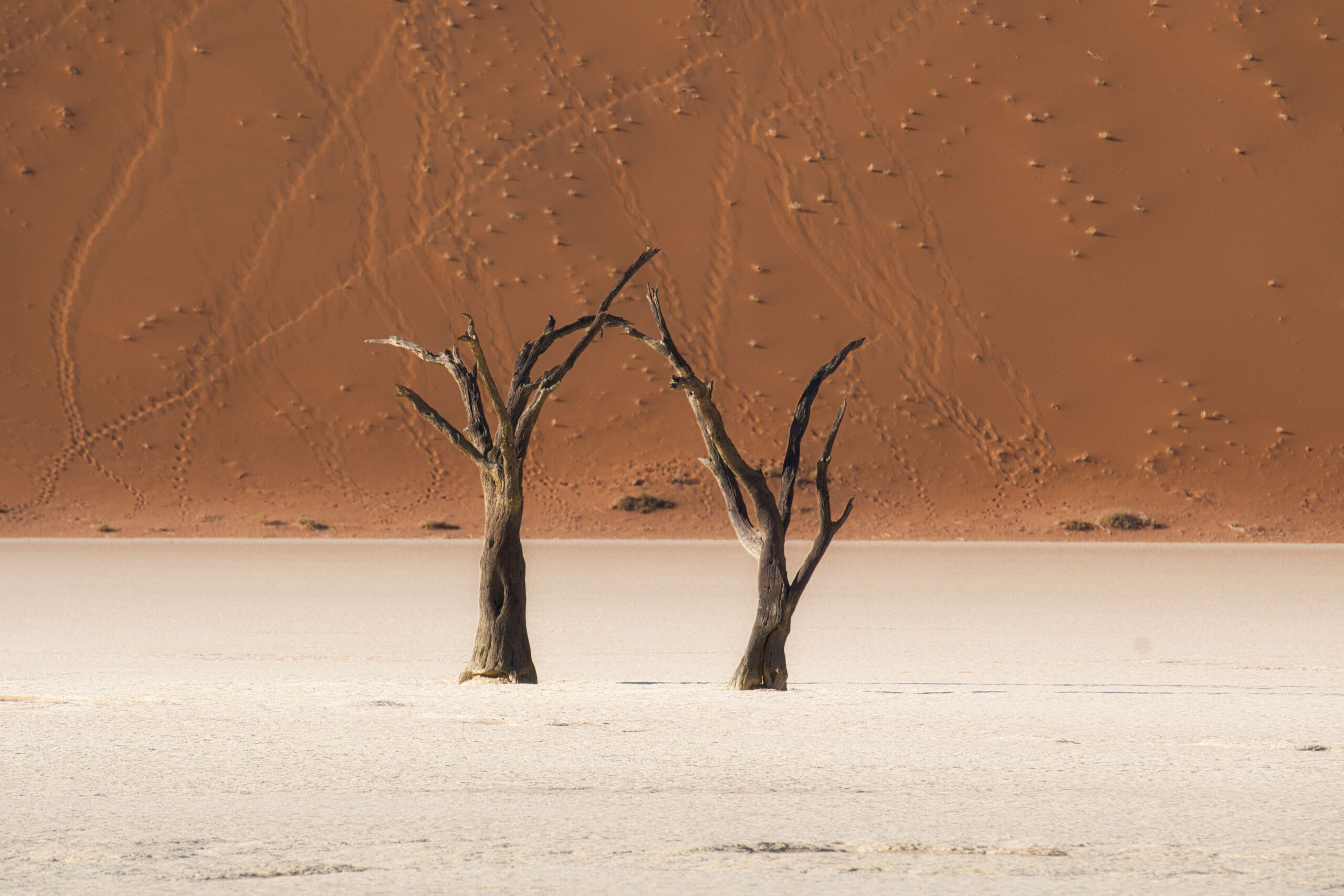
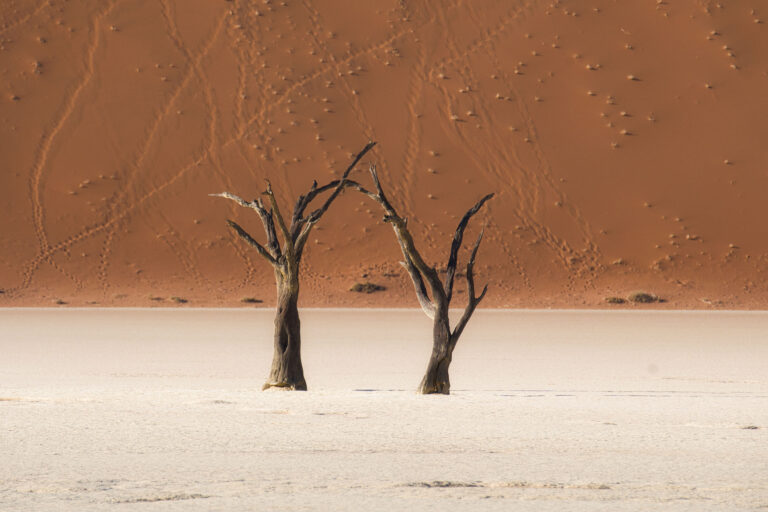
An early start to enter Deadvlei with the first light — Namibia's most recognisable image: an ancient white clay pan studded with camel thorn trees that died more than six centuries ago, when the dunes cut off the Tsauchab River…
Read the full day
An early start to enter Deadvlei with the first light — Namibia's most recognisable image: an ancient white clay pan studded with camel thorn trees that died more than six centuries ago, when the dunes cut off the Tsauchab River. The air is so dry the trees never even decomposed: they still stand, blackened by the sun, against an orange wall of dunes over 300 metres tall. The half hour after sunrise, as the shadow line slides down the dune, is the moment we come for.
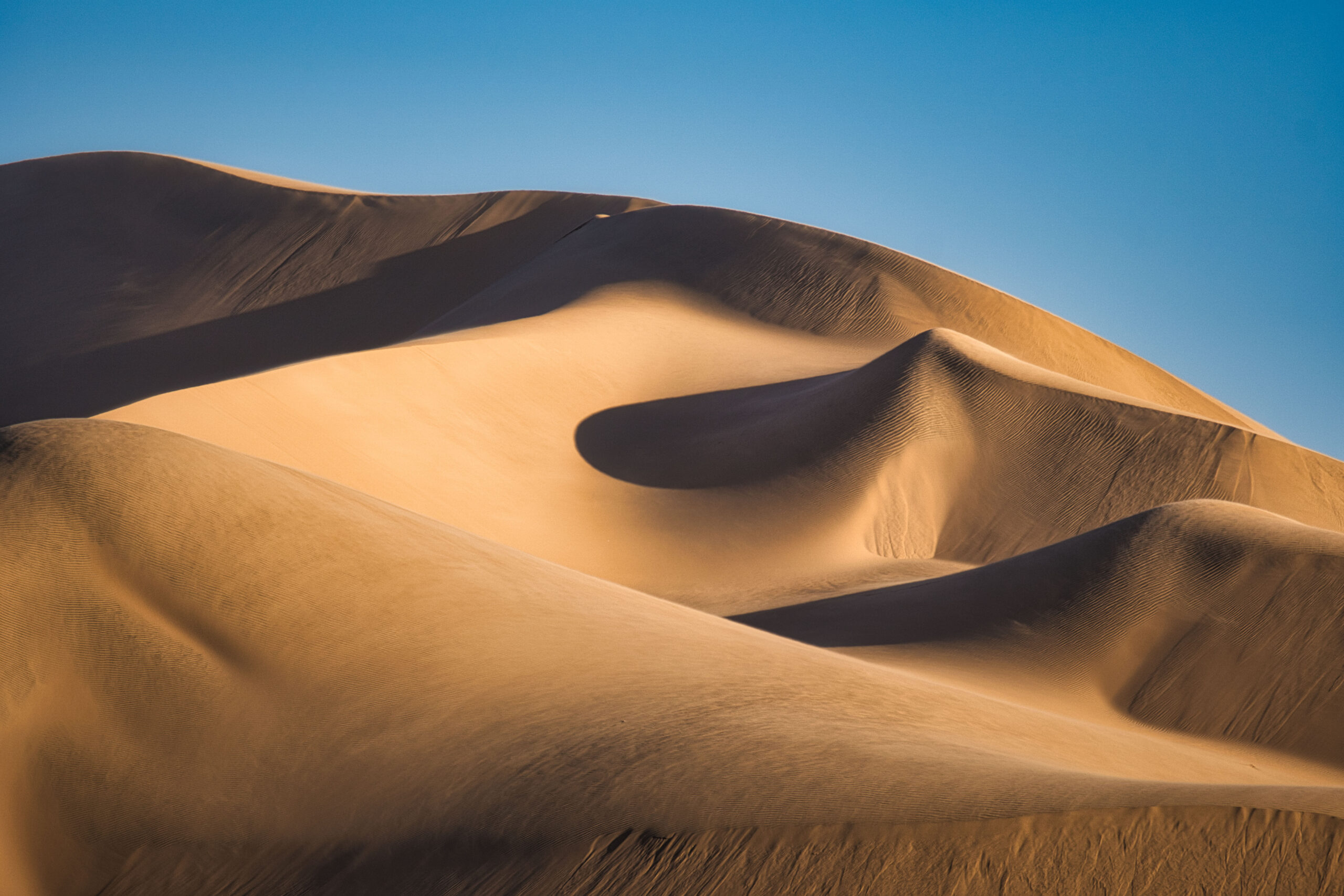
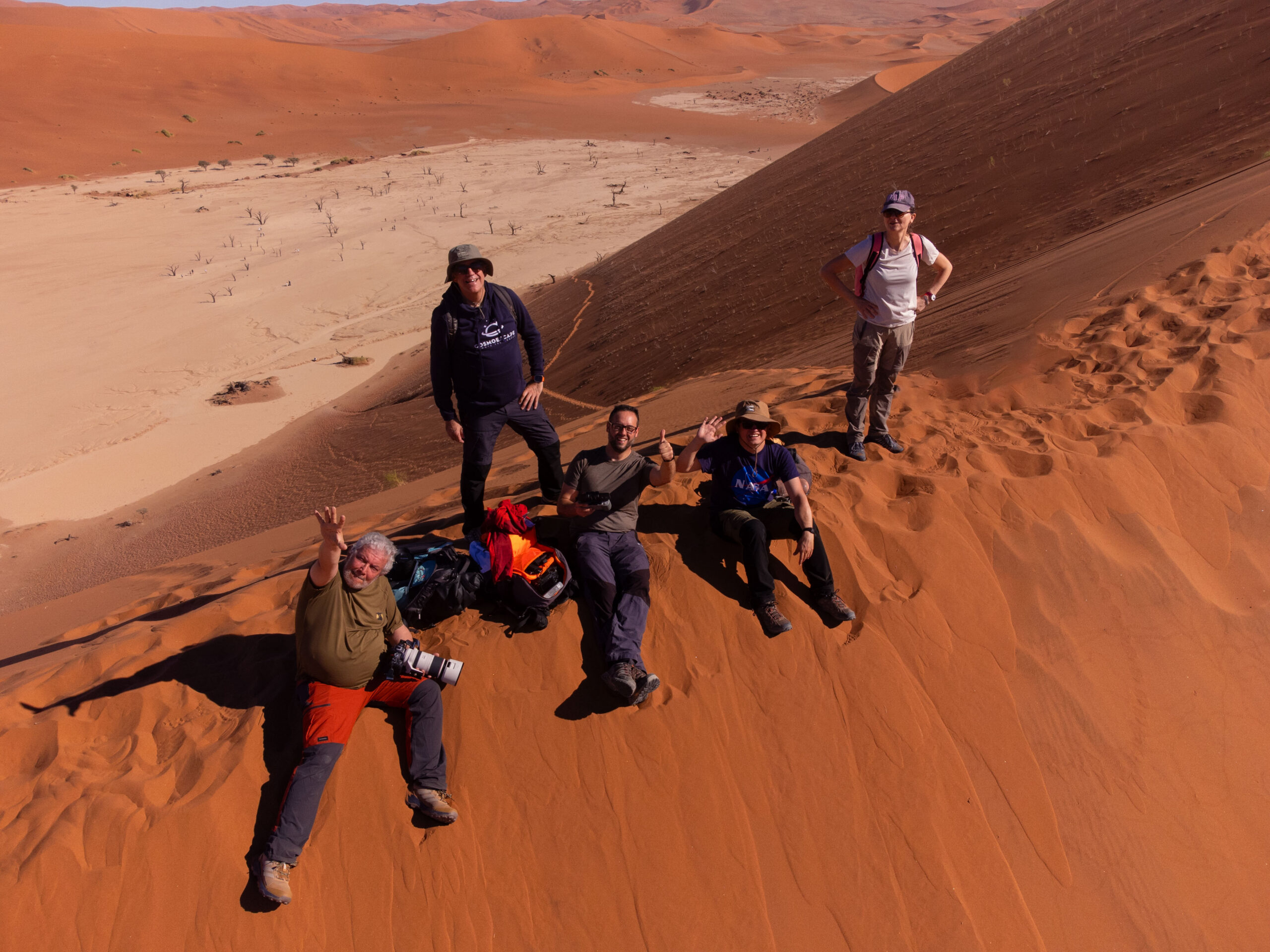
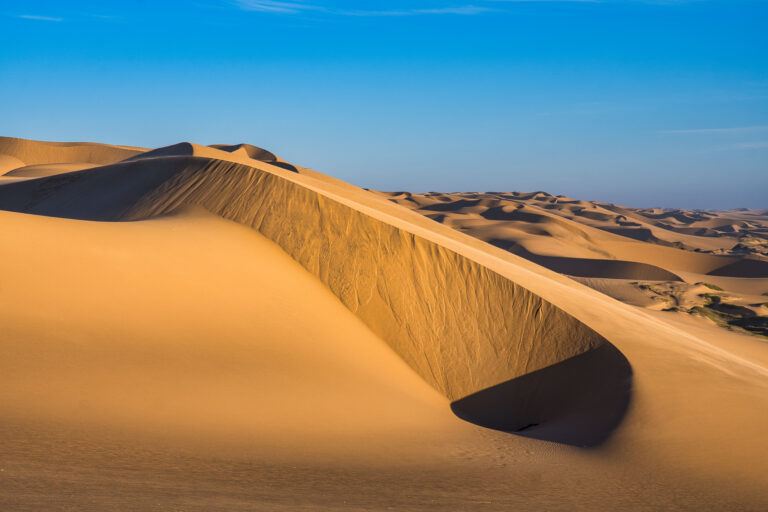
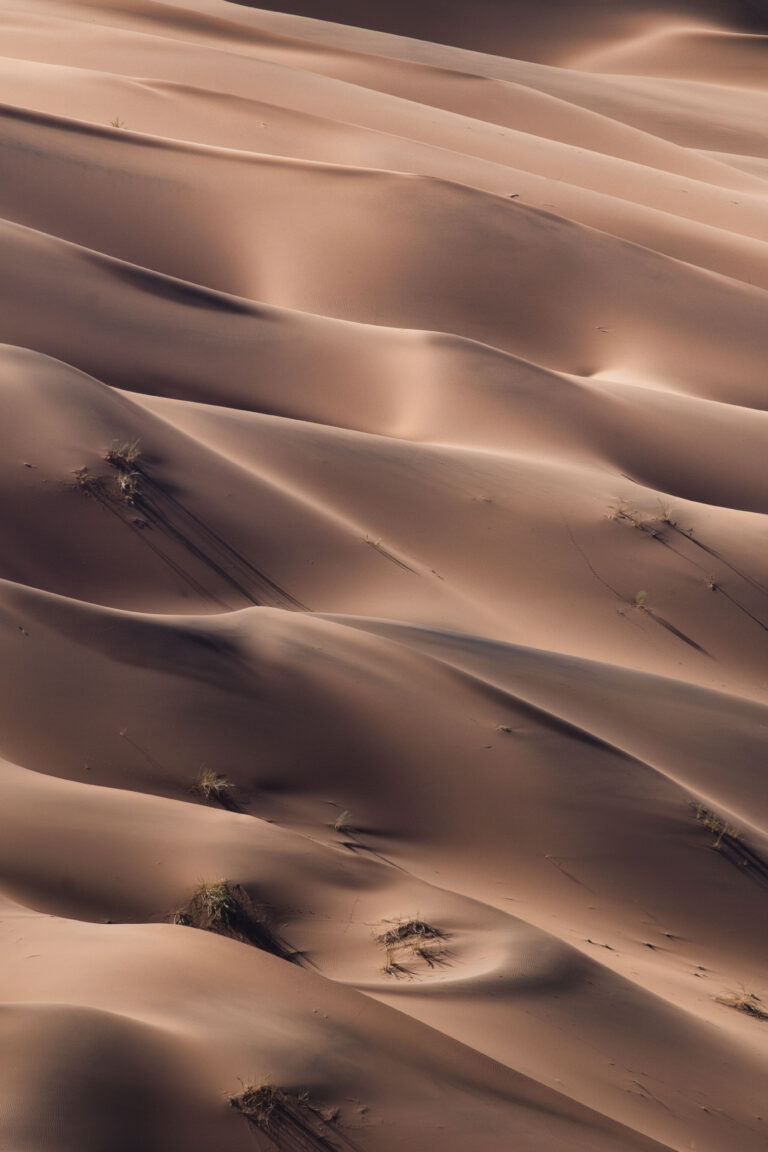
Optional climb up one of the great dunes —Big Daddy stands around 325 metres— to photograph the sand sea from above. The deep red of these dunes is iron oxide: the older the sand, the deeper the colour, and the Namib has been a desert for at least 55 million years — the oldest in the world.
Sunset at Sesriem Canyon, a 30-metre gorge carved by the Tsauchab through conglomerate rock; its Afrikaans name —“six straps”— recalls the leather thongs settlers tied together to haul water from the bottom. Last night shoot of the trip under the Namib sky.
-
9
Day 10 · July 7 — Sossusvlei → Windhoek
Return to Windhoek (about 5 h 20 min) across the mountains of the central escarpment, with photo stops depending on flight times. Arrival at the airport and end of services. Ten days, three deserts, and a hard drive full of night.
Read the full day
Return to Windhoek (about 5 h 20 min) across the mountains of the central escarpment, with photo stops depending on flight times. Arrival at the airport and end of services.
Ten days, three deserts, and a hard drive full of night.
Gallery
What's included
Included
- Lodging
- Park entrance fees
- Photo guide and all their expenses
- 4x4/minibus transport and fuel throughout the trip
Not included
- International flights
- Meals and drinks
- Travel insurance
- Tips
- Single room supplement
- Anything not expressly mentioned under "Includes".
Your guide
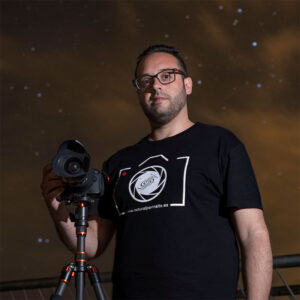
Luis Miguel Azorín
My name is Luis Miguel Azorín and I am the content creator behind the YouTube channel "Natural Portraits" With a restless mind and a great love for the natural world, I have been fascinated by everything related to nature since…
View profileSee their 1 trips
Frequently asked questions
Why these exact dates?
Because of the moon. The July 2027 new moon falls on the 4th, right in the middle of the expedition: every night session of the trip happens with less than 11 % lunar illumination. July is also Namibia's dry winter: near-guaranteed clean skies, wildlife concentrated at Etosha's waterholes and comfortable temperatures for walking the dunes.
What if it's cloudy on the astrophotography nights?
Nobody can guarantee a sky, but these dates were chosen precisely on the statistics: July is the heart of the dry winter, with whole clear weeks and some of the lowest cloud cover on Earth. The trip also spreads its photographic nights across two different areas —Spitzkoppe and Sossusvlei—, so one overcast night never compromises the trip's results.
What photographic level do I need?
None in particular. The guide works both with those trying night photography for the first time and with those who already master the technique: planning by light benefits everyone equally.
What gear do you recommend?
For Etosha and the coast, a telephoto lens (300 mm or more is ideal). For the night sessions, a fast wide-angle (f/2.8 or better) and a sturdy tripod. Filters, plenty of spare batteries —the cold nights drain them faster— and protection against the fine desert dust, especially when changing lenses.
Is Namibia cold in July?
It is the middle of the austral winter: mild, sunny days around 20–24 °C and cold nights that can drop below 0 °C in the desert. For the night sessions you need proper warm clothing: a layering system, hat and gloves.
Are wildlife sightings guaranteed?
No. The dry season concentrates the animals at Etosha's waterholes and makes sightings highly likely, and the flamingos and fur seals of the coast are regular residents, but no wild animal sighting can ever be guaranteed.
Is it physically demanding?
It is an accessible trip. The only demanding activity is optional: the climb up the great dunes of Sossusvlei, done slowly, at dawn, with no obligation to reach the top. The rest alternates between vehicle, short walks and static sessions.
Are flights included?
No. International flights to Windhoek are each traveller's responsibility. The trip begins and ends at Windhoek airport.
Which meals are included?
All breakfasts are included at the four lodges, and dinner is also included on both nights at Spitzkoppe (Uitkyk Guest Farm) and both nights at Sossusvlei (Desert Homestead Lodge). Remaining meals and drinks are at your own expense: budget roughly €250–400 for the whole trip. Eating out in Namibia is noticeably cheaper than in most of Europe.
Do I need a visa for Namibia?
Yes. Since April 2025, EU citizens need a tourist visa, available on arrival or — better — as an e-visa applied for online a few days before travelling (processed in about 48 hours). It costs 1,600 NAD (around €85–90). Your passport must be valid for at least 6 months with 3 blank pages. We send step-by-step instructions before the trip.
Do I need vaccinations or health precautions?
No vaccinations are mandatory when travelling from Europe. Northern Namibia (Etosha) is considered a low-risk malaria area, and July — the dry season — is the lowest-risk time of year; even so, we recommend visiting a travel health clinic 6–8 weeks before departure for personal advice. Travel insurance with medical cover is not included and is mandatory.
What currency should I bring?
The Namibian dollar (NAD), pegged 1:1 to the South African rand, which is also accepted. Cards work at lodges, restaurants and fuel stations along the main routes; carry some cash for tips and small purchases. An ATM at Windhoek airport covers your arrival.
Can I fly my drone?
Namibia regulates drones strictly: flying is prohibited inside national parks (Etosha, Namib-Naukluft), and the rest of the country requires a prior permit from the civil aviation authority. If you want to bring yours, tell us when booking and we will advise what is feasible at each stage.
Another question? Ask the assistant or write to us on WhatsApp.