
What Camera Gear to Bring on a Costa Rica Photography Trip
What camera gear should you bring on a photography trip to Costa Rica? It’s the question we get asked most before every expedition, and for good reason: few destinations demand this much versatility from a nature photographer. In the same morning you can go from a hummingbird hovering thirty centimetres from your lens to a scarlet macaw crossing the canopy forty metres up, and by night end up crouched next to a poison dart frog the size of a fingernail. Choosing the right lenses — and knowing when to use each one — is the difference between coming home with the shot or just the story.
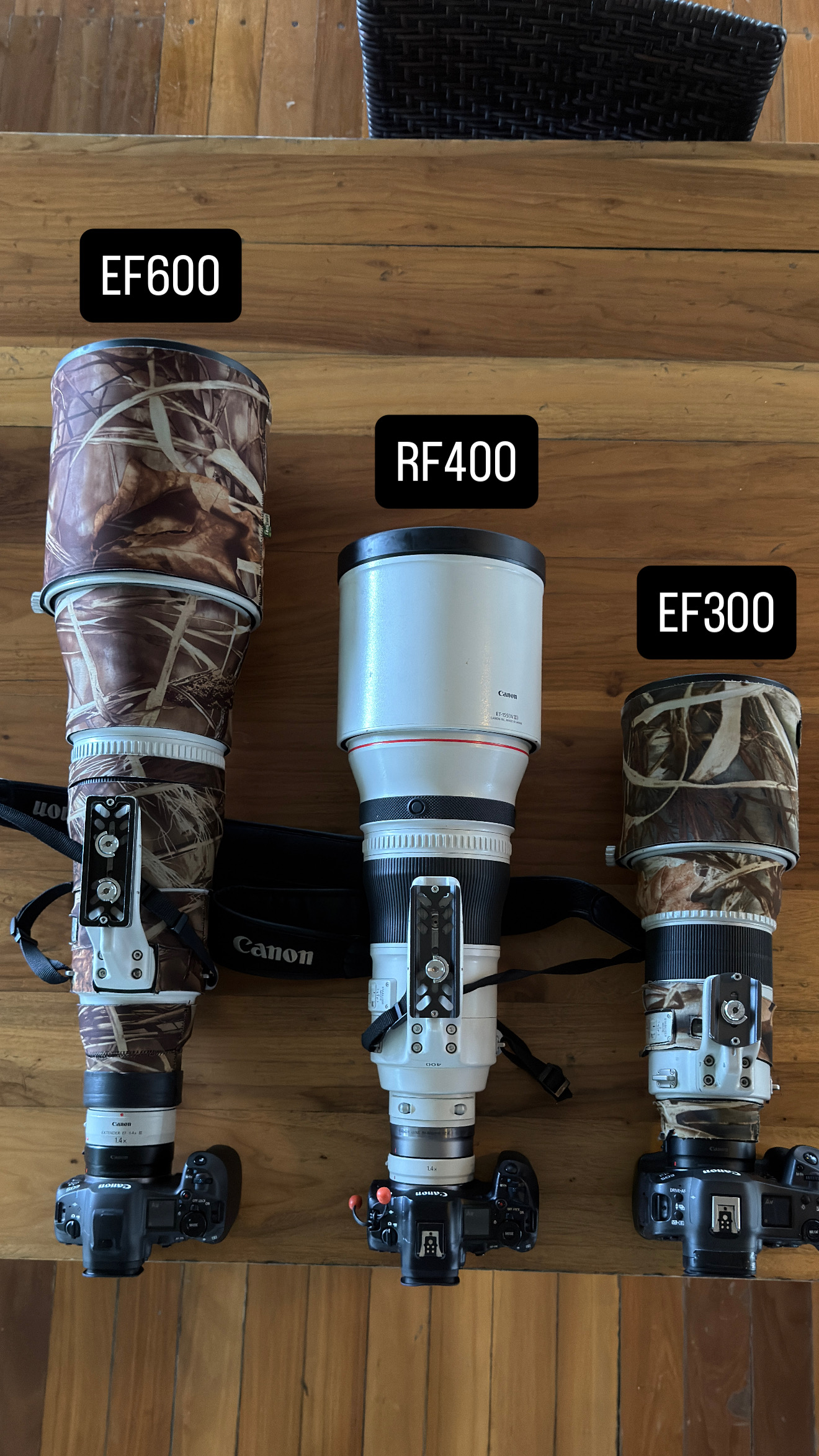
The gear you shouldn’t leave behind
Everything below is Canon gear, since that’s what we shoot with, but the logic behind each choice travels to any brand. Match the focal length and aperture to what you’re photographing, and the same reasoning applies whether you shoot Nikon, Sony or Fujifilm.
Macro: the small stuff up close
Poison dart frogs the size of a fingernail, butterflies with iridescent wings, the texture on a single leaf: this is where a dedicated macro lens earns its keep. Our first choice is the Canon RF 100mm F2.8L Macro IS USM, with true 1:1 magnification and tack-sharp results even wide open. If you don’t own a macro lens, the RF 24-70mm F2.8L is a solid stand-in: its close focusing distance won’t get you true macro reproduction, but it’s more than enough for frogs and butterflies at arm’s length.
Birds: the backbone of the trip
From hummingbirds at the feeders to toucans in the canopy, birds are what most of the trip revolves around, and the lens choice here has a clear hierarchy. The Canon RF 100-500mm F4.5-7.1L IS USM is non-negotiable: light, versatile, and capable of covering everything from a hummingbird a metre away to a toucan mid-canopy. If you can only bring one lens, this is it. A notch below in priority, but a real asset whenever reach becomes the limiting factor, sits the Canon RF 200-800mm F6.3-9 IS USM: heavier and hungrier for light, but those extra millimetres turn a distant silhouette into a detailed portrait. And if you already own a 400mm F2.8 prime, that’s the dream setup: background separation and light-gathering power nothing else on this list can match, and, paired with a 1.4x extender, a 560mm f/4 on demand.
Terrestrial mammals: fast and close
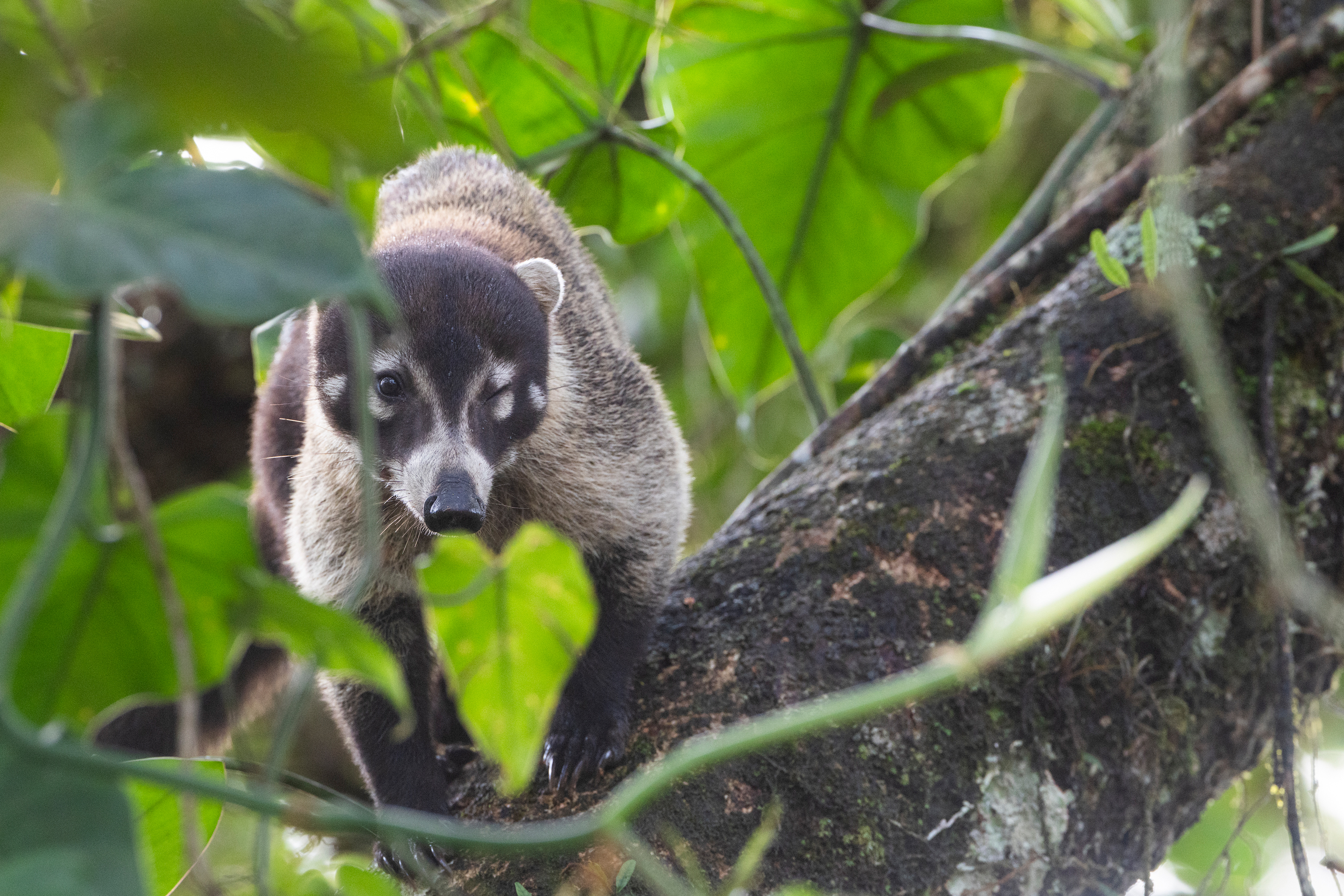
Coatis, agoutis, monkeys crossing the trail a few metres away: these encounters reward speed over reach. The Canon RF 70-200mm F2.8L IS USM is the agile choice, with faster handling and more light-gathering power for animals that show up close with no time to think. For mammals that keep their distance, the same telephotos you’re already carrying for birds, the 100-500mm or the 200-800mm, do double duty.
Night photography: when the light runs out
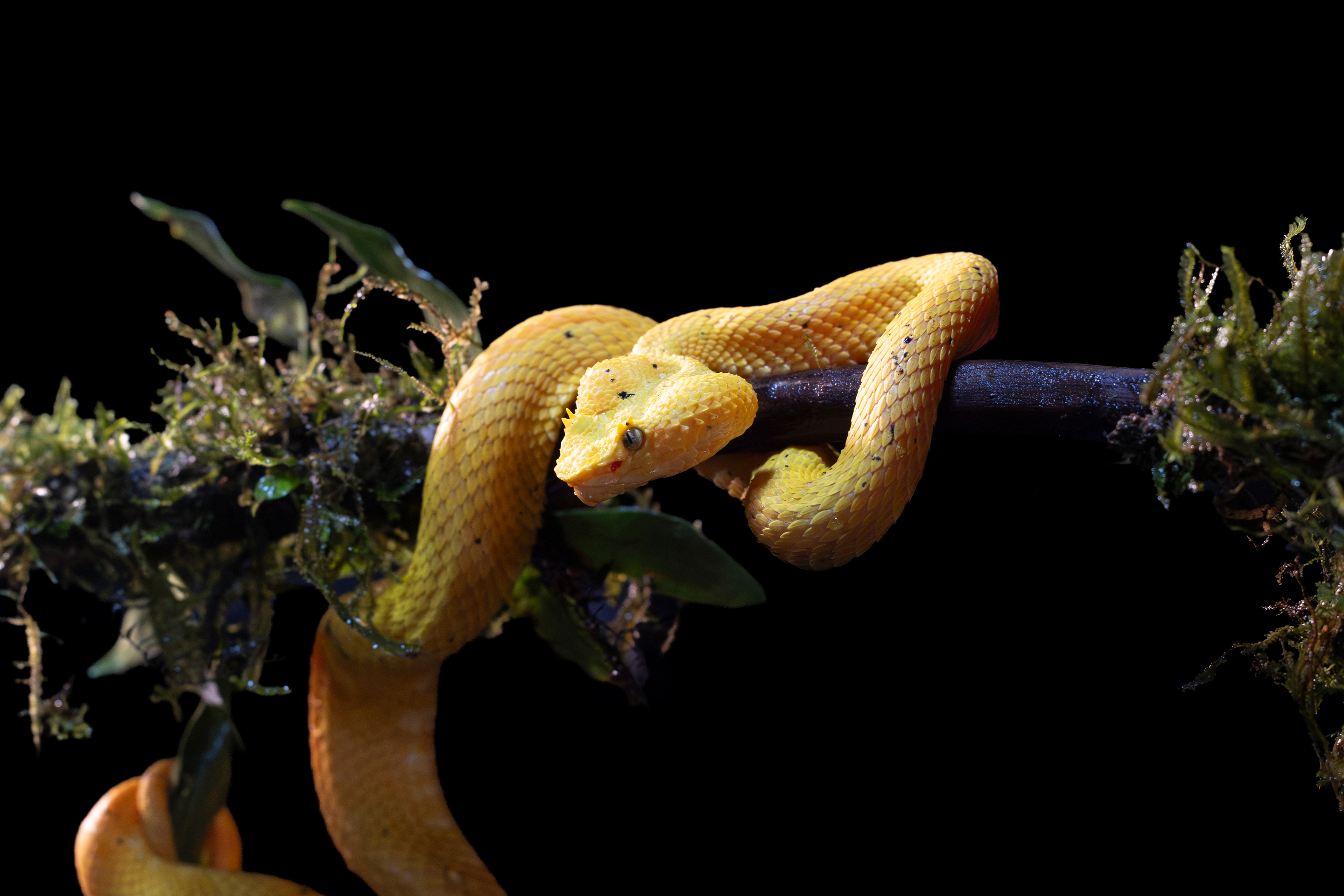
Frogs and snakes come out after dark, and this is the one scenario where aperture matters more than anything else. A 400mm F2.8 prime is the tool of choice, gathering enough light to shoot handheld in near-total darkness. Without one, the 100-500mm with fill flash gets the job done for subjects close to the path.
On top of that we pack a lightweight monopod for long sessions with the 400mm f/2.8 (a tripod and ball head are usually overkill for moving wildlife), a rain cover — on the Caribbean side it can rain any time of year — spare batteries, since humidity drains them faster than usual, and fast memory cards for hummingbird burst sequences.
The photography route, stop by stop
This is how we plan a typical day of our Costa Rica expedition, and which lens we have mounted at each stage of the route.
Hummingbirds: speed at close range
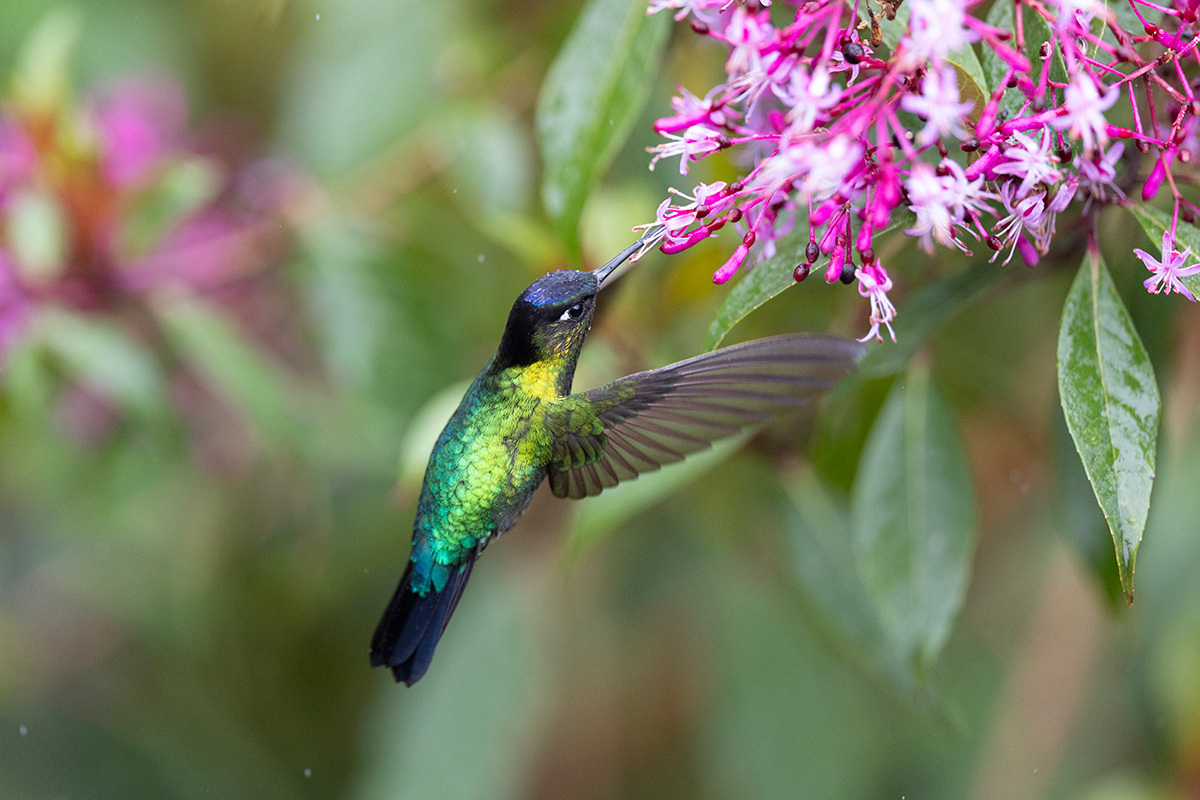
We always start at the hummingbird feeders, while the early-morning light is still soft. The distance here is minimal — sometimes under a metre — and what matters isn’t reach, it’s autofocus speed and a solid burst rate. The RF 100-500mm, even at its shorter end, is more than enough to freeze the wingbeat at over fifty times a second and throw the vegetation behind the subject out of focus.
Toucans, woodpeckers and the big canopy birds
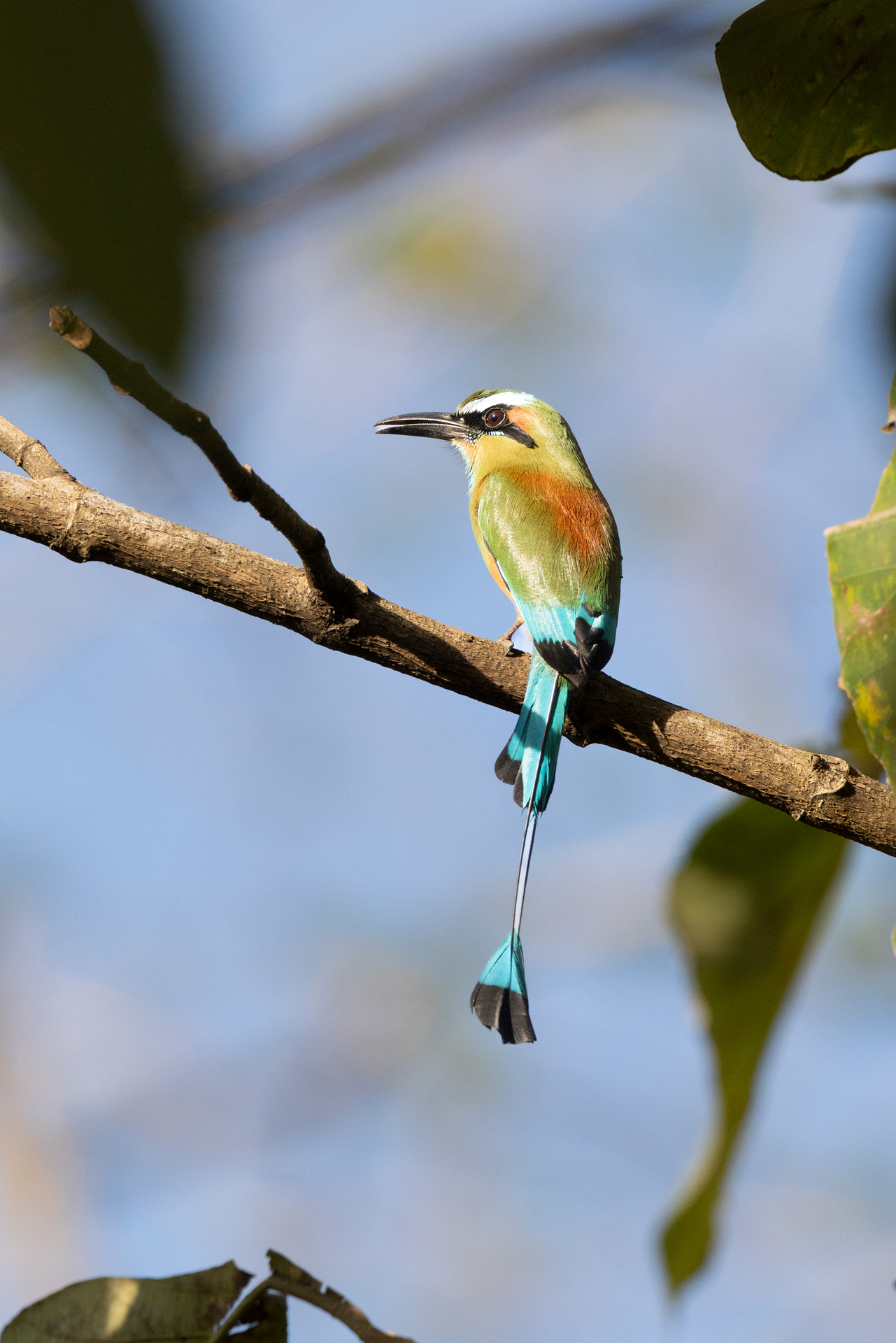
As the sun climbs higher, we look up to the canopy. Toucans, woodpeckers and other larger birds move through the treetops at distances no short lens forgives. This is where the RF 200-800mm comes in: the reach needed to fill the frame without invading their space or resorting to calls or bait. In good morning light, even at 800mm you can hold shutter speeds fast enough to freeze the head movement as a woodpecker strikes the bark.
Butterflies and frogs: colour up close
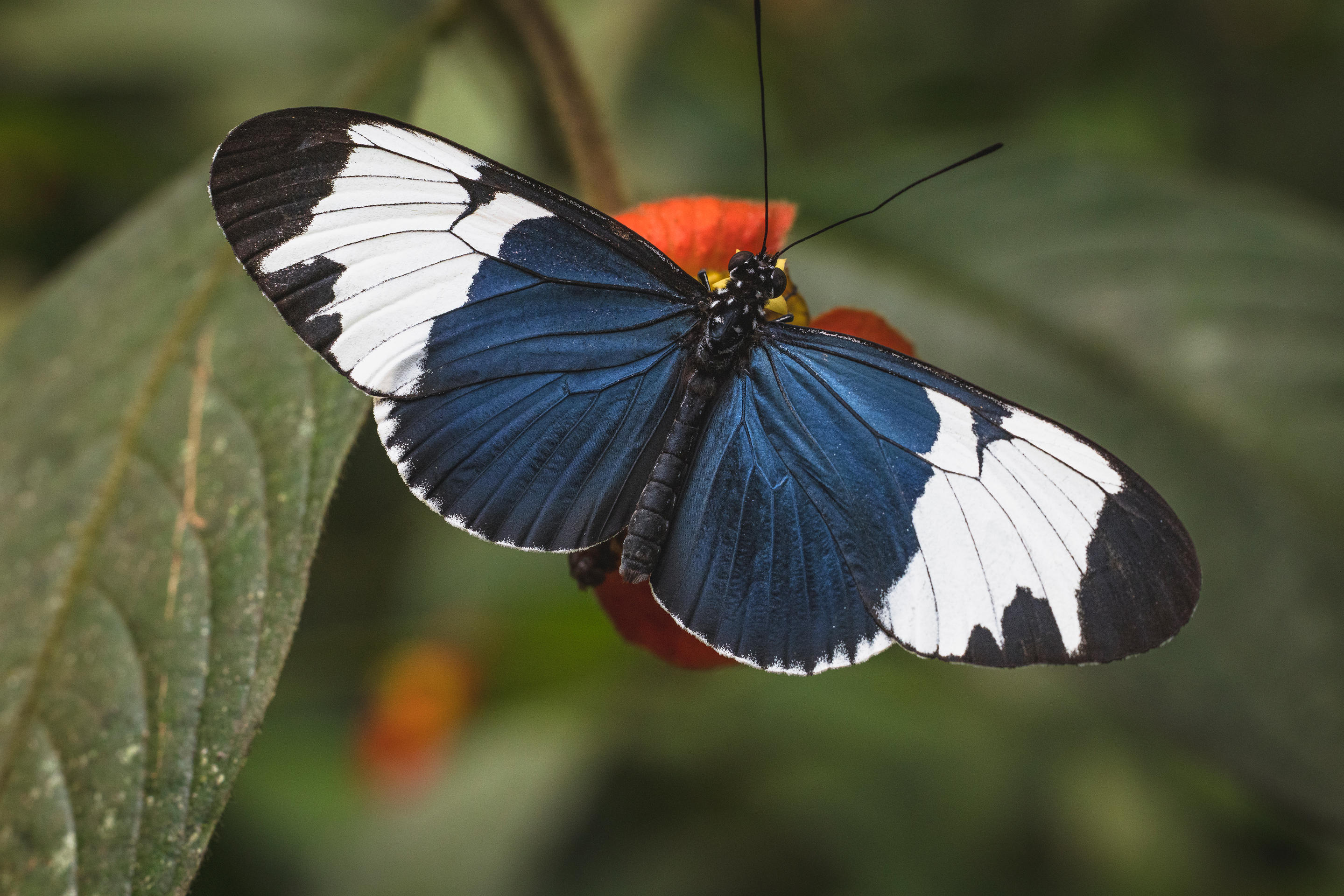
By mid-morning we’re back down in the understory, where iridescent butterflies and poison dart frogs in impossible colours appear just a couple of metres from the trail. We don’t carry a dedicated macro lens, but the 400mm f/2.8 — with its generous aperture — isolates the subject from the jungle background even at close focusing distances, and the 100-500mm handles the rest of the framing when the subject is a little further away or on the move.
Terrestrial mammals in the undergrowth
Coatis, agoutis, peccaries, or with luck a tapir crossing the trail: Costa Rica’s terrestrial mammals tend to appear and vanish in seconds, almost always through dense undergrowth. This is 200-800mm territory when there’s room to step back, the 70-200mm f/2.8 when the animal shows up close and light-gathering and quick handling matter more than reach, or the 400mm f/2.8 with the 1.4x extender when light drops under the forest canopy and we need that extra aperture to avoid shooting at shutter speeds that are too slow.
The king vulture from the hide
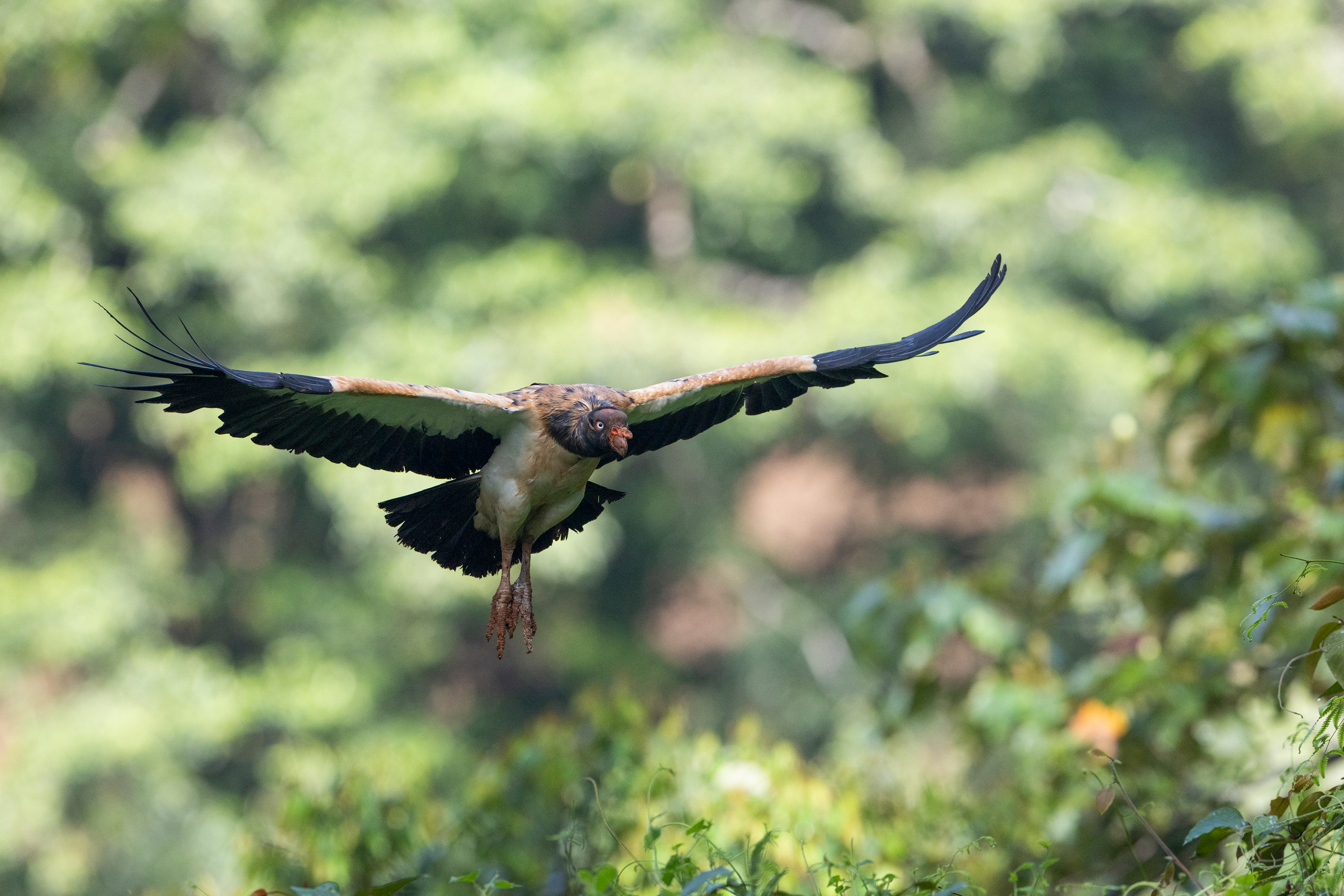
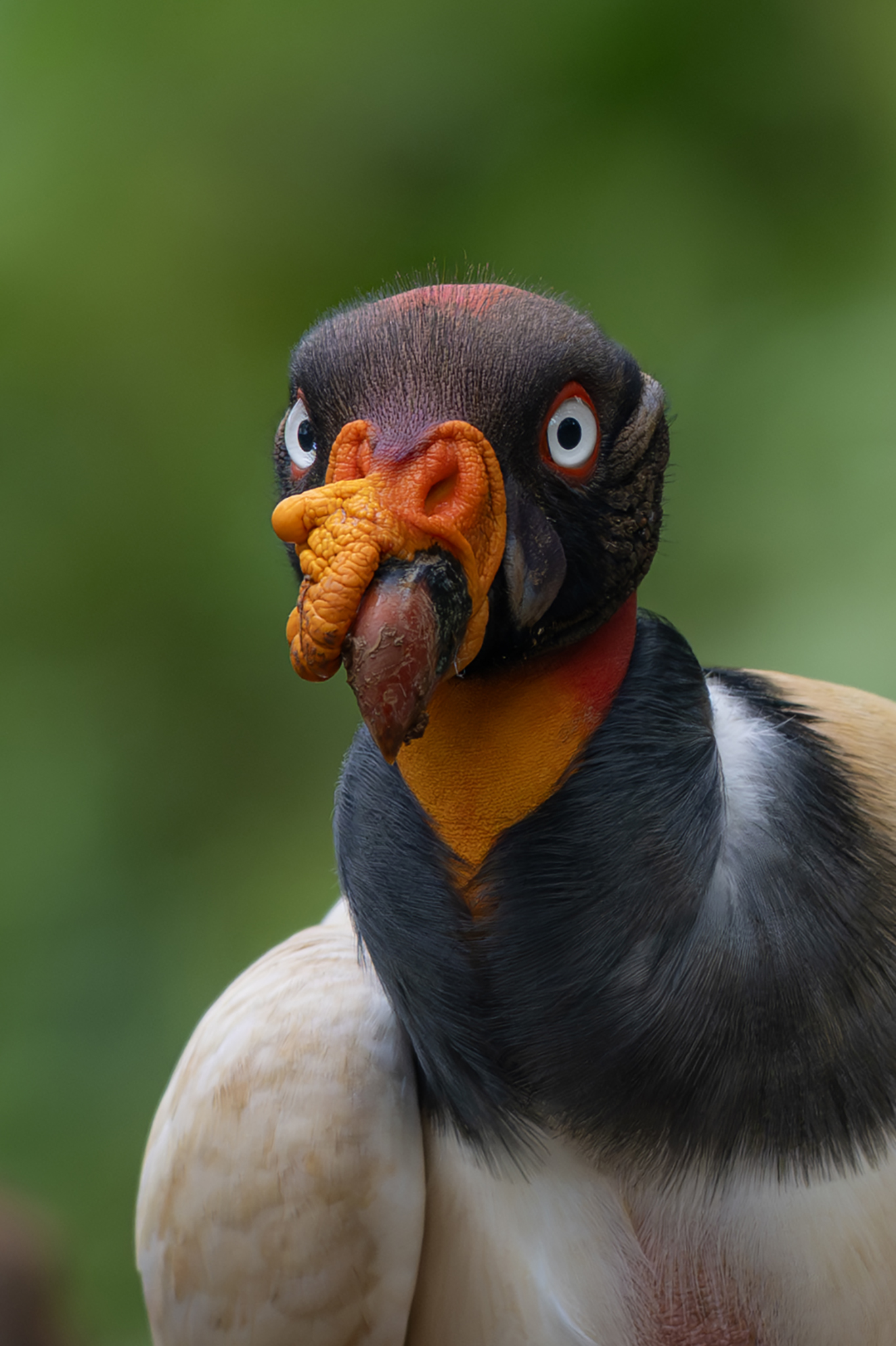
In the afternoon we set up in a hide dedicated to observing the king vulture, one of the most spectacular vultures on the continent for the colouring of its head. From the hide, still and with time to spare, we mount the 400mm f/2.8 with the 1.4x extender: the resulting 560mm, combined with the light coming through the hide’s slits, is the ideal combination for a portrait with a fully melted background and the skin detail on the head well resolved.
Frogs and snakes by night, from a hotel in the north
We close the day — and the route — at a hotel in the north of the country, where after dinner we head out with headlamps to photograph frogs and snakes during their real activity hours: the night. Here the 400mm f/2.8 takes centre stage again for its ability to gather light in near-total darkness, though for species closer to the path the 100-500mm with fill flash also does the job without needing to get too close.
Photographing with nature, not against it
All this gear serves a single purpose: photographing without interfering. Respectful distances, no handling animals or altering their behaviour to get a shot, and local guides who know every trail and every hide better than anyone. The best photograph is still the one that leaves no trace.
Want to walk this photography route with us, gear in hand? Our next Costa Rica expedition already has dates: January 2027. All the info here.